
All The World's a Soundstage
In which Criterion releases Jacques Tati's PLAYTIME in glorious 4K, and Norm gets to enjoy it.
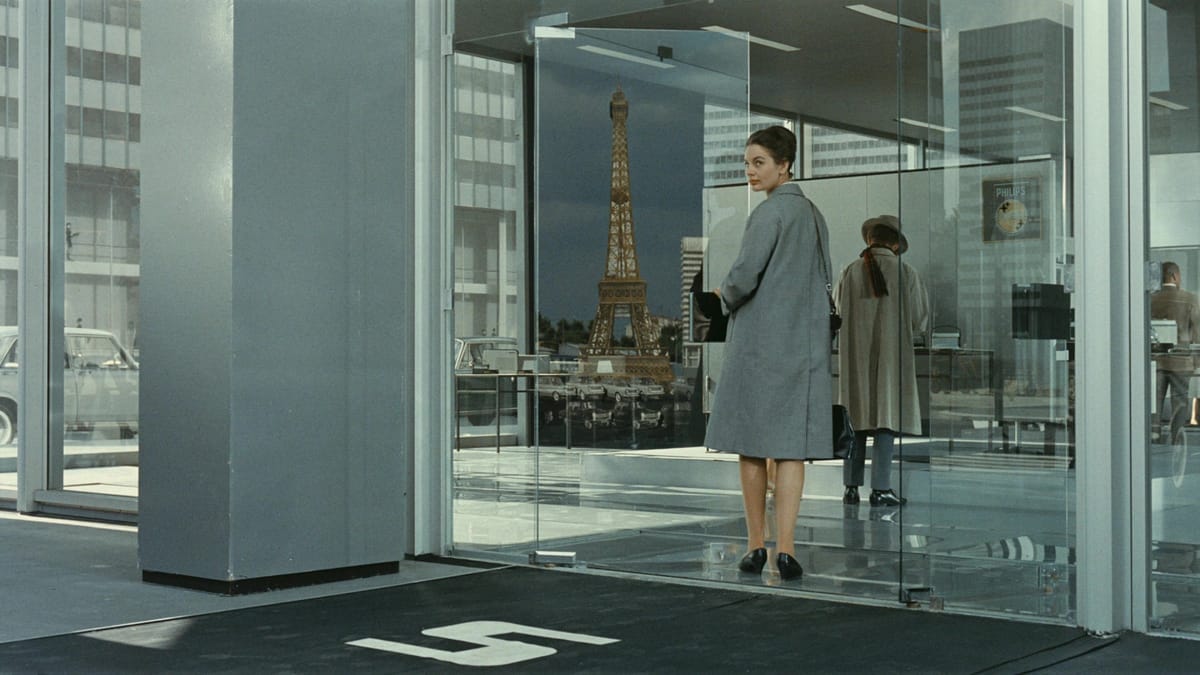
The thing you should know about PlayTime is that making it cost Jacques Tati almost everything. As the artist dryly recalled in a 1972 interview at the San Francisco Film Festival: “When I made the movie, I had a house. Afterward, I didn’t have a house.”
After decades as a primary force in French comedy, the legendary actor (and writer, and producer, and director) poured his cachet, his artistry and his personal wealth into his high-concept clockwork comedy of chaos. He engineered entire city blocks on a soundstage. He built massive sets and filled them with people, giving each player their own specific bits of business, shooting the resulting collisions and reactions in long, largely static takes. He even insisted the film be shot in 65mm – the province of gargantuan studio epics – so his audience could sink into the massive image and perceive every element clearly. It bankrupted him, but over time it’s become appreciated as a classic.
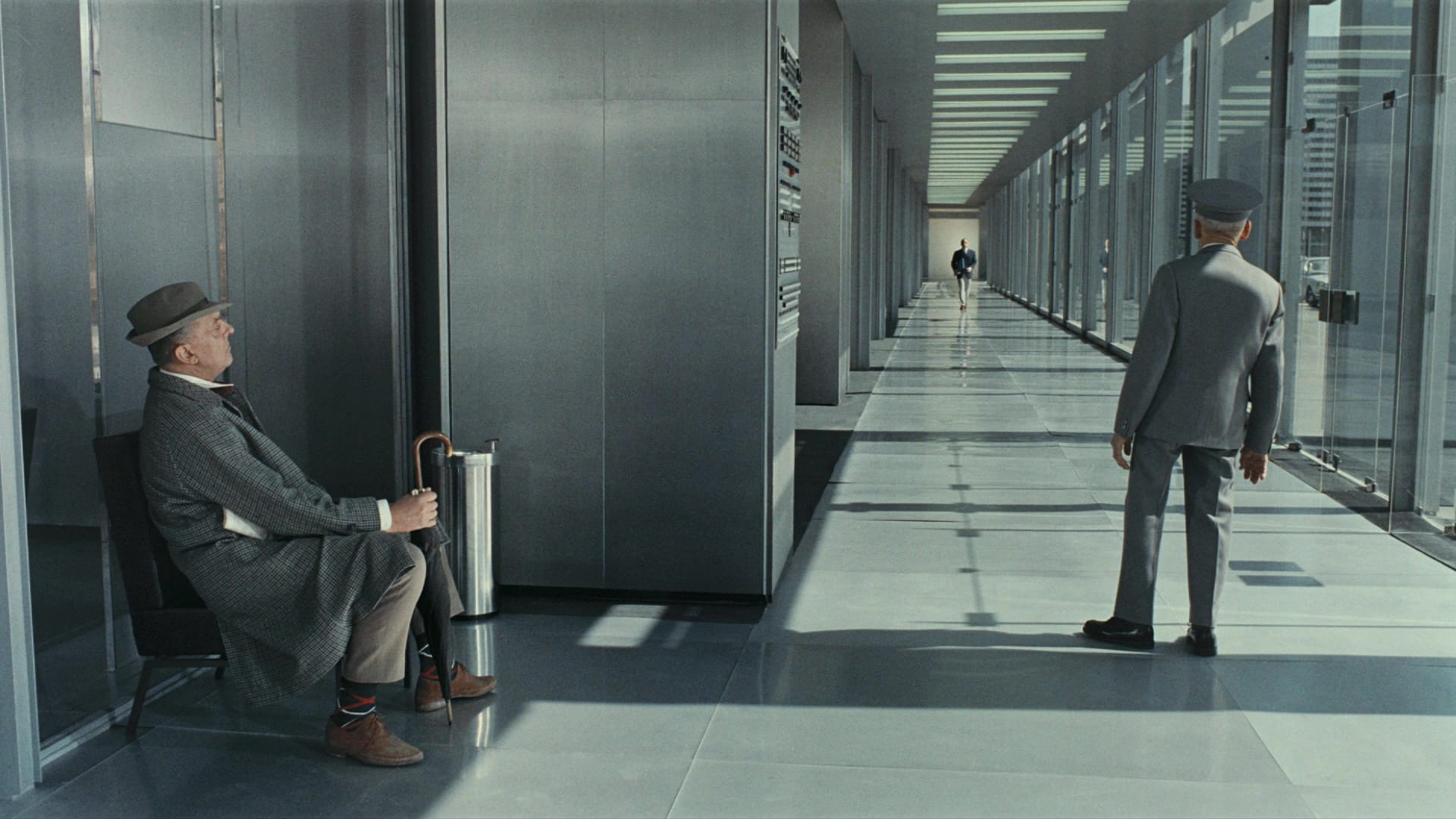
Tati would eventually sort out his finances and make two more movies before failing health forced him to retire, but PlayTime remains his zenith, a perfect, plotless odyssey that follows dozens of people through the chaos of 24 ordinary hours in mid-’60s Paris. Tourists arrive at the airport; men in suits buzz around the cubicles of an office building. Traffic is a nuisance, but not so bad you can’t get where you’re going. There’s a little shopping. You go home, or out to dinner – maybe you can get a table at the swanky new restaurant downtown. Just mind the door.
Is PlayTime Tati’s masterpiece? Quite possibly! Some may prefer the simplicity of M. Hulot’s Holiday or the complexity of the car stunts in Trafic, but PlayTime has a delight in its own artifice that feels unique among his films. Mon Oncle flirted with controlled environments by putting Hulot in a fancy futurist community, but he could wander outside; in PlayTime, save for a few key shots, even the outside is inside, to be reorganized or manipulated at the filmmakers’ will.
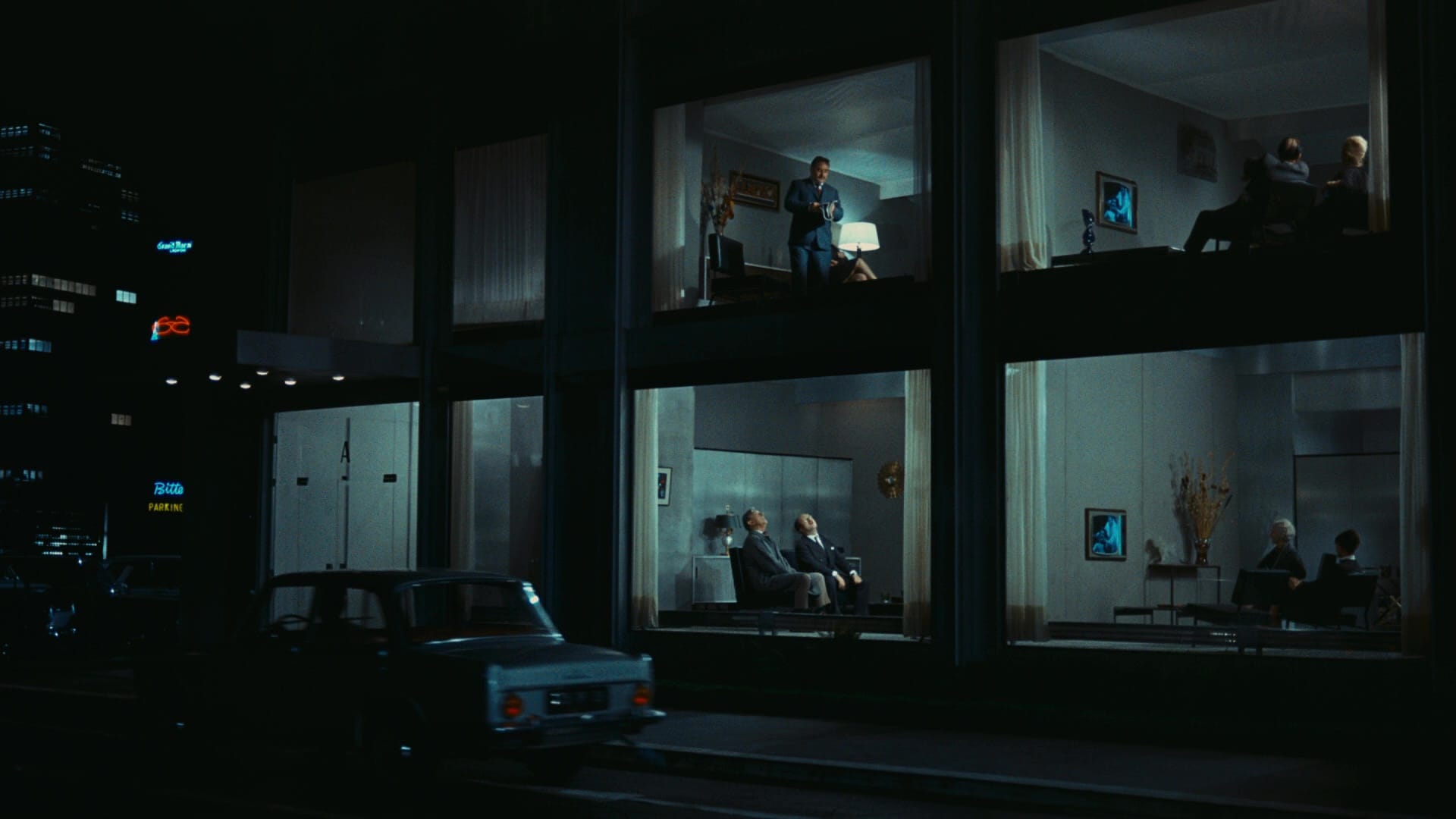
And if Tati wasn’t the first director to work en tableaux – that aesthetic was invented in the silent days – he might be the one who perfected it. Certainly the films of Roy Andersson and Wes Anderson would be very different without this specific work. PlayTime shows us a new, immersive way to tell stories. It’s almost theatrical, except that no theater can operate at this scale. It almost feels like it’s predicting environmental videogames like Myst – with Hulot as the player, wandering through a landscape that’s deliberately difficult but ultimately navigable. I can’t imagine how audiences would have received this in 1967.
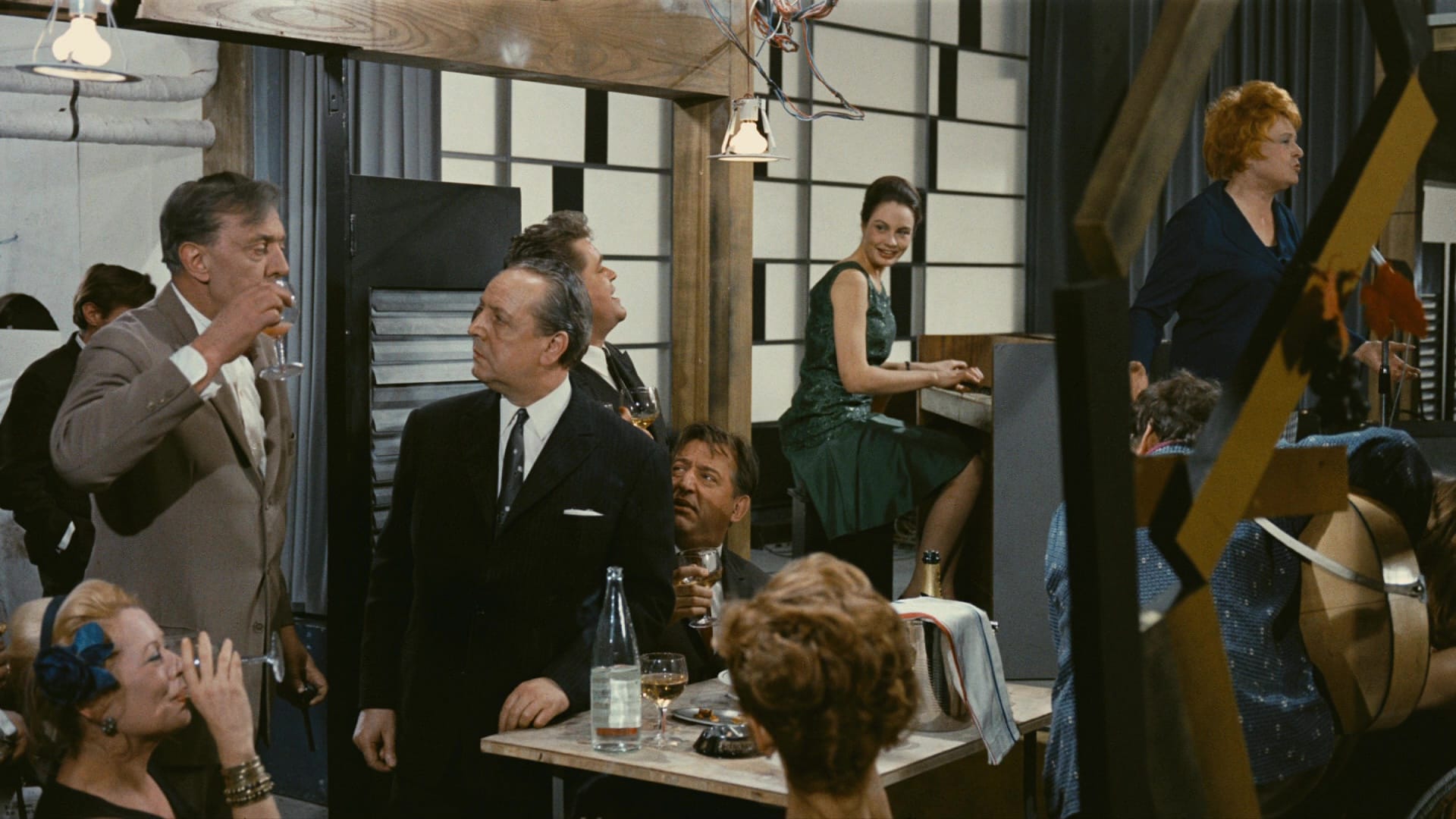
But leave it to Kate to find the perfect analogy on her very first viewing. She pointed out that every frame of Playtime is designed like a page in a Where’s Waldo book – a feast of information that keeps demanding you shift your focus, because it’s all equally interesting.
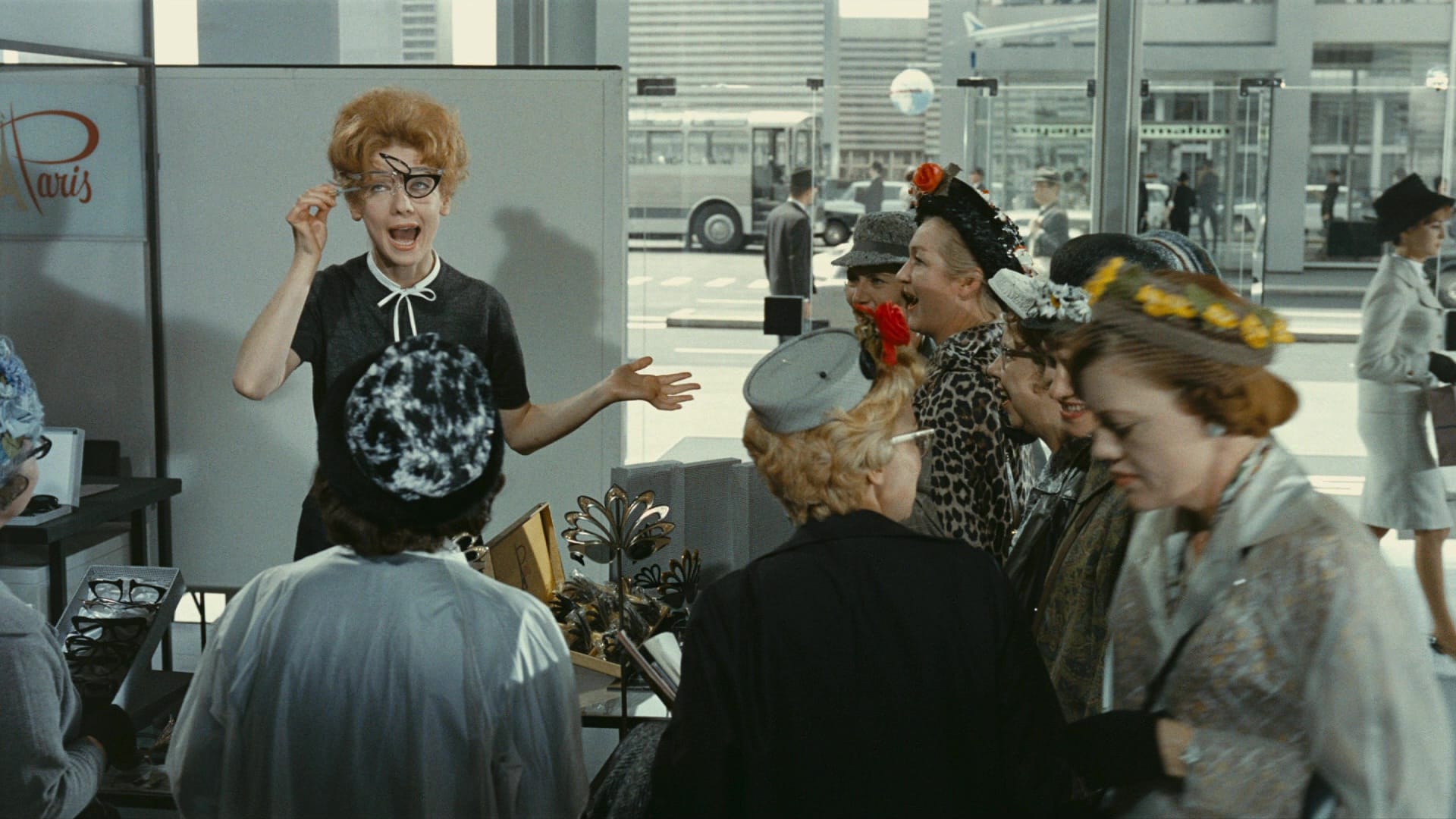
Criterion’s UHD is, at least technically, the label’s fifth edition of PlayTime. There was a LaserDisc, of course, and a DVD in 2001, followed by a 2009 Blu-ray, each of which brought a little more detail to Tati’s stunning large-format visuals. A second Blu-ray, sourced from a new 4K restoration, was included in the Complete Jacques Tati collection in 2014, and twelve years later that restoration can be screened in its native resolution in this week’s 4K special edition.
It is a glorious disc, revealing details and depths that rival a 70mm projection; the image is also cleaner, more stable and more consistent than a surviving print would look today. There’s no HDR grade, which did strike me as curious, but Andréas Winding’s exquisite 65mm images are perfectly vivid without it.
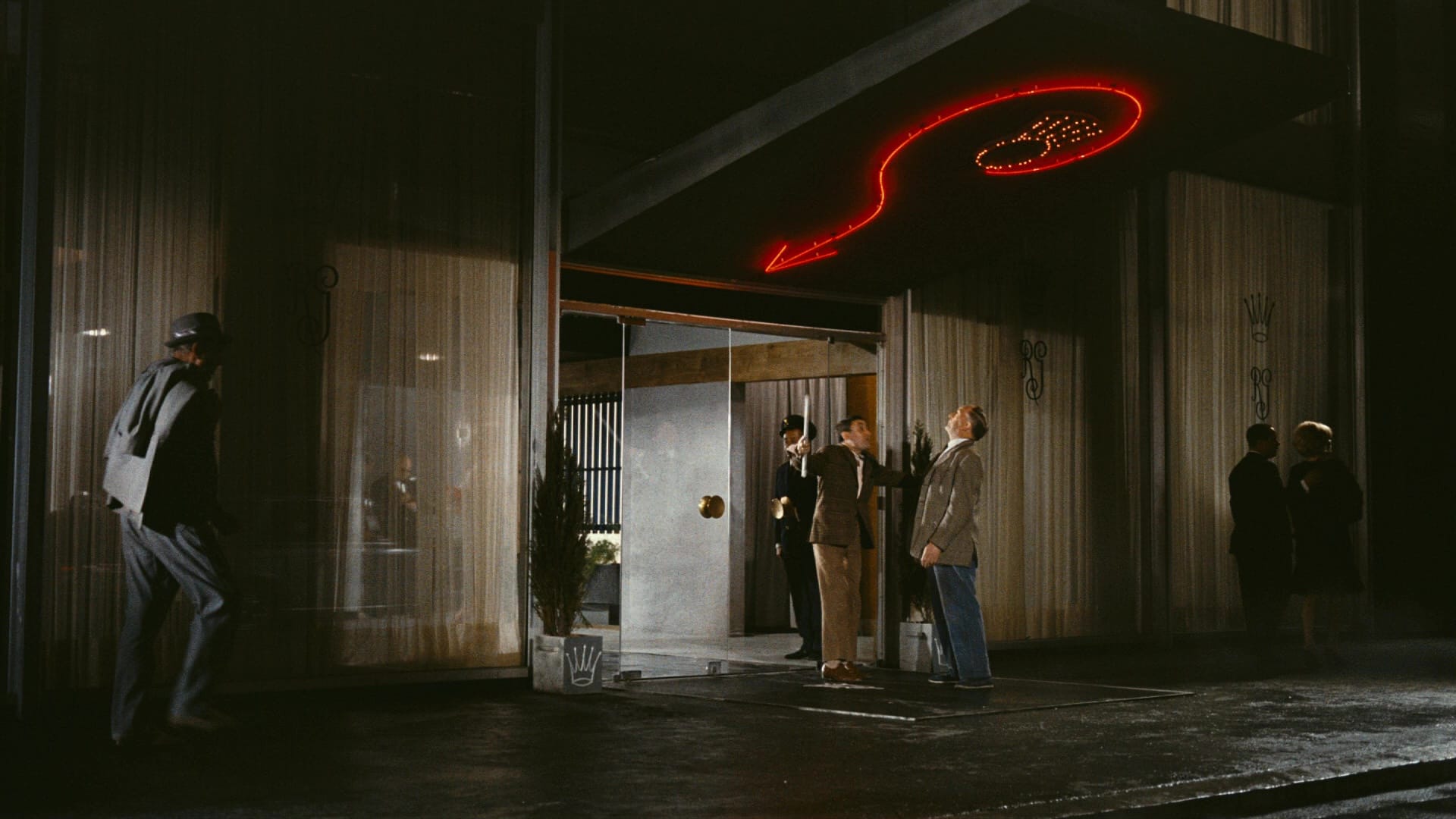
The Royal Garden’s neon sign burns bright red, and there’s a seemingly endless range of grays, blacks and whites in the buildings and offices, and perfectly manicured wardrobes of the various businessmen wandering around. M. Hulot’s slightly tweedy look distinguishes him from the suits, but only to our eyes; everywhere he goes, he’s assumed to be a person of status despite his perpetual state of genial befuddlement.
I’ve seen PlayTime half a dozen times now, and I still don’t know what Hulot is supposed to be doing in Paris; he arrives for a meeting (a job interview?) that never happens, but doesn’t seem terribly upset about it. Instead, he spends the whole movie wandering distractedly from one space to another, running into old war buddies, being taken home for drinks by one friend and invited to dinner by another. Maybe the meeting was just an excuse to go to the city for a bit. Or maybe it’s Tati’s way of showing us how little space his most famous character occupies in his artistic vision; if he doesn’t care about this guy, why should we?
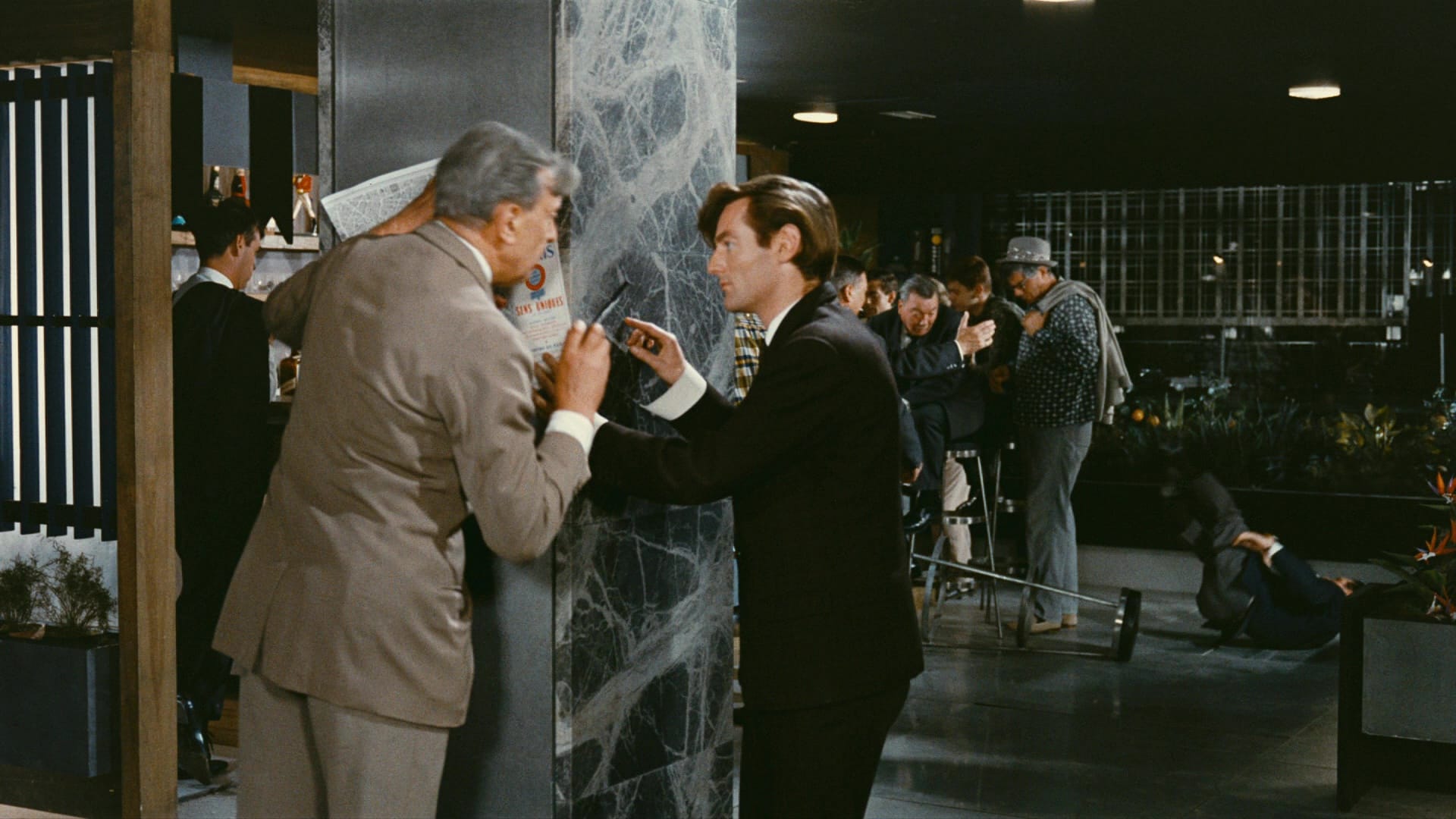
But of course we care about Hulot, with his befuddled smile and compulsive need to go along with the group even when it derails his own plans; trapped in a world of gestures and banalities he doesn’t fully understand but can’t help returning, the poor fellow is a perfect everyman. (He is also, in his hapless agreeability, much more Canadian than I’d ever previously noticed.)
While it’s being made available in both 4K and Blu-ray editions, PlayTime is Criterion’s first 4K release – to my knowledge, at least – that isn’t a combo: In each set, the feature is packaged on its own platter, with the supplements produced for earlier editions assembled on a companion Blu-ray. There's a wealth of material here, from that aforementioned interview in San Francisco and sequence-specific commentaries from Philip Kemp, Jérôme Deschamps and Stéphane Goudet to short documentaries and visual essays, the lovely intro Terry Jones recorded for Criterion's DVD in 2002 and Tati's own 1967 short Cours du soir.
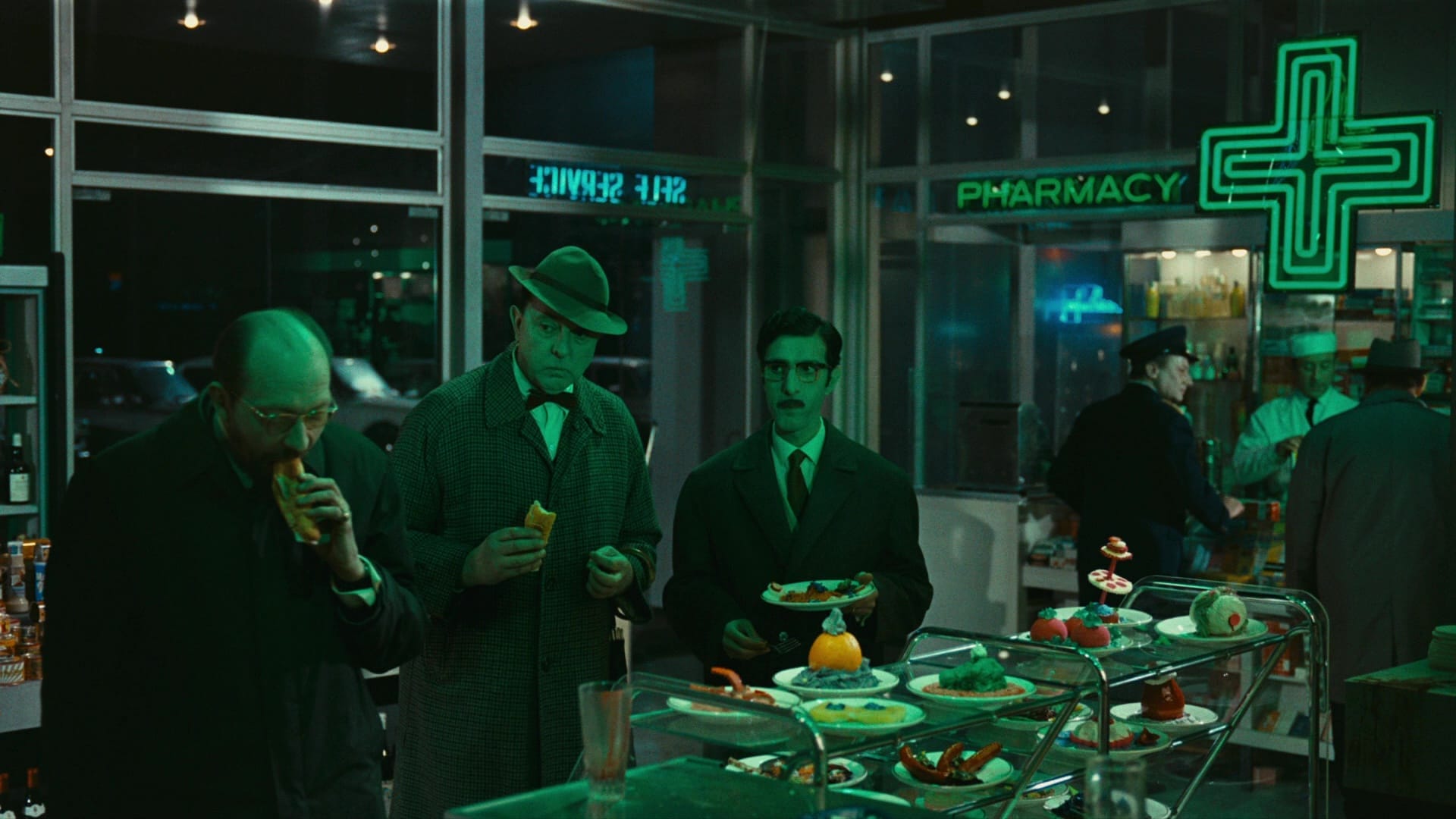
All other Criterion 4K titles announced for this year have followed the tradition of pairing a 4K disc of the feature with whatever discs are in the relevant Blu-ray set; perhaps this is just a way to keep replication costs down, or maybe Criterion’s team assumed that most people buying the 4K edition would already have the Complete Tati. (I mean, I certainly do.)
OCD issues aside, if you have a 4K player there’s absolutely no reason not to pick this up. It’s easily the best treatment the film has had since its original release – and this time, it’ll get a lot more respect.
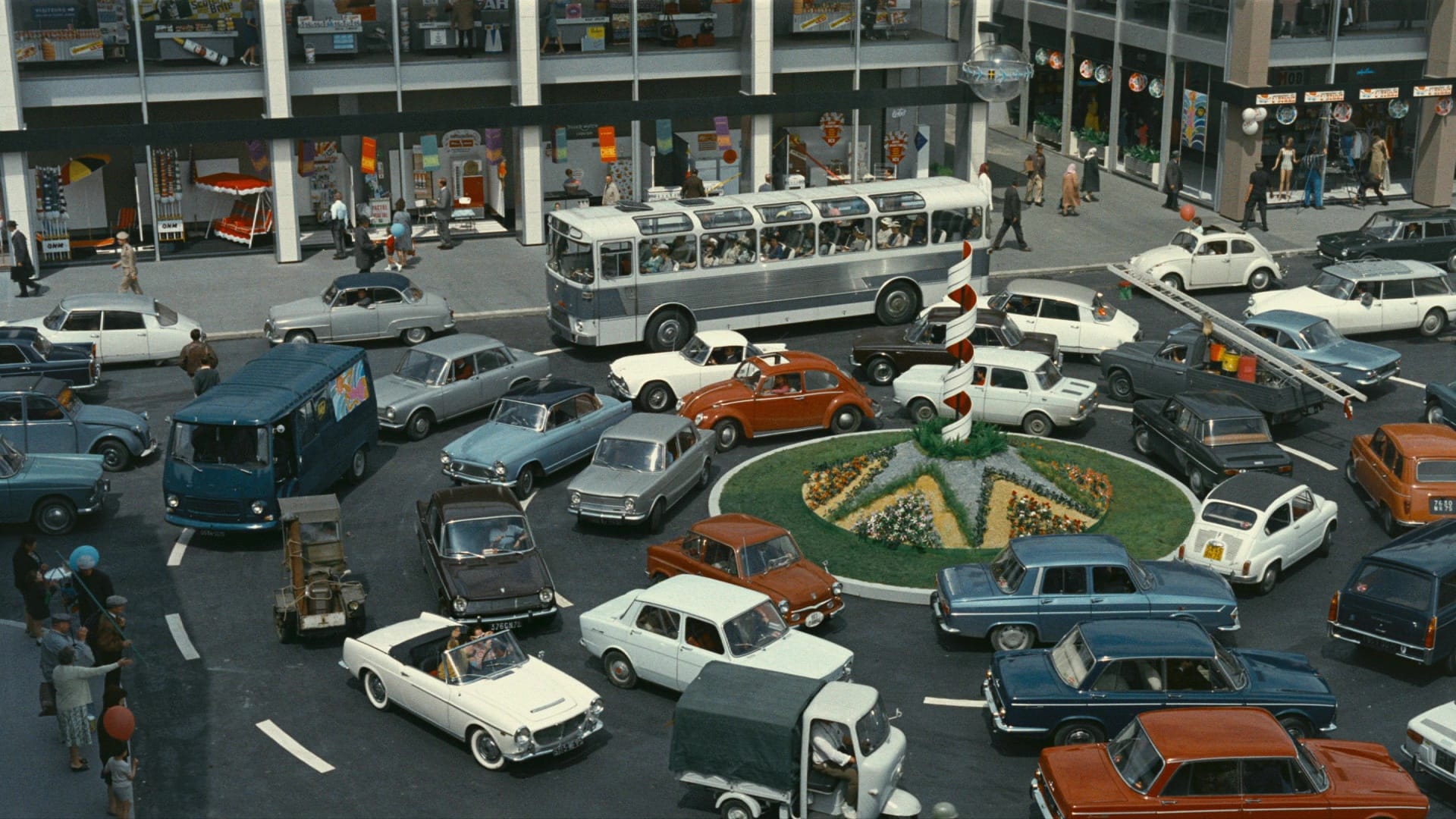
Playtime is now available in 4K in the Criterion Collection. A new two-disc Blu-ray edition is also available, as mentioned above.
Up next: Song Sung Blue and a fresh take on Deathstalker hit the new release shelves, and one of the greatest films of the ’70s leads the catalogue charge. But first, there’s Friday’s What’s Worth Watching column for paid subscribers … and it’s a good one. C’mon, bump that sub up a notch!