
Each Unhappy Family
In which Norm spins up the very different family stories BLUE HERON and THE END OF OAK STREET.
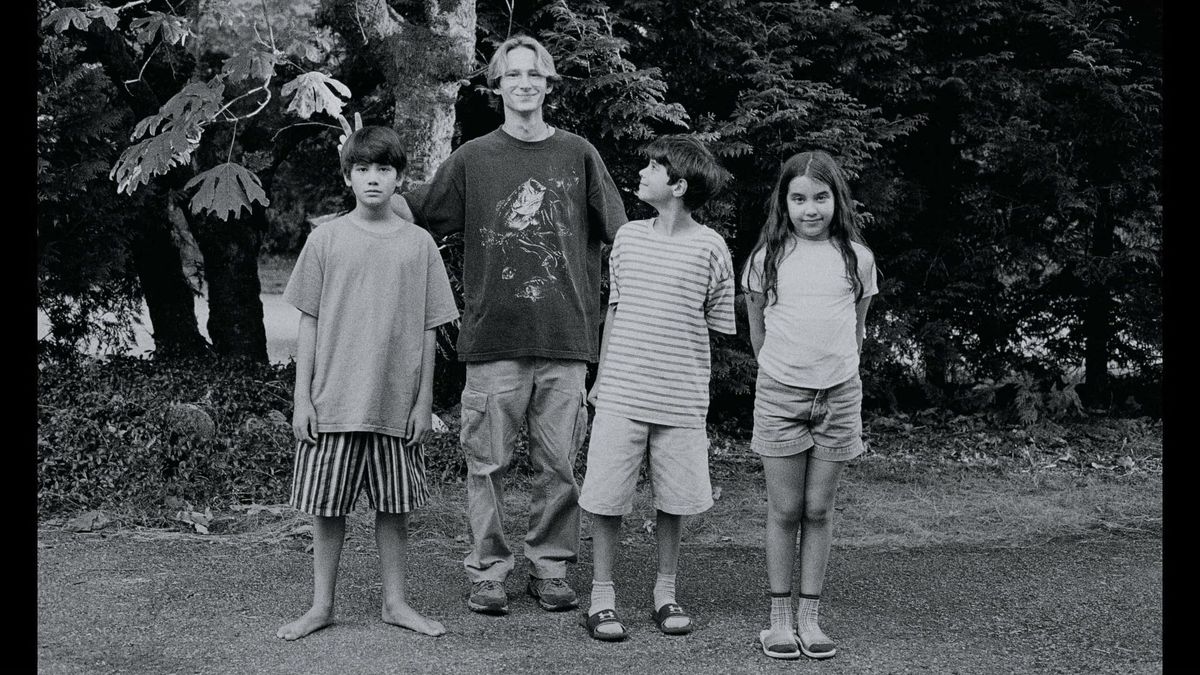
While we all wait for Odysseus to reach our shores, let’s talk about another bold cinematic journey: Blue Heron.
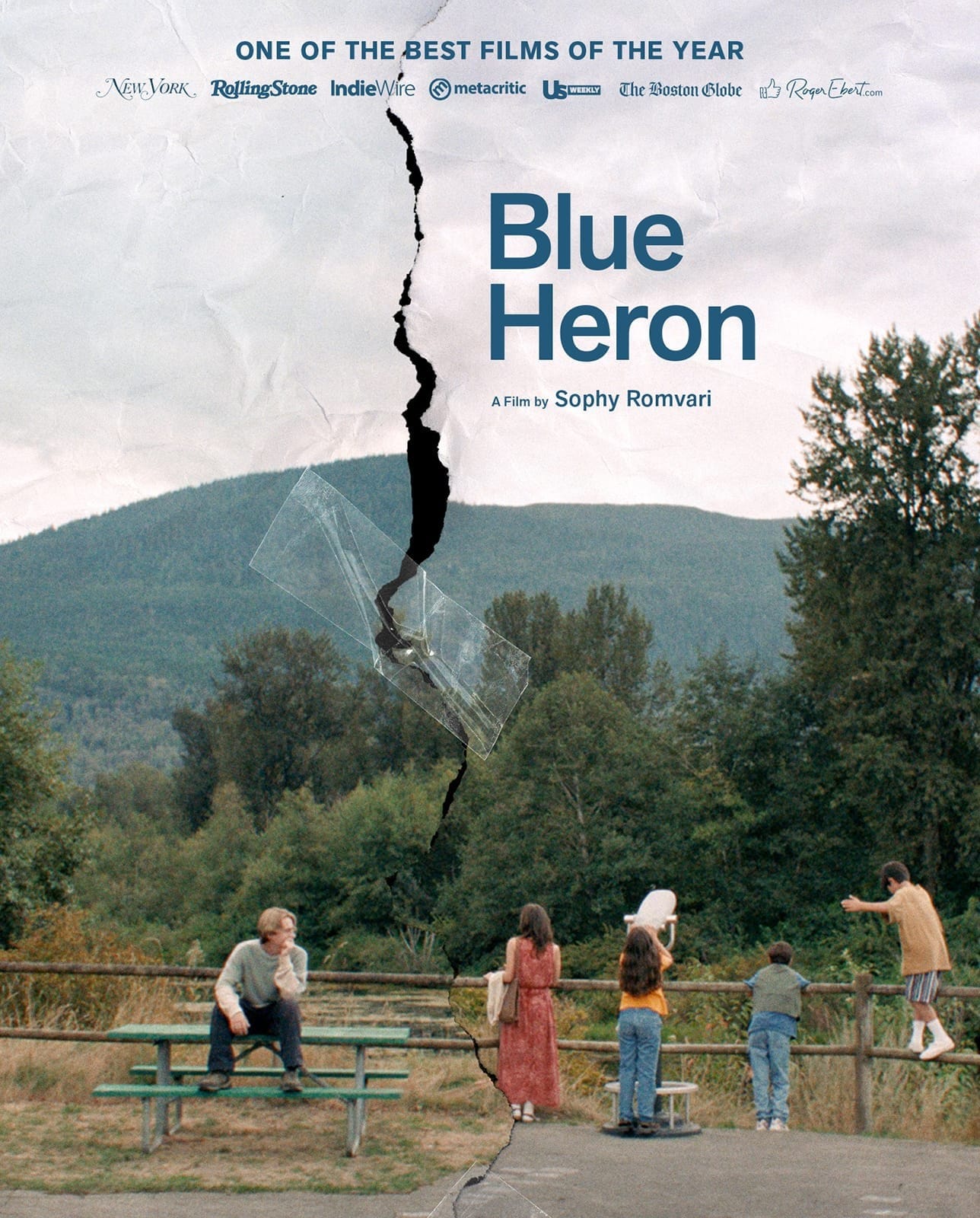
I’ve been an admirer of Sophy Romvari’s precise, layered and deeply moving shorts for as long as she’s been making them. (They’re currently streaming on the Criterion Channel.) Toronto being a small town, we’ve gotten to know one another a little bit over the years; Sophy was an early guest on Someone Else’s Movie, and returned to the podcast this spring. I’d been waiting for her to make a feature for a really long time, and it’s my pleasure to inform you that Blue Heron delivers on the promise of Sophy’s shorts, offering her a larger canvas for her autofictional style of drama and expanding its emotional depths appropriately. You can lose yourself in it.
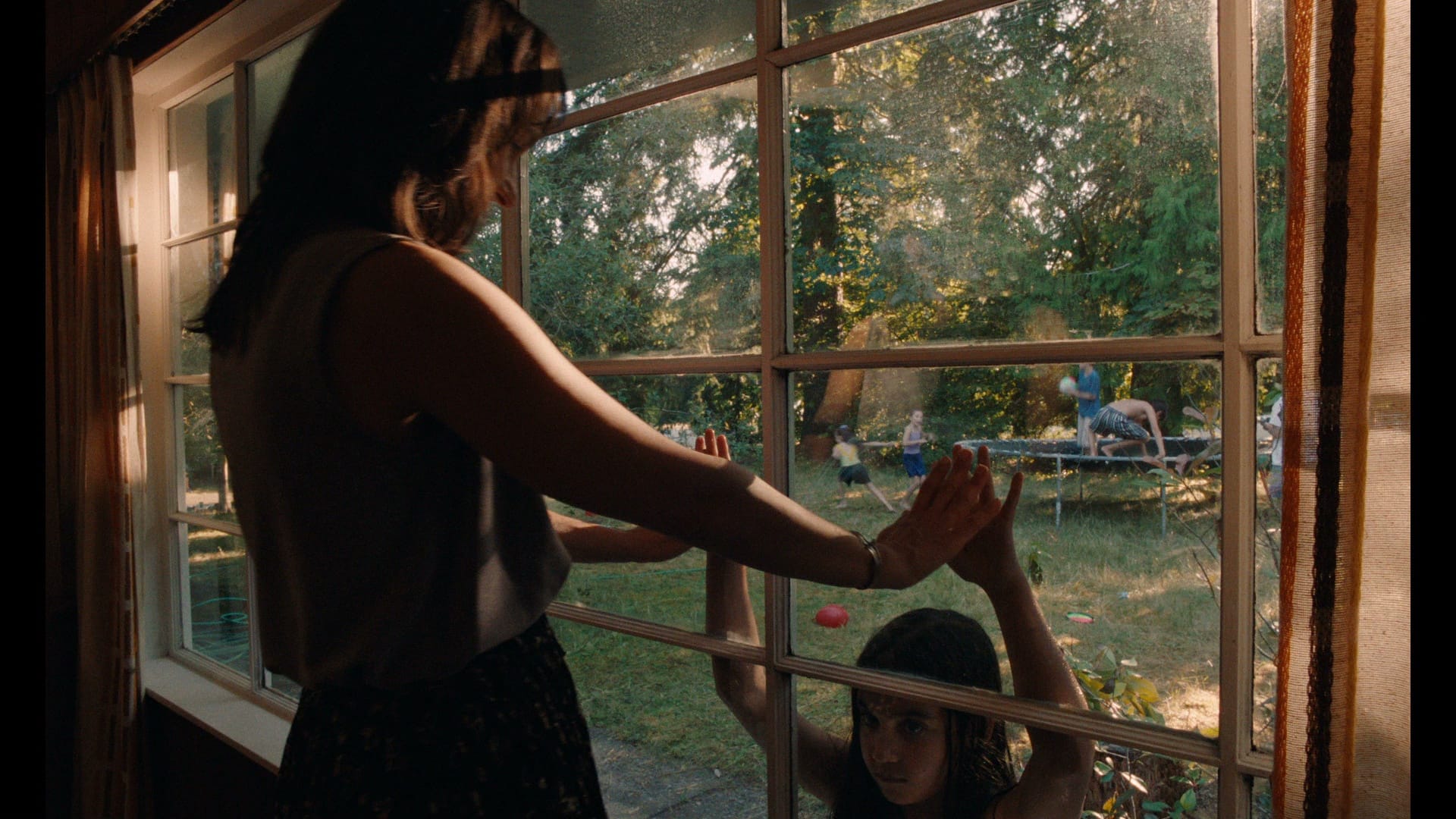
Expanding on ideas from Sophy's 2020 short Still Processing – which is included as a supplement on the new Criterion Presents Blu-ray, about which more below – Blue Heron is a story with a hole in it. Opening in the 1990s, the film follows a Hungarian family as they adjust to their new life in Vancouver, the camera spending a lot of time with eight-year-old Sasha (Eylul Guven). She’s a watcher, catching things her parents and siblings don’t always notice – though she doesn’t always comprehend what she sees, because she’s still a child.
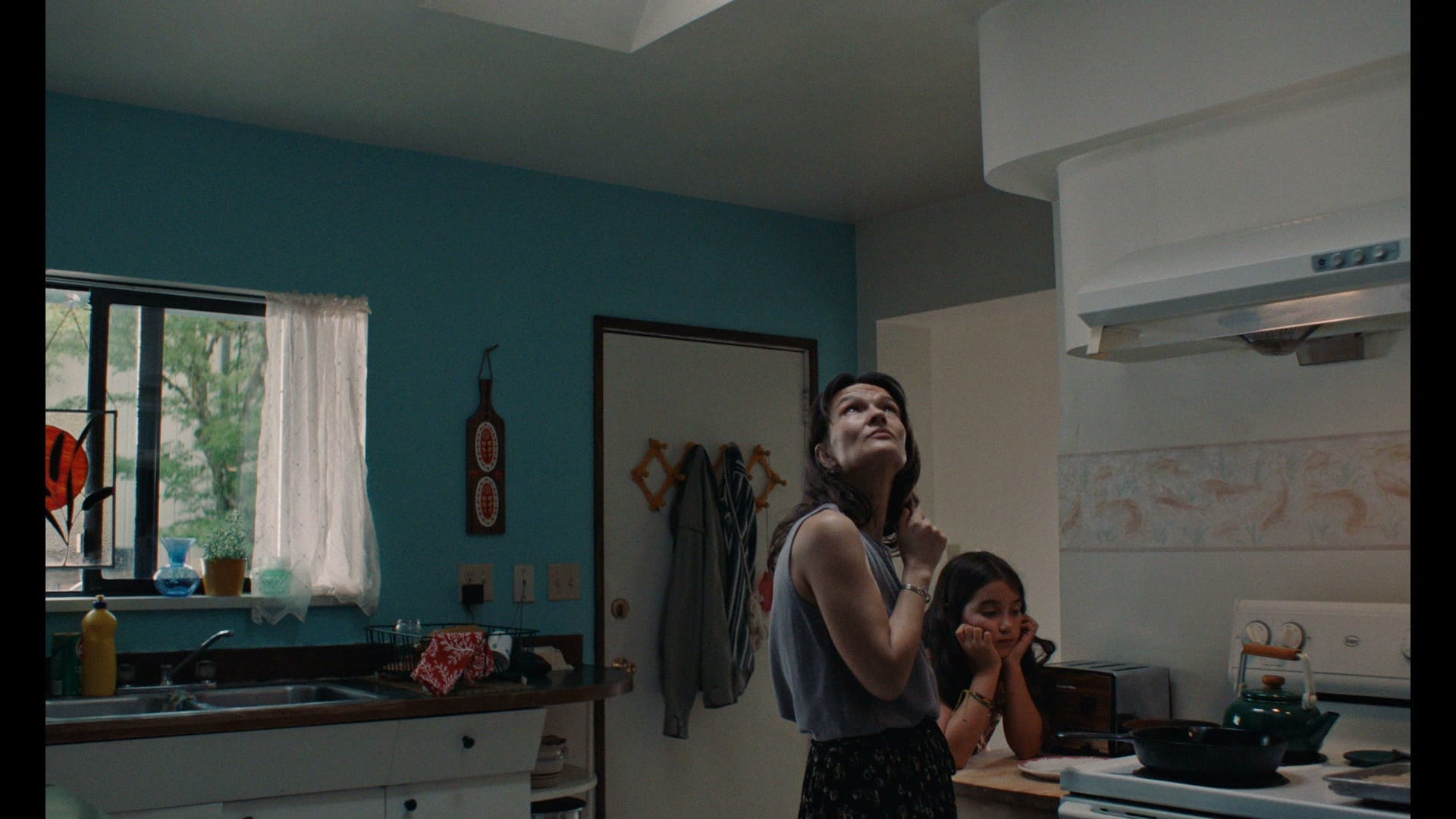
Sasha doesn’t know why her older brother Jeremy (Edik Beddoes) is so uncomfortable all the time, lying motionless on the porch or wandering around on the roof. She doesn’t know why her mother (Iringó Réti) and father (Ádám Tompa) are so tense around him; she just knows that’s the way things are. But they’re not right, and she knows that too. Gradually, we are led to understand we’re watching a story Sasha will grow up to tell. It’s a story about the one thing she missed.
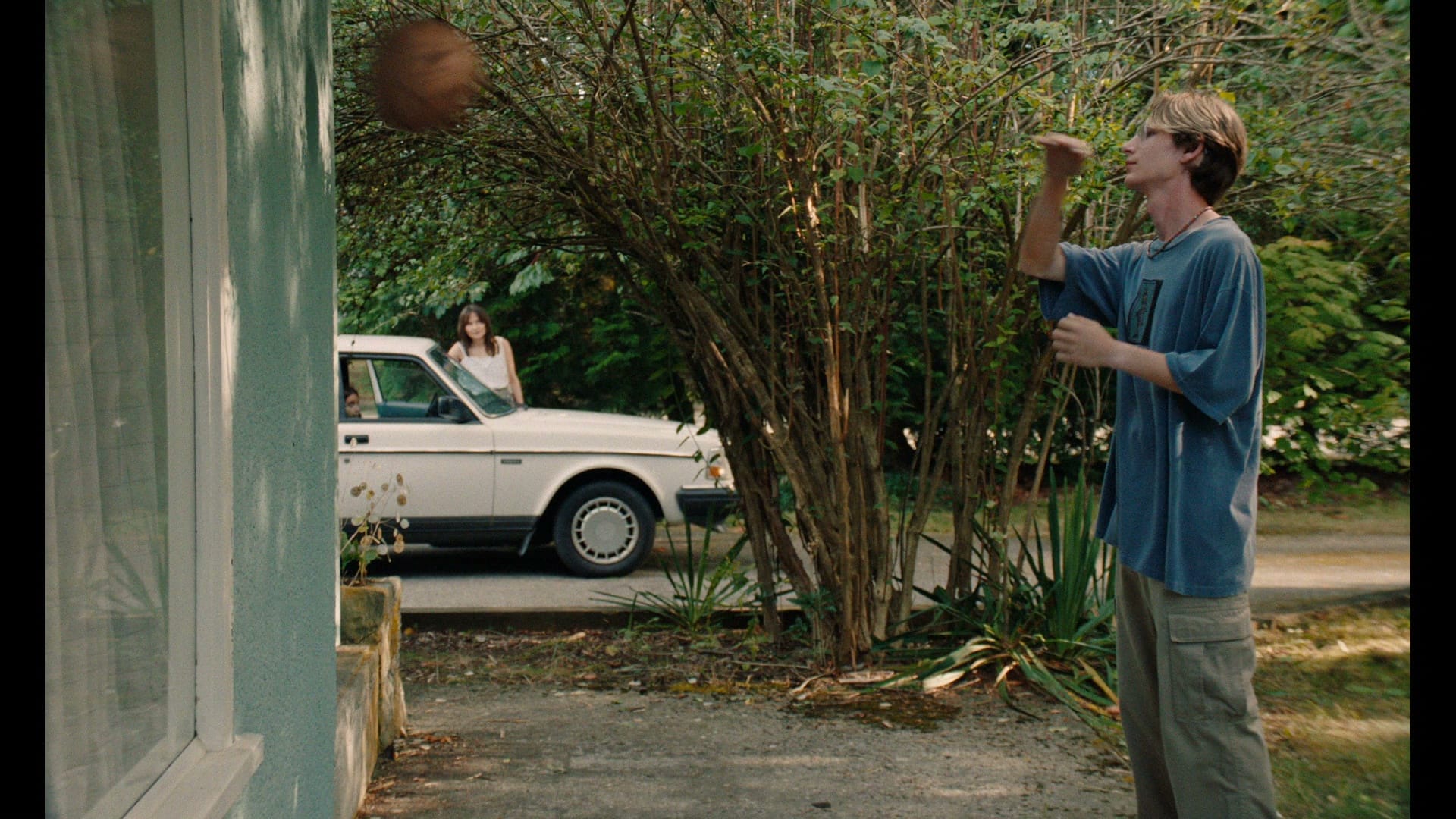
Evocatively shot by the brilliant Maya Bankovic (Wexford Plaza, Akilla’s Escape), Blue Heron takes the audience inside a memory and leaves us there to watch, helpless, as the most important events in someone’s life play out in front of us. I hesitate to bring up Charlotte Wells’ shattering Aftersun as a comparison for fear of setting high expectations for Sophy’s film, which is doing something very different with its aesthetic and its tone. But the two debuts do resonate with one another, and Blue Heron meets those expectations in ways you won’t easily shake. It’s an odyssey, too.
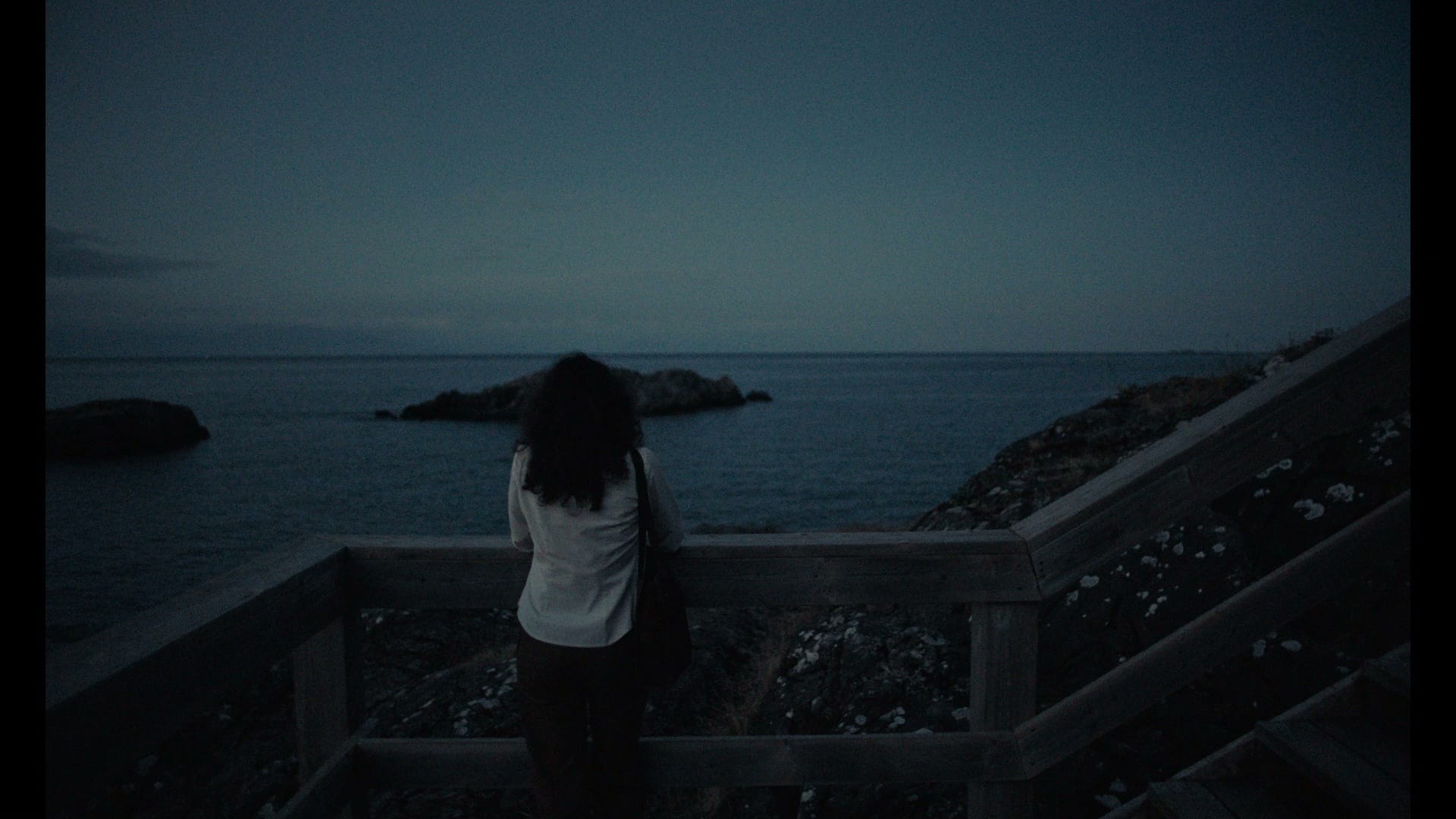
Criterion’s Blue Heron Blu-ray – released under the label’s Criterion Presents imprint - supplements an excellent 1080p presentation of the feature with Sophy’s 2020 short Still Processing and the Meet the Filmmakers segment she recorded for the film’s streaming debut on the Criterion Channel, in which she takes us through the casting, cinematography and production design that snap the film into its place and time. She also alludes to a certain narrative trick I am still protecting more than a year after I first saw the film, because it’s that powerful.
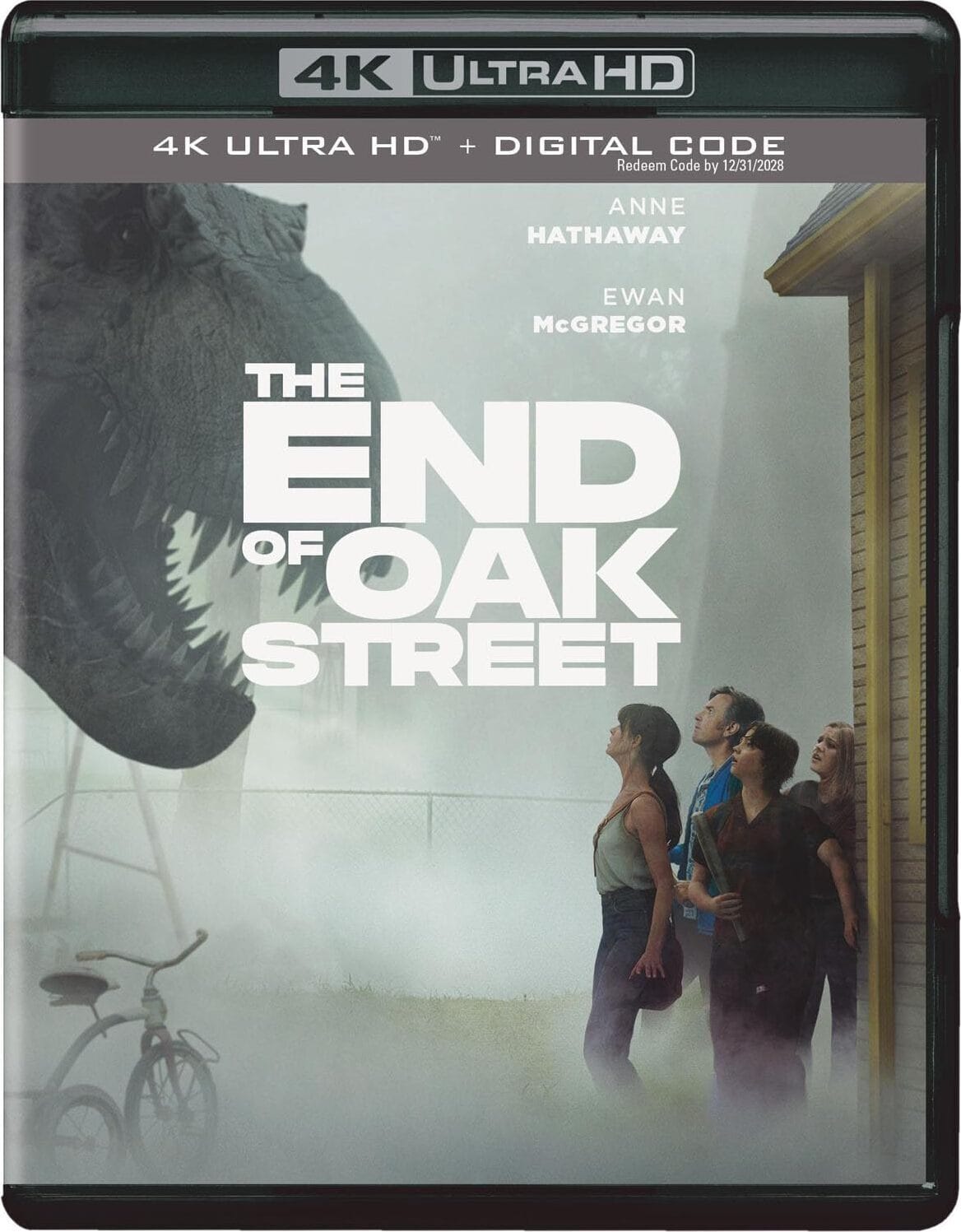
There are no narrative tricks in The End of Oak Street, though you might find a paradox or two in David Robert Mitchell’s Amblin-inflected sci-fi thriller about people running away from dinosaurs. Nope, this one delivers precisely what it promises, which is the people and the dinosaurs and the running. And it’s a lot of fun.
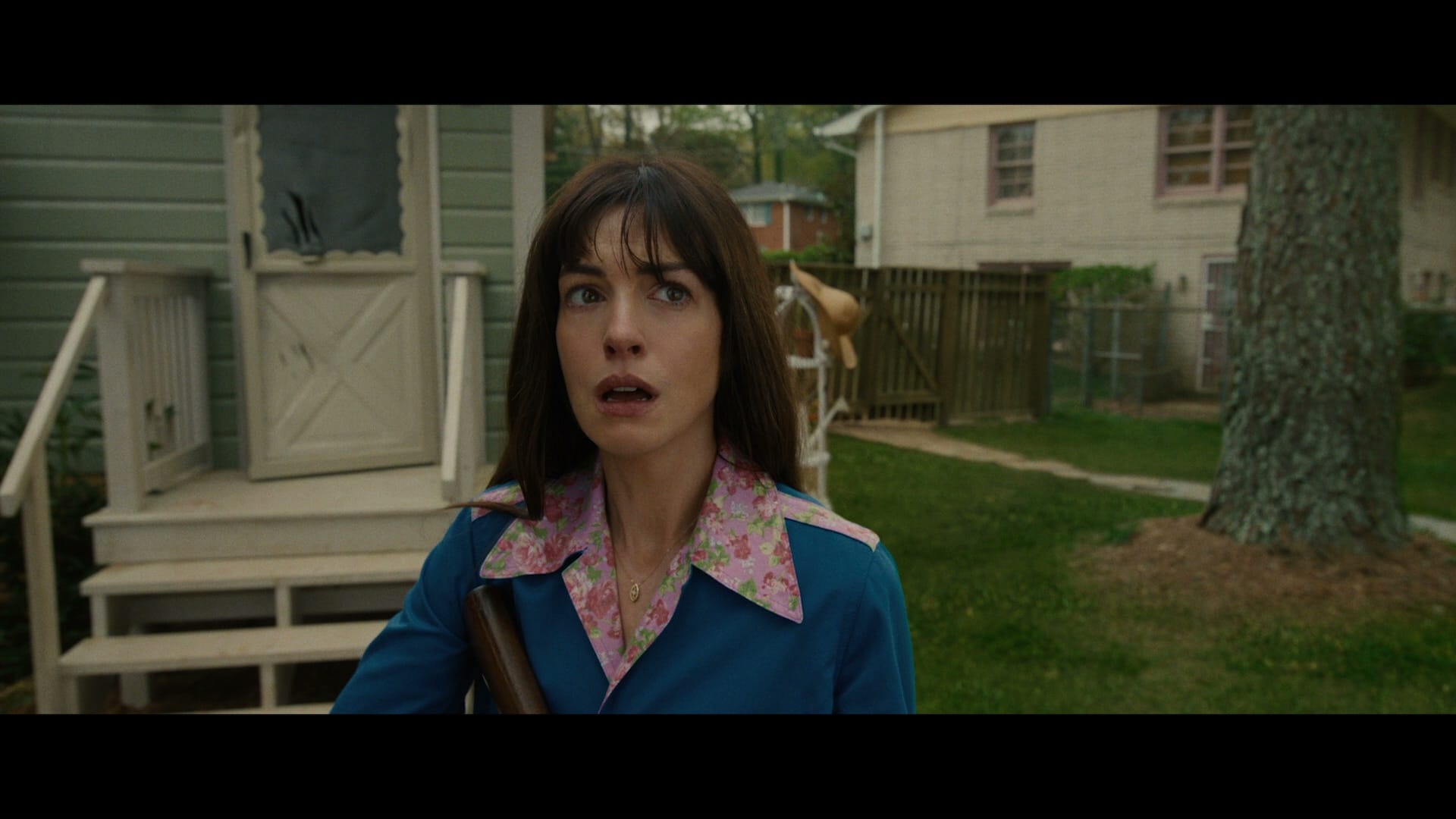
Is a frantic PG-13 special-effects thriller a strange pivot for Mitchell after It Follows and Under the Silver Lake established him as very, very good at creating simmering tension through implication and misdirection? Absolutely! But that’s also what makes it work so well, I think: Mitchell’s name is strong enough to pull in actors who can sell both the goofy premise and makes us care about their characters’ survival. We have to be able to enjoy the carnage without actively rooting for any of our protagonists to get eaten here, and Anne Hathaway and Ewan McGregor are really good at that.
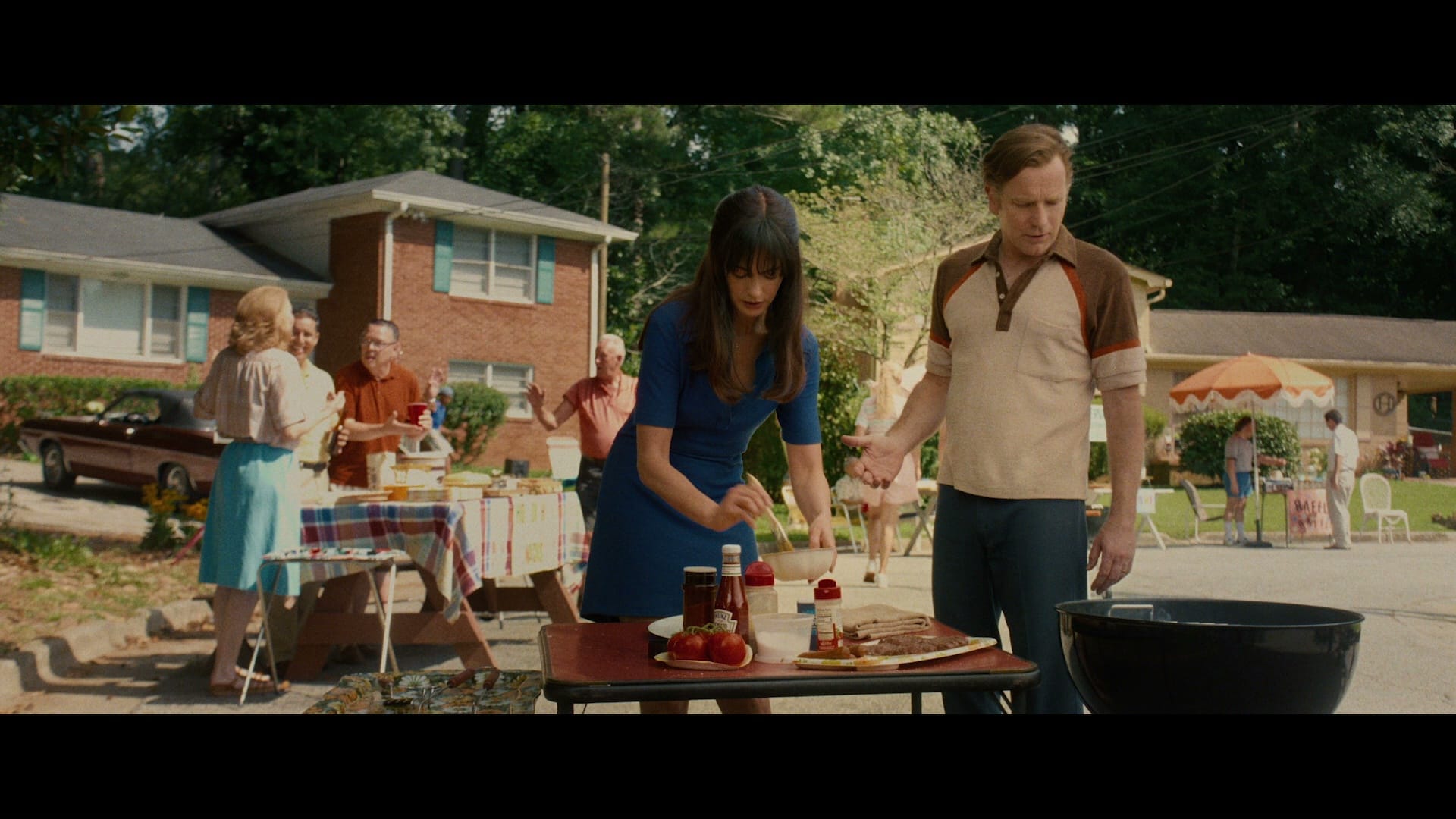
That’s them as Denise and Greg Platt, a couple living not entirely happily in 1982. Denise is running their household and parenting their teens pretty much on her own while Greg’s trying to hide the fact that the pizza deliveries he does as a side hustle are in fact his sole source of income. Also he’s drinking again, and Denise knows it. Things haven’t been great between them for a while, to the point that the novel Denise has been furtively writing in the basement is a transparent fantasy about how badly she wants to pack up and leave.
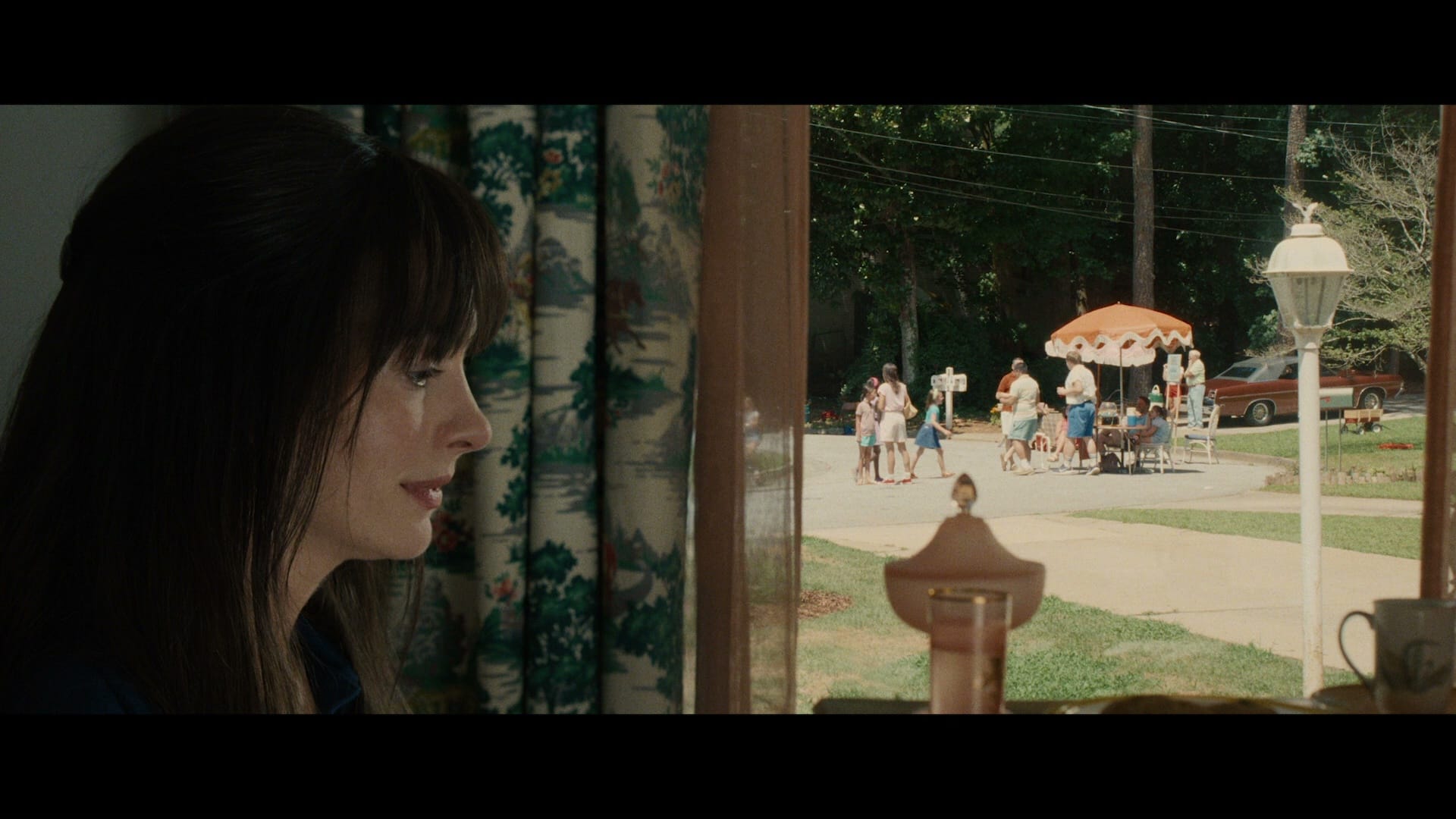
The kids aren’t having the best time either. Audrey (Maisy Stella), who’s about to graduate high school, knows her family can’t afford to send her to Cornell to study with Carl Sagan. And Brian (Christian Convery), who’s a little younger, is responding to his unstable home situation by acting out, recently breaking a kid’s arm in a disastrous prank. Said kid’s big brother is looking for payback. None of this is any good.
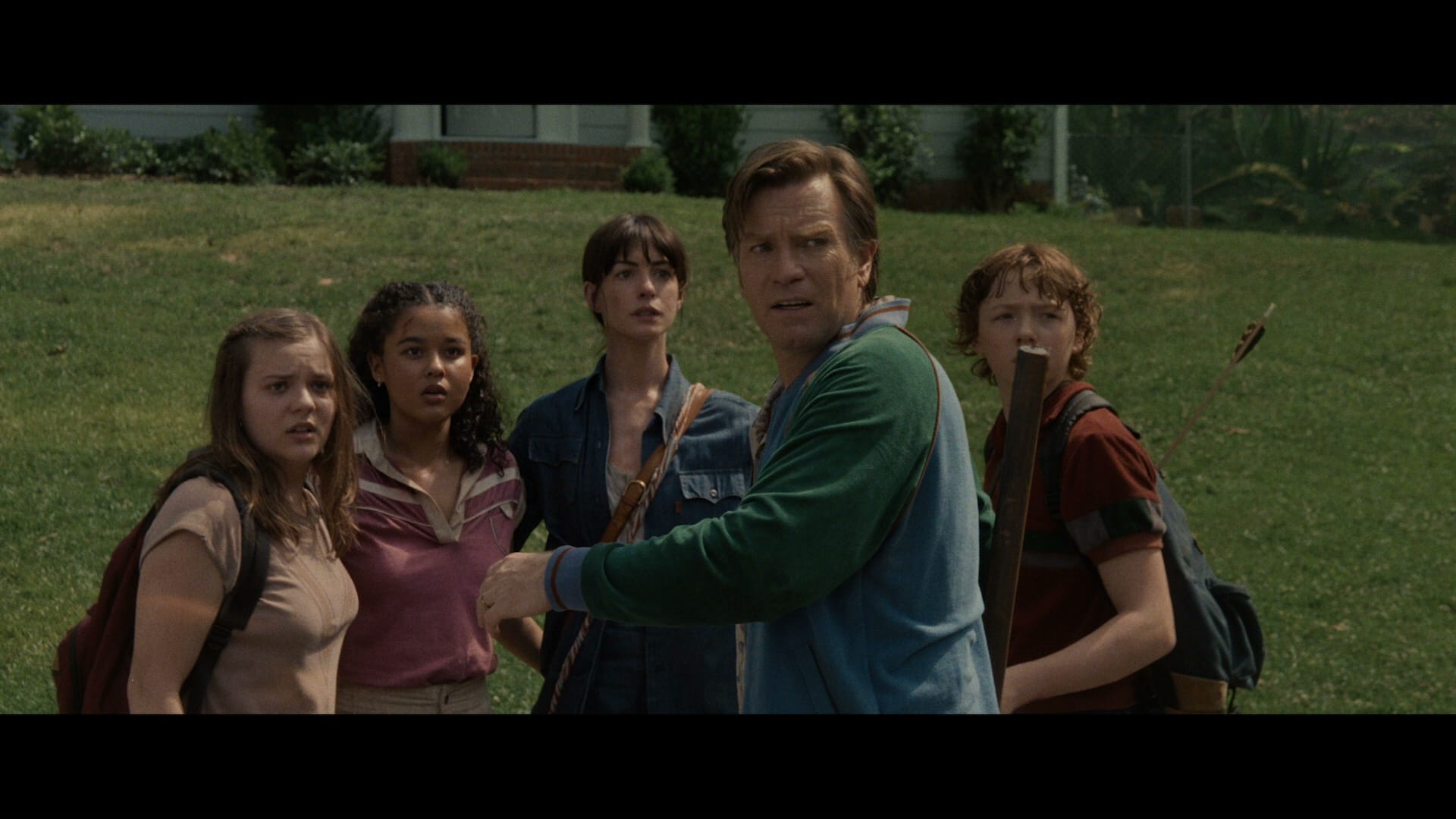
But then, one night, a flash of brilliant light transports the Platt house – and about two miles in either direction – a couple hundred million years into the past, when dinosaurs roamed the Earth, and the family must put all their issues aside just to survive. That’s really all there is to The End of Oak Street, and that’s all there needs to be.
In the supplements, Mitchell and Hathaway both cite Poltergeist as a touchstone, and that makes perfect sense: Tobe Hooper’s 1982 funhouse ride, was similarly grounded by producer and co-writer Steven Spielberg’s warmth for the Freeling family, and their unwavering support for one another – to the point of Dad literally sending Mom to hell and back to save their youngest daughter. Mitchell’s movie is just as playful, even as he shows us why we’re following this particular family through an ordeal that swallows their entire neighborhood.
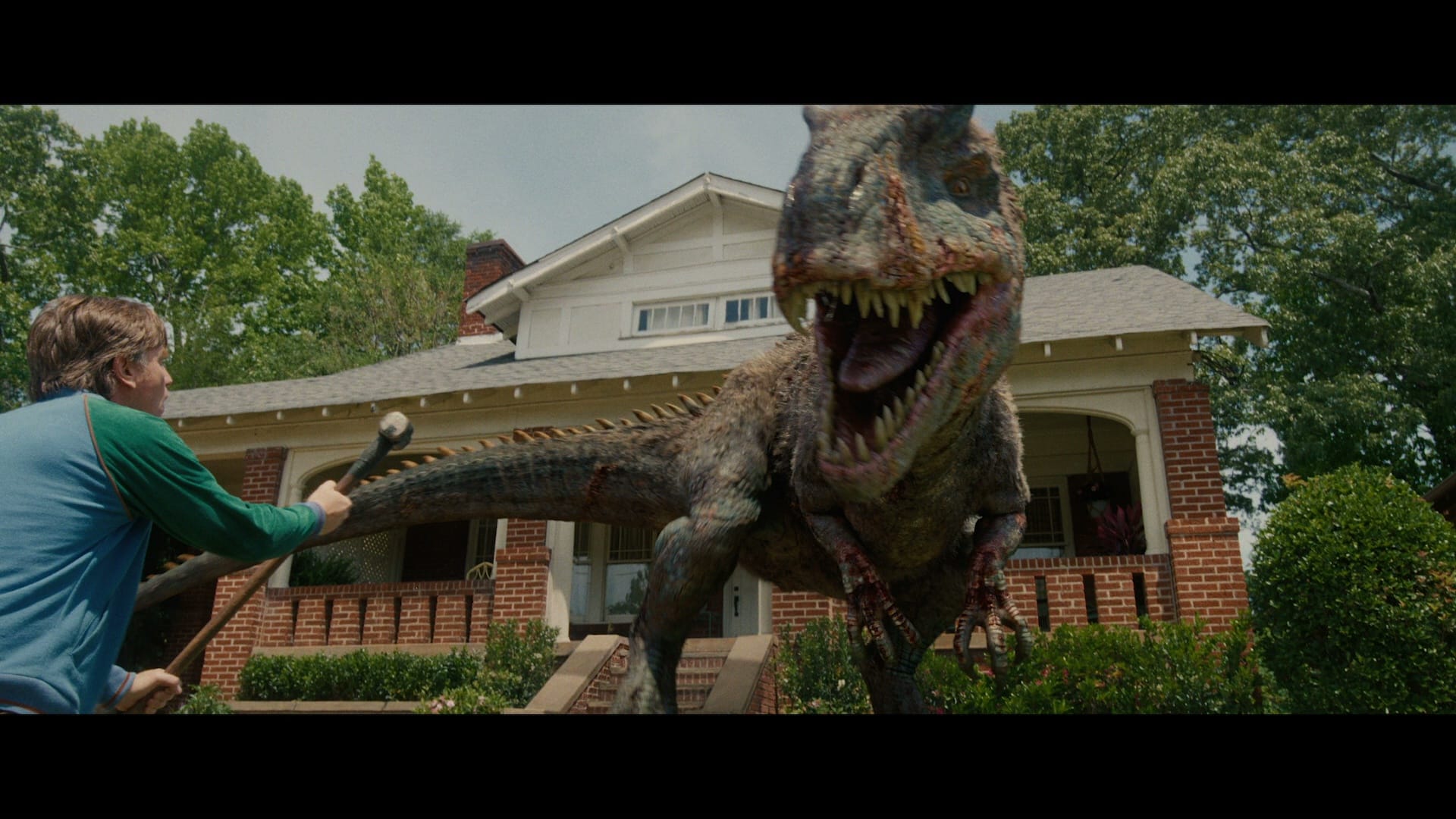
The End of Oak Street toys with the viewer in the best possible ways, using the “oops, just missed it” model of Jaws and Close Encounters and E.T. to keep its snappy beasties out of sight. Houses shake, leaves rustle in the backyard, tails and spines and plates can be glimpsed in the distance as the Platts look in the wrong direction. By the time the creatures are revealed in all their glory, we’re fully invested in how these overmatched, desperate humans will survive each encounter – and what they’re willing to do to save each other. Even the dog gets to help!
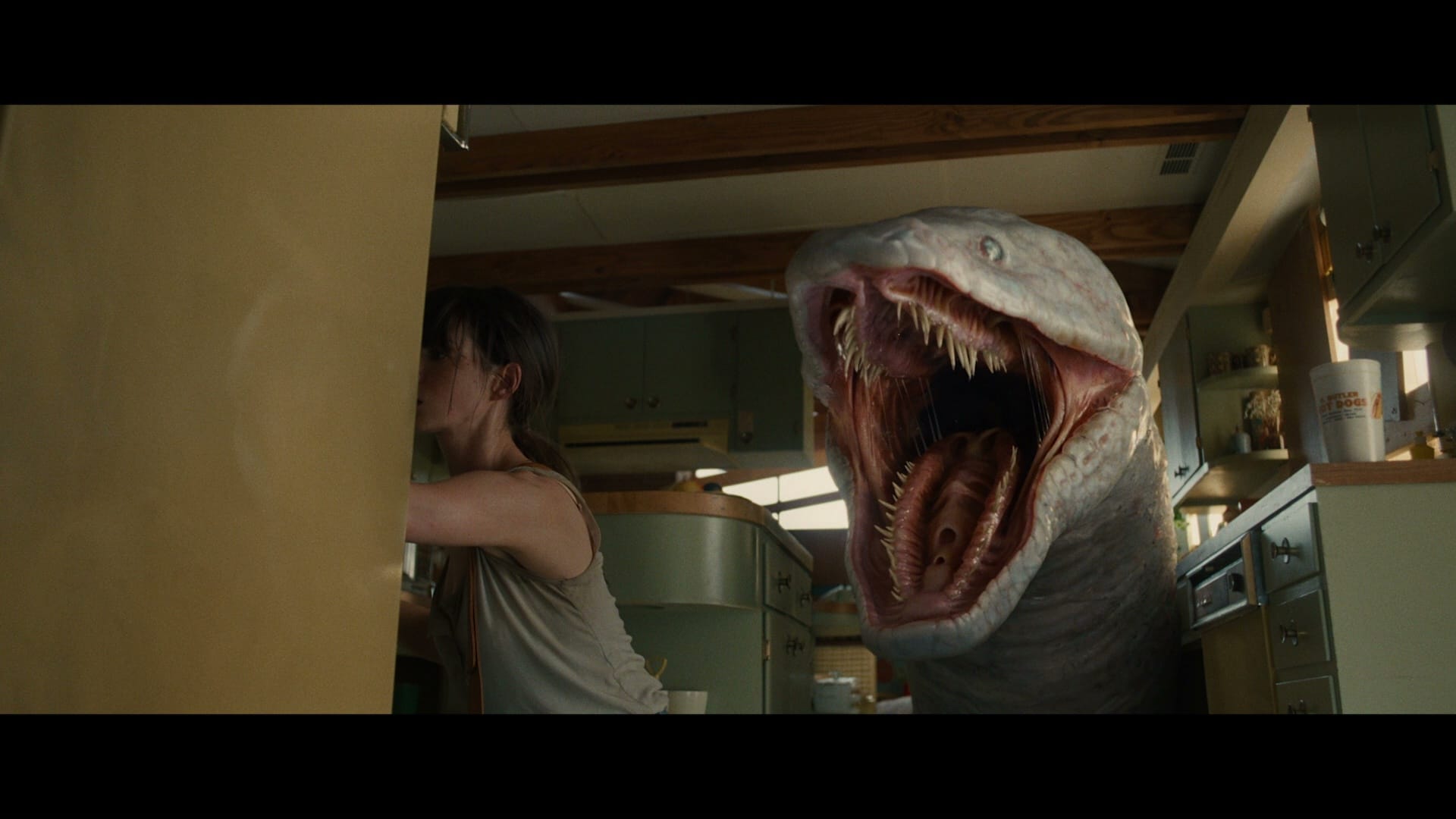
Warner’s 4K edition of The End of Oak Street is a beauty, with the 2160p presentation letting us appreciate how much work Mitchell and his cinematographer Mike Gioulakis have done to approximate the look of 1980s celluloid in a digital shoot. (These screen captures are sourced from the 1080p clips included in the special features, so they’re not quite as convincing. But trust me, it works.)
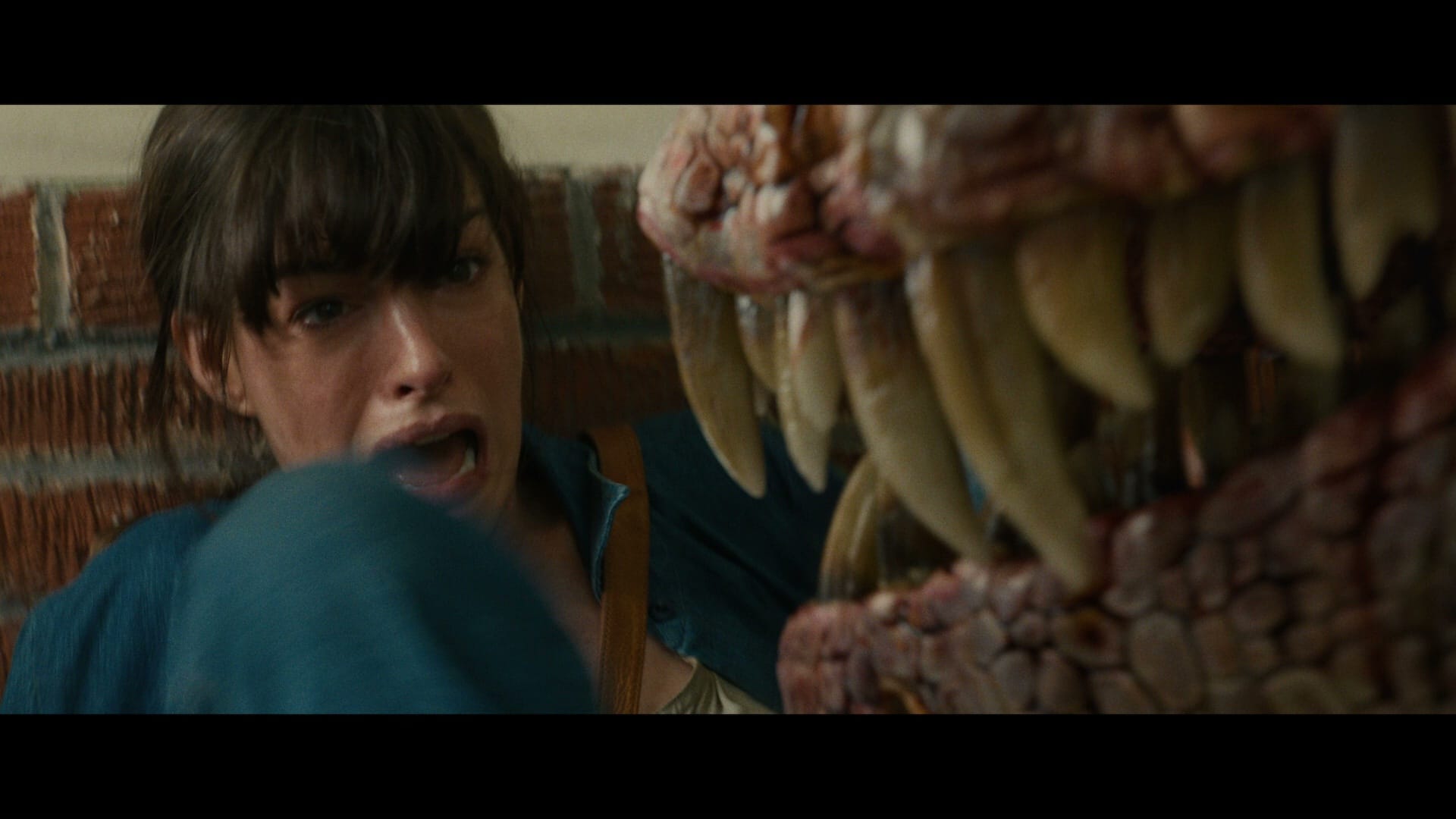
A trio of production featurettes offer 35 minutes of behind-the-scenes material, with a little more looseness than we’ve come to expect from polished major-studio advertorial. “Banding Together: The Making of The End of Oak Street” is the headliner, a 20-minute making-of with Mitchell and all four leads taking us through the whole project, with detours into the production design, creature development and cinematography. (Mitchell offers a quick explainer on the appeal of the split-diopter shots he and Gioulakis deploy throughout the film as a visual signature; he just thinks they’re neat!)
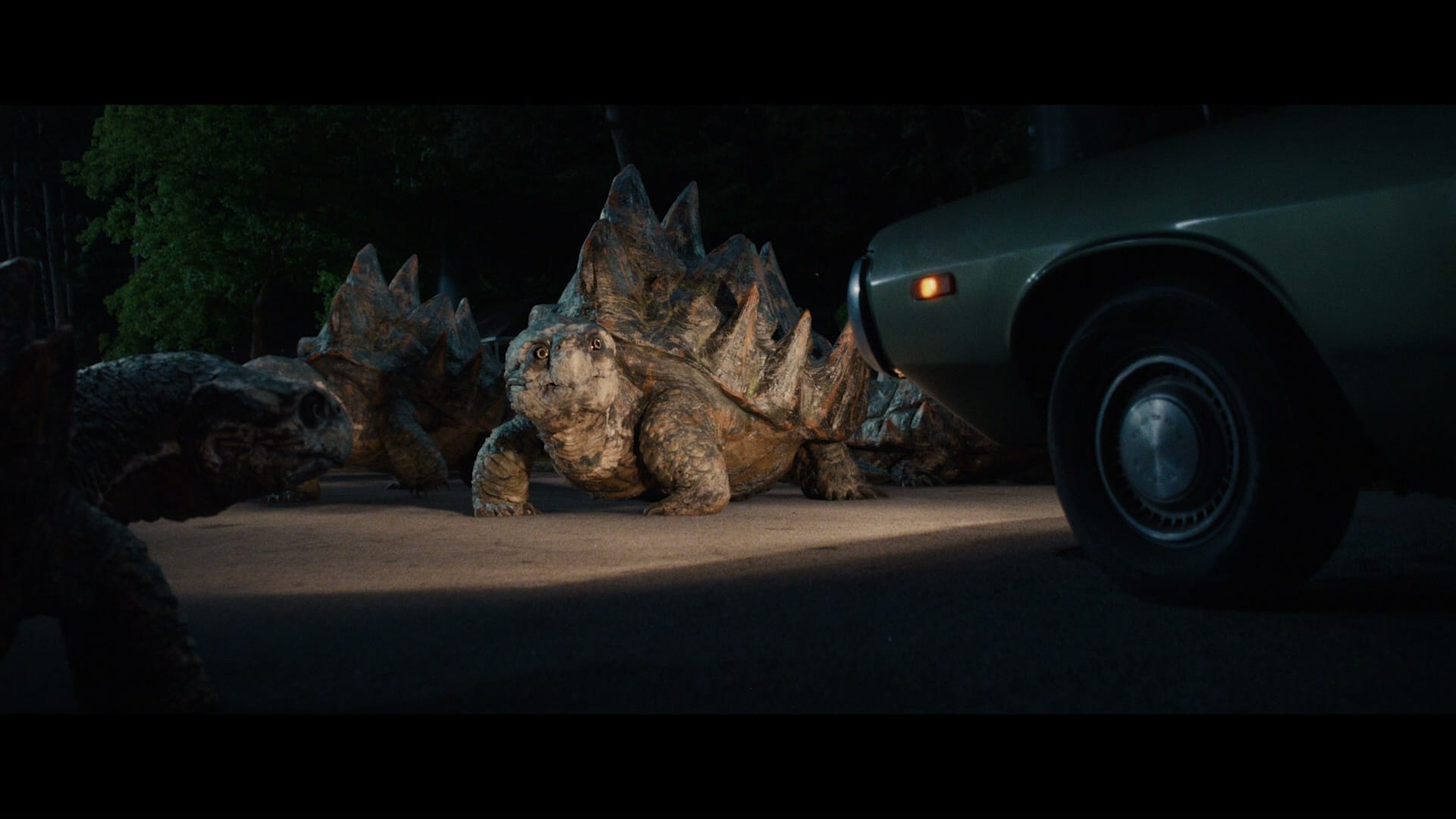
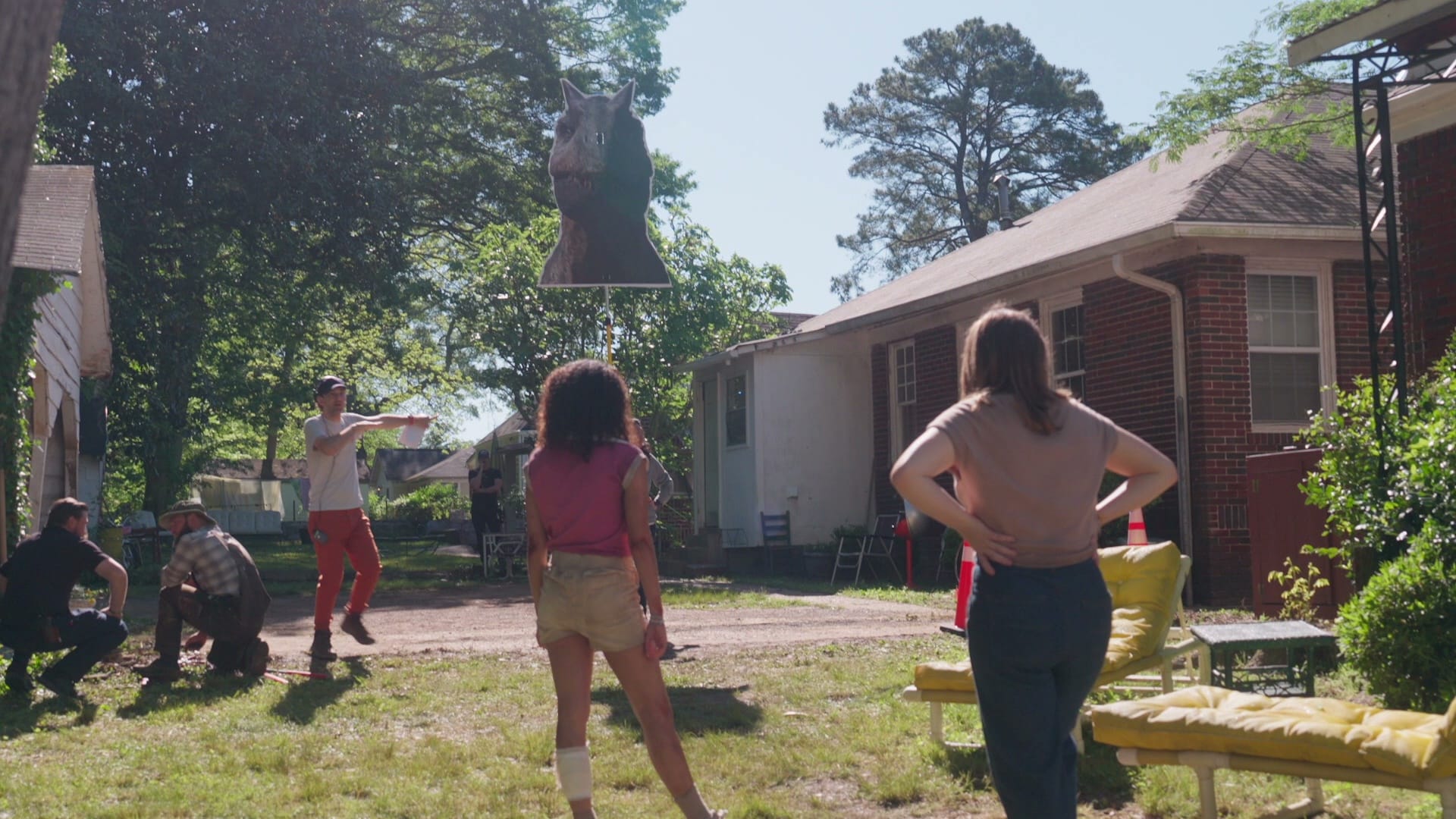
“Every Creature Tells a Story: The Dinosaurs of Oak Street” and “The Spinosaurus Attack: Driving Fear on Oak Street” are offcuts from the same EPK interviews, with cast and crew discussing the mechanics of the movie’s dinosaur sequences with real enthusiasm for the technical challenges they represented, and the ingenuity of Mitchell and the crew in solving those challenges. Convery shares his awe at watching Hathaway act the hell out of her scenes against broomsticks and pillows, while Hathaway admits she ruined more than a few takes by giggling at stunt performers in gray onesies.
Meanwhile, McGregor was faced with an entirely different acting challenge in the Spinosaurus sequence, having to scramble out of an up-ended sedan without kicking his Oscar-winning co-star in the jaw. Honestly, it sounds like everybody had a really good time on this one. So if you’ve been on the fence, it’s time to embrace the chaos.
Blue Heron is now available on Blu-ray under the Criterion Presents imprint; in Canada, it’s distributed by Cinema Cellar – and currently part of their big Criterion Collection sale. Grab it blind, you won’t regret it. And The End of Oak Street is now available in individual 4K and Blu-ray editions from Warner Bros. Discovery Home Entertainment. It’s fun!
Up next: The Odyssey, just as soon as it arrives. But in the meantime, let’s hear it for Aaron Reynolds and Adam Schoales, who both knew Christopher Nolan and Hoyt van Hoytema shot their Homeric epic entirely on IMAX 70mm film. (They weren’t the only readers who knew that, but they were the ones whose names came up in the draw!)