
Roads Not Taken
In which Norm forges a connection between BLACK SUNDAY and DRAGONSLAYER.
Well, that didn’t work out as planned. Due to a couple of shifted dates and a run of family obligations, this took even longer than I expected to come together. Sorry for the delay, but on the upside the next edition will hit your inbox in no time at all.
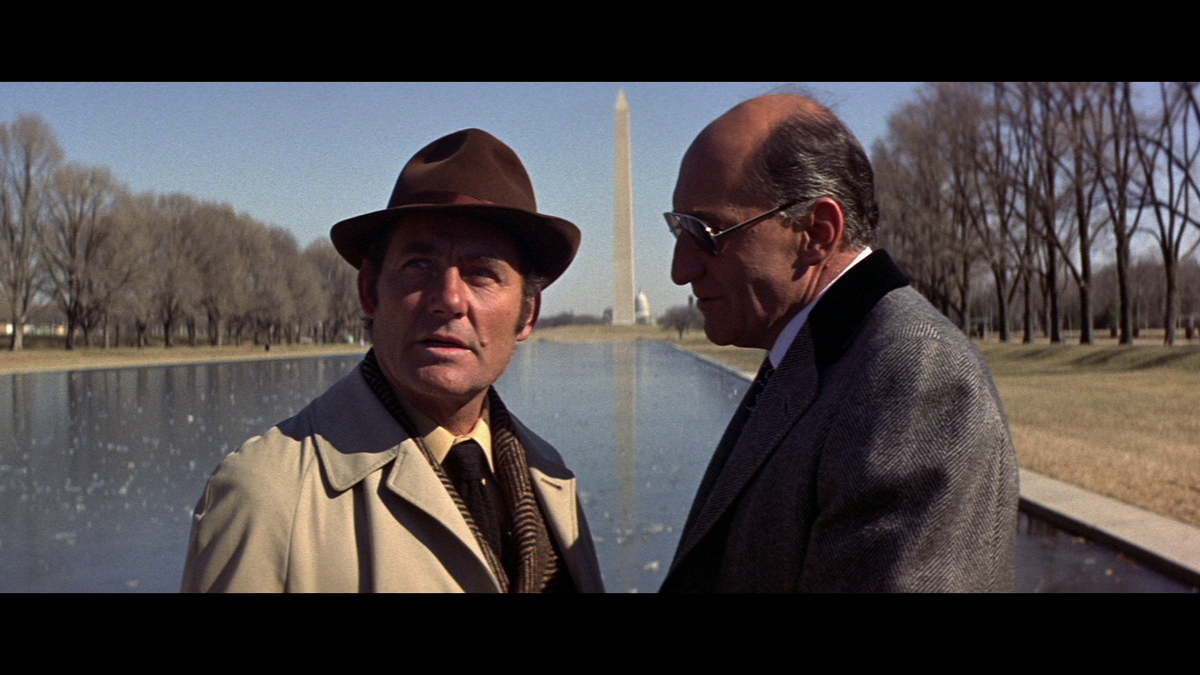
I noticed something about two discs that hit the shelves in recent weeks – specifically, Arrow Video’s new Blu-ray special edition of John Frankenheimer’s Black Sunday and Paramount’s Home Entertainment’s 4K restoration of Matthew Robbins’ fantasy epic Dragonslayer. Or rather, there was something about the movies that seemed to work in tandem.
I know, I know. How does an R-rated 1977 thriller about Israeli and American agents trying to thwart a Palestinian bombing of the Super Bowl resonate with a 1981 fantasy epic about a sorcerer’s apprentice doing his best to slay the dragon that’s been terrorizing a village for decades?
Well, here’s the thing. Both are well-executed, compelling works, representative of top-shelf studio productions for their era. Both of them were conceived and marketed as blockbusters, targeted to the mood of the moment. And both were considered misfires because they didn’t land as hard as hoped, at a point when mass media was starting to cover box-office grosses. But they do what they want to do, and they do it surprisingly well – and if you haven’t seen either film in a while they hold up just fine. But by the same token: Exactly who did they think they were making these for?
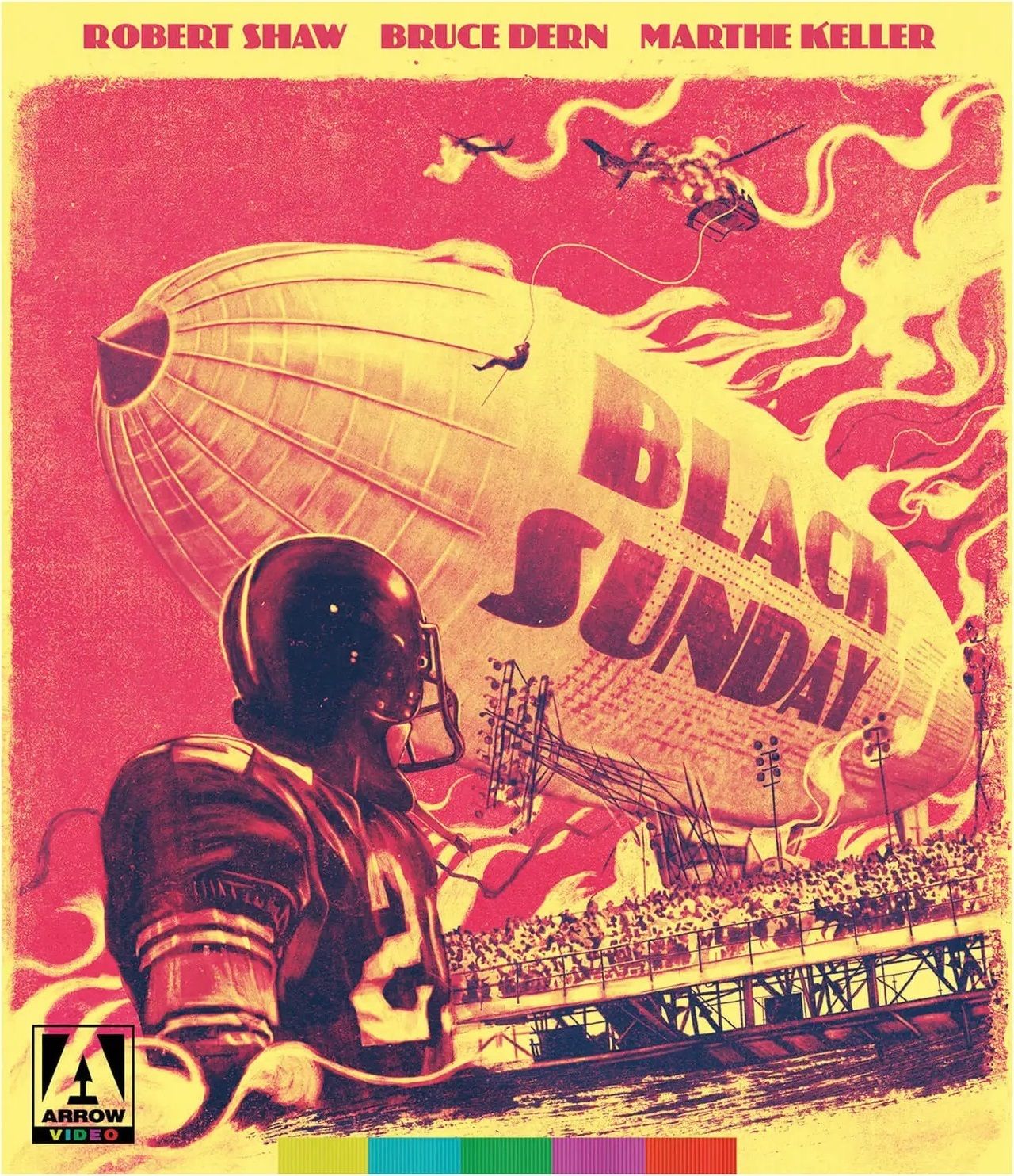
With Black Sunday, the remit is not complicated: Thomas Harris’ best-seller is a crackling procedural about a driven lawman trying to stop a terrorist attack, landing squarely in the middle of the Venn diagram between police procedurals and disaster movies that defined American studio movies in the 1970s. It’s The French Connection meets Earthquake! But then Jaws came along, so the Goodyear blimp also sort of plays the role of the shark, with the Super Bowl as Amity’s beaches on the Fourth of July.
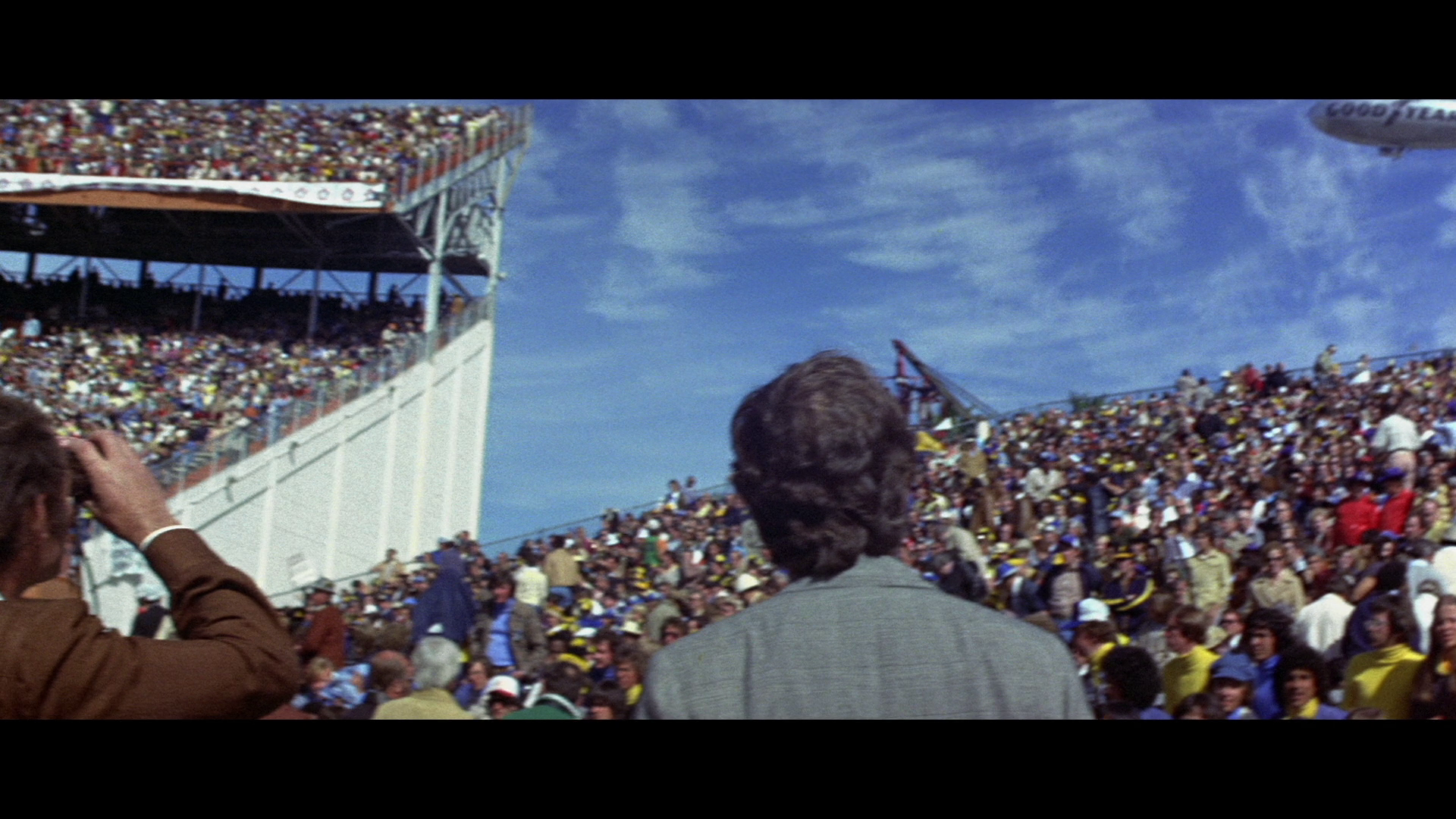
… wait, but doesn’t the Fourth of July sequence happen about halfway through Jaws, serving as the turning point of the story rather than the climax? And don’t most disaster movies give you the disaster before the last reel? Never mind, shut up, Robert Evans is producing this and nothing will stop him.
And honestly, the movie makes it all play; Harris’ novel is a meticulously paced thriller offering vividly written characters and hardly any of the feverish sadism that would became his bread and butter after Red Dragon, and as adapted by a trio of screenwriters (including the unparalleled Ernest Lehman) it translates very effectively to the screen, cutting between good guys Major Kabokov (Robert Shaw) and his CIA counterpart Sam Corley (Fritz Weaver) trying to piece together the where, when and how of a Black September attack on American soil and mastermind Dahlia Iyad (Marthe Keller) and her pawn Michael Lander (Bruce Dern), a traumatized Vietnam vet turned blimp pilot whose grudge against Uncle Sam makes him the perfect stooge to turn said blimp into a death machine.
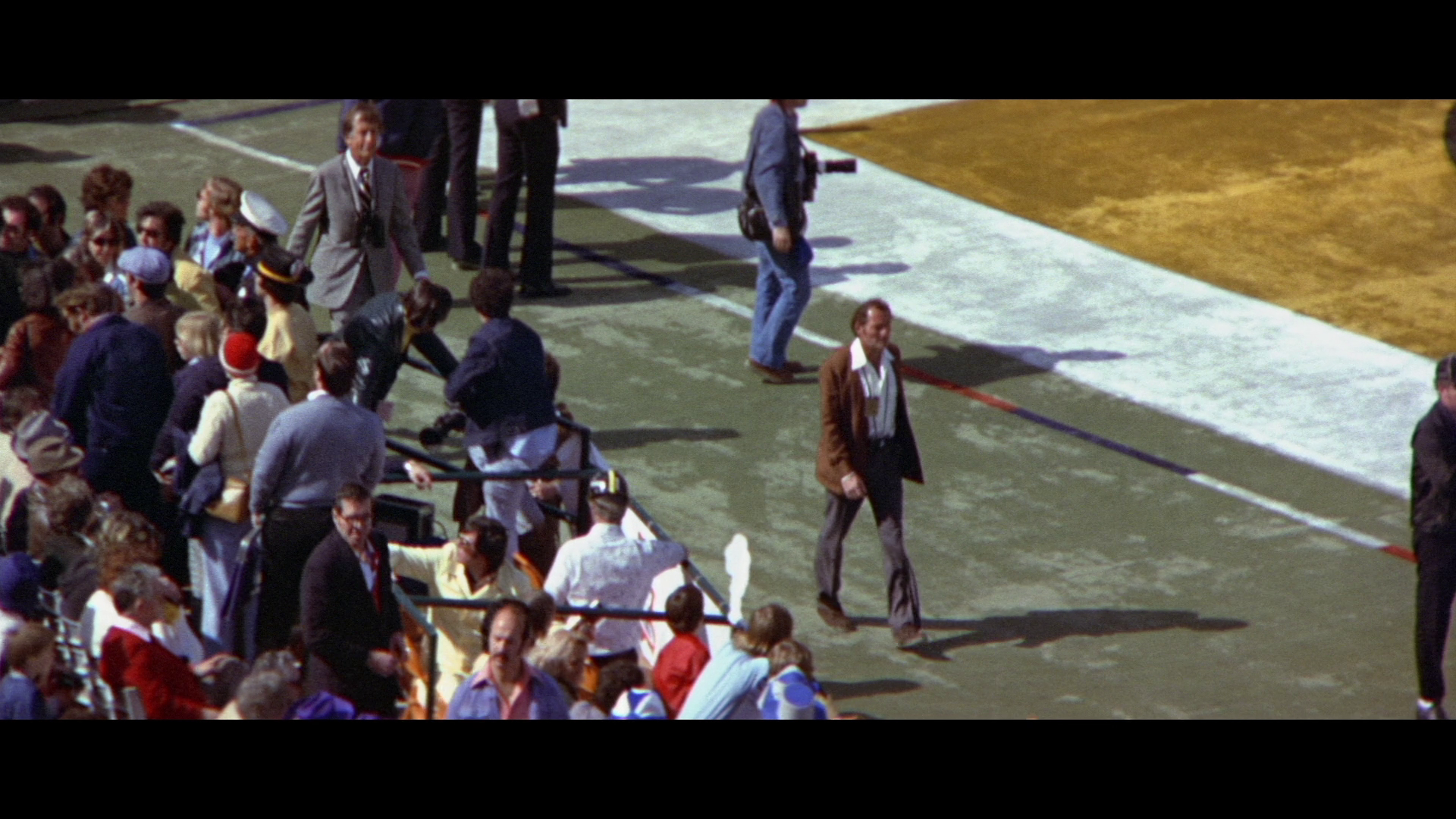
Frankenheimer’s decision to shoot the entire picture handheld gives the action a sense of breathlessness even in its quieter moments, and establishes a subtle documentary feel that helps convince us the Super Bowl sequences are really happening. As critic Sergio Angelini explains in a visual essay commissioned for this release, DP John A. Alonzo shot guerrilla-style at a number of actual games, even staging an incredible take of Shaw running through literally thousands of unassuming extras – by which point we don’t even question the complexity of such an endeavor.
And the smaller things that poke at our suspension of disbelief are balanced by other elements that feel more concrete: Shaw’s utterly unconvincing as a Holocaust survivor of Eastern European origin, but he stalks through the film as though he’s daring someone to call him on it, while the Swiss-born Keller shifts just slightly into the Teutonic for a delivery that, weirdly enough, sounds exactly like Arnold Schwarzenegger’s Austrian growl.
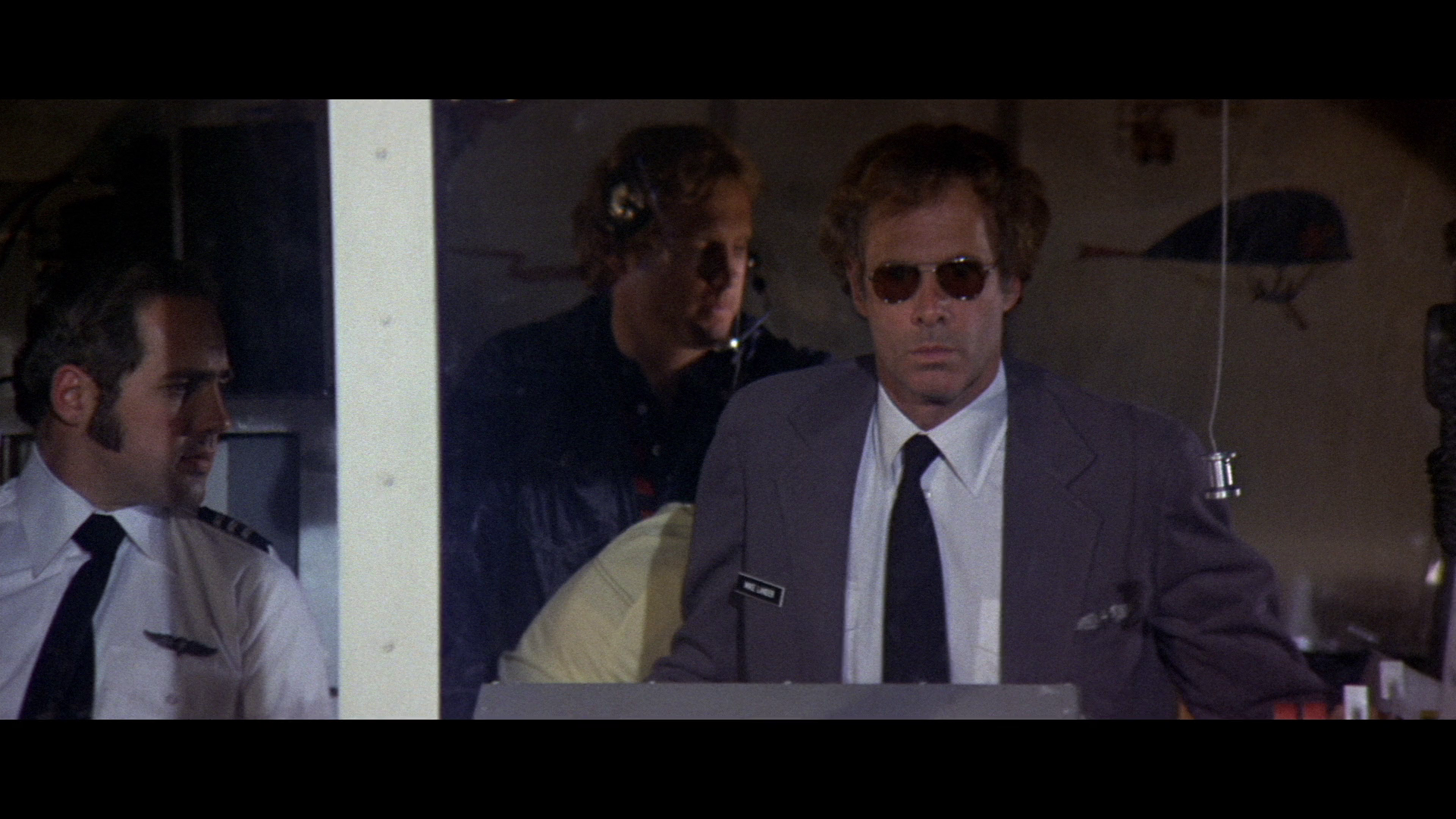
Similarly, the effects are best described as consistently inconsistent in that mid-70s way, with wild real-world aerial stunt photography intercut with shots of the cast grimacing against rear-projection backdrops. The finale is a letdown insofar as it’s the one time in the film that the pacing falters; the movie doesn’t end so much as stop short, leaving us wondering whether there was a coda left unfilmed. But that’s really the worst charge one can bring against Black Sunday … except for the other thing.
The other thing about Black Sunday is that the whole production is built on the calculation that this is what people will flock to see – to the point of fully giving away the shocking ending in every piece of marketing, from the trailer to the TV spots to the damn poster – when barely two months later, Star Wars is going to come along with its laser swords and space princesses to lay waste to all conventional wisdom. It’s a dinosaur that doesn’t know the comet is coming, and as such it’s an invaluable artifact.
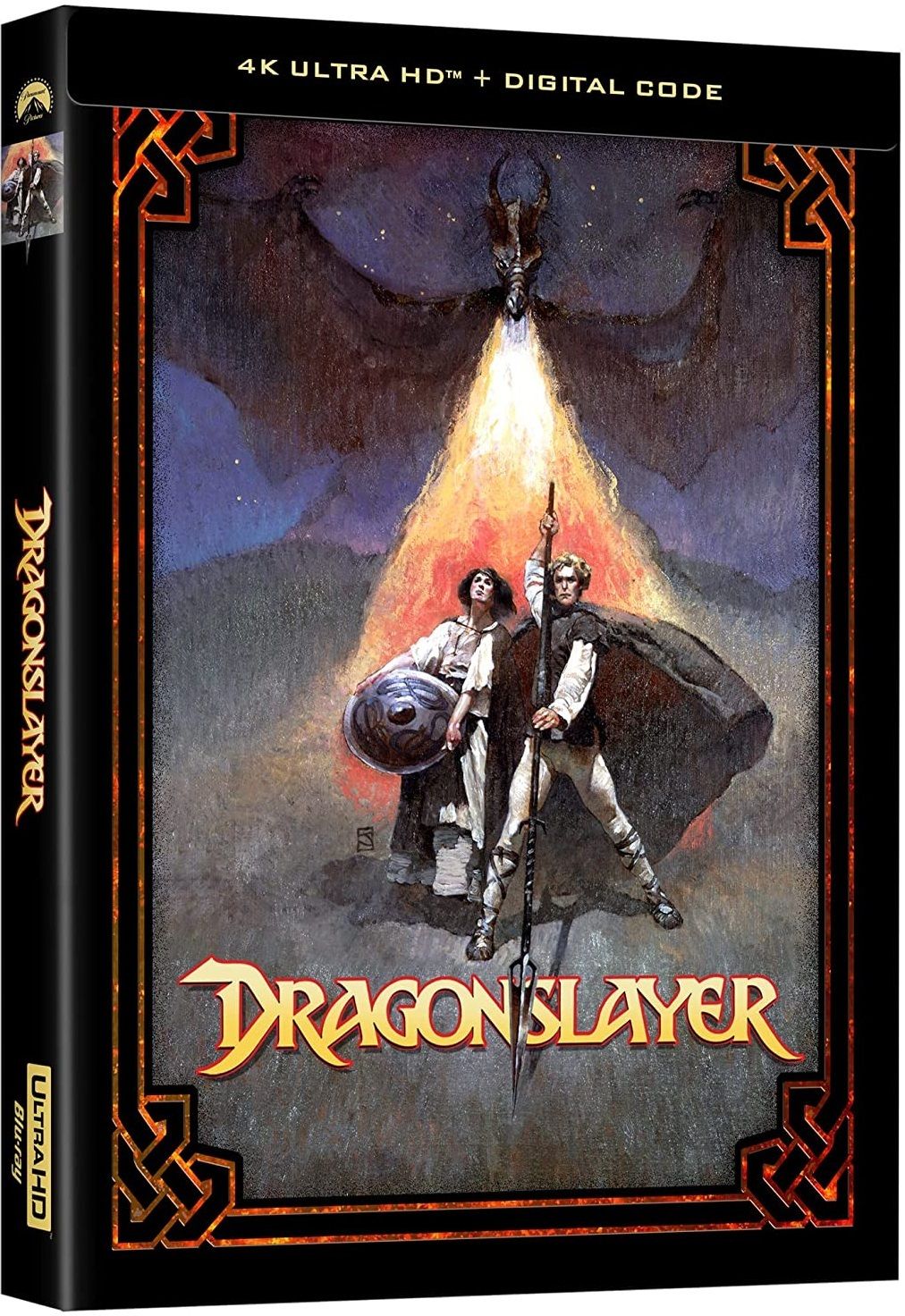
Dragonslayer was on the other side of the comet, and knew all about it, utilizing the ILM crew that had just finished working on The Empire Strikes Back to craft its still-spectacular visual effects. But its grimy, gloomy fantasy realm owes more to the New American Cinema than one might think; the film may have been shot in Wales and Scotland (and splendidly so, thanks to Alien cinematographer Derek Vanlint), but it’s the brainchild of producer Hal Barwood and director Robbins, longtime screenwriting partners who came up with Spielberg, Coppola, Lucas and Milius and shared their indie-forged aesthetic.
And damn, Robbins makes Dragonslayera singular experience. As he discusses in an hour-long retrospective documentary – and in an absolutely wonderful audio commentary moderated by frequent collaborator and die-hard Dragonslayer fanboy Guillermo Del Toro – the film may have been commissioned to ride the success of the Dungeons & Dragons gaming craze, but it quickly distinguishes itself from the game with a mature, eccentric take on its fantasy elements, and also by grounding its drama in the performance anxiety of Peter MacNicol’s Galen, an unprepared apprentice who must convince the dragon-plagued villagers of Urland that he shall slay the fearsome Vermithrax Pejorative, rather than his freshly cremated master Ulrich (Ralph Richardson, having a fine time playing an off-brand Gandalf).
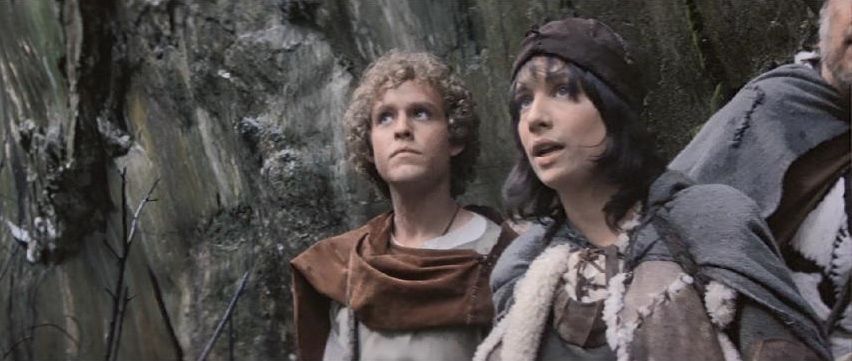
MacNicol is just great here, able to seem flustered and arrogant within the same breath and striking a charming chemistry with Caitlin Clarke’s Valerian, even before she’s revealed to be a young woman who’s been raised as a boy by her father to protect her from being sacrificed to the beast in the semi-annual virgin lottery of Ufland. The innocent Princess Elspeth (Chloe Salaman) has also been protected, thanks to her royal father’s interference; her decision to balance the scales will lead to a gross-out scene that still haunts those of us who saw the film as impressionable children. I believe this remains the only Walt Disney-branded film with both gore and nudity, though in all fairness I haven’t revisited Unidentified Flying Oddball in a long time.
Dragonslayer pushes against expectations in a number of other ways; it takes its time exploring the unenlightened brutality and cruelty of its world long before anyone does anything heroic; everyone’s sweaty and scared and kind of a jerk, even the king (a delightfully snooty Peter Eyre). The human antagonist, royal enforcer Tyrian, is basically a thug with a badge … which is fine, because he’s just a distraction until the dragon shows up, and dear god is it glorious.
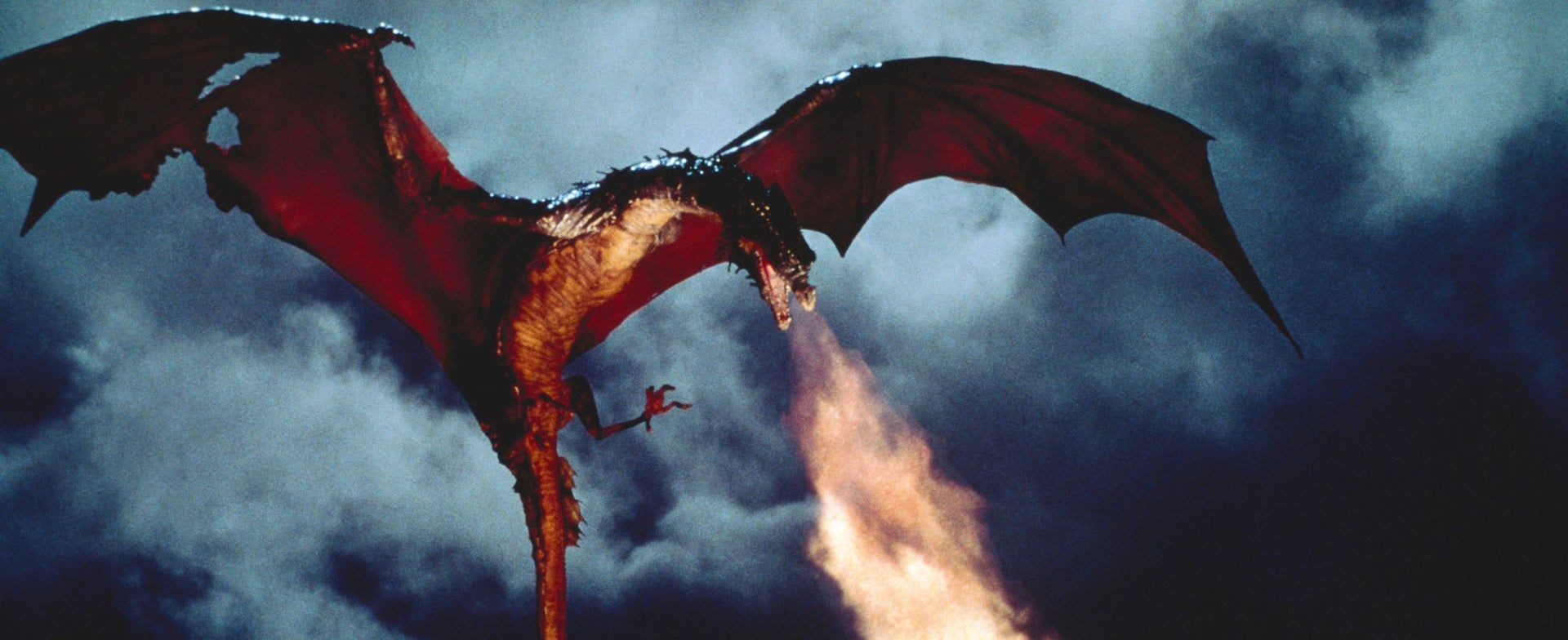
Realized through a combination of Dennis Muren’s giant animatronic parts, a Chris Walas puppet and Phil Tippett’s miraculous go-motion– which gets an entire chapter in that retrospective documentary – the beast marks a watershed moment in screen dragons which I’d argue has yet to be topped, forty years later. Once it’s revealed, the movie does get a little less dramatically interesting, but I can’t blame Robbins and Barwood for the number of loving shots of V.P. swooping and diving through a series of cloudscapes while our heroes work up the nerve to cast spells; their creation deserves every second of screen time it gets.
Was it what audiences wanted? Not in the summer of 1981, anyway; Raiders of the Lost Ark was rolling through cinemas like a giant boulder, offering a more confident hero and a somewhat less murky morality, though its climax is no less fantastical; I hope Robbins and Barwood took some solace in their movie being stomped by their dear friends, at least – and in the fact that the movie slowly found its audience over the decades, rising in the fantasy canon as more and more projects tried and failed to top its accomplishments.
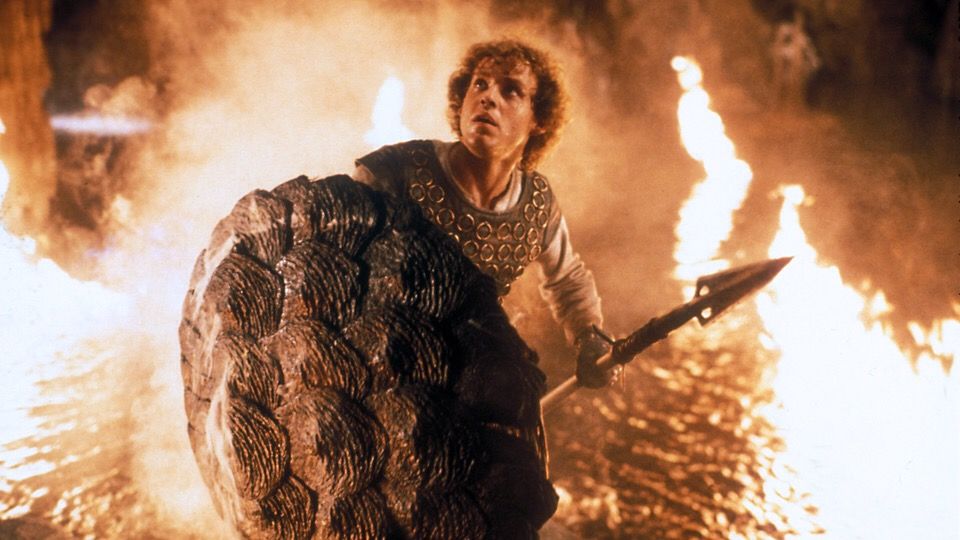
And I expect it’s about to be discovered all over again in this beautiful 4K restoration, which lets us appreciate all the fine details on costumes, every tarnished plate of armor, every flickering flame and damp stone wall that the DVD edition missed. I don’t doubt Peter Jackson studied its windswept exteriors while imagining the Lord of the Rings trilogy; Robbins and Barwood can’t really complain, having stolen Ulrich’s death and resurrection from Tolkien in the first place.
So there we are. Two movies, both alike in release and reputation, now restored and ready to dazzle you on disc. Or at least Dragonslayer is; Black Sunday’s more about making you nervous. But game recognize game, and all that.
Black Sunday is available on Blu-ray from Arrow Video. Dragonslayer is available in 4K and Blu-ray editions from Paramount Home Entertainment. Go get ’em both.
Coming up: Paramount upgrade the Picard-era Star Trek movies in 4K, Warner restores a few more classics and I celebrate Cohen Media Group’s ongoing Jacques Rivette project. Will I get these to you on time? Here’s hoping!