
Seduction of the Innocent
In which Norm spins up new discs of PENNIES FROM HEAVEN, LITTLE SHOP OF HORRORS, FRANKENHOOKER and THE POPE'S EXORCIST.
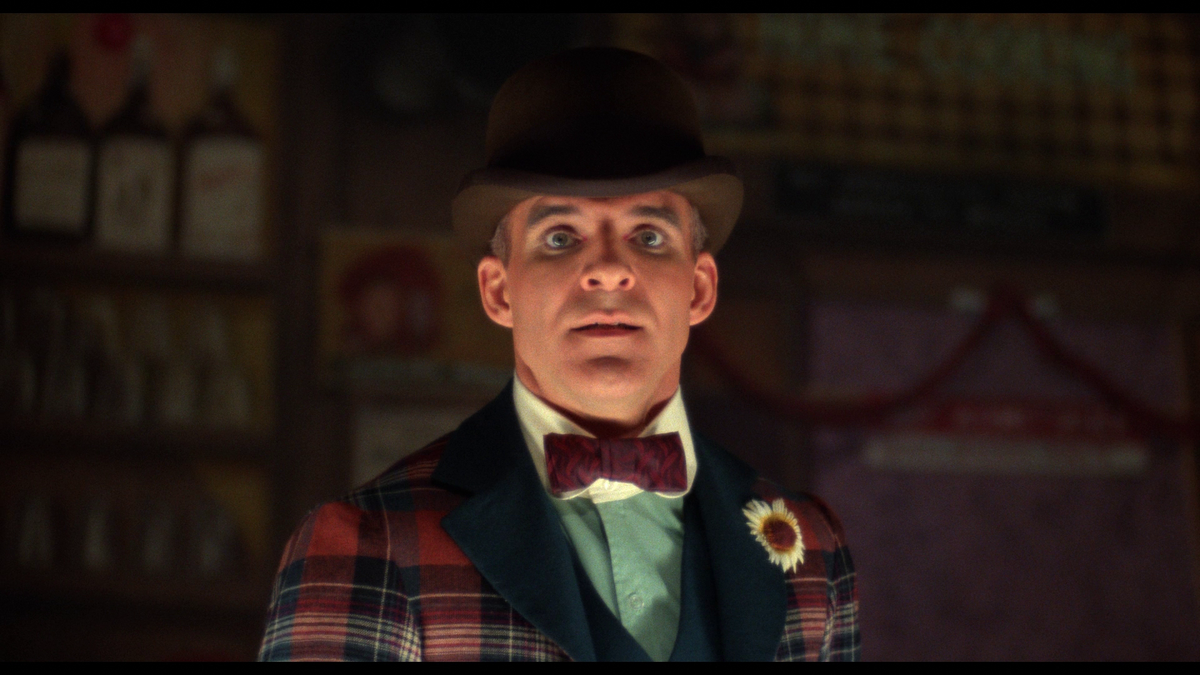
I’ve been writing about home video for almost forty years now – please just let that observation slide, I don’t want to think about it – and the one thing I’ve learned is that there’s always a way to connect the dots between entirely unrelated works that just happen to be hitting the shelves at the same time. That’s my secret, Cap. I find the narrative.
And even then, this column felt especially challenging. How does one stitch together the four movies that all showed up around the same time – three of them produced between 1981 and 1990, and the fourth just three years old? Well, two of them have Steve Martin in ’em, so let’s start there.
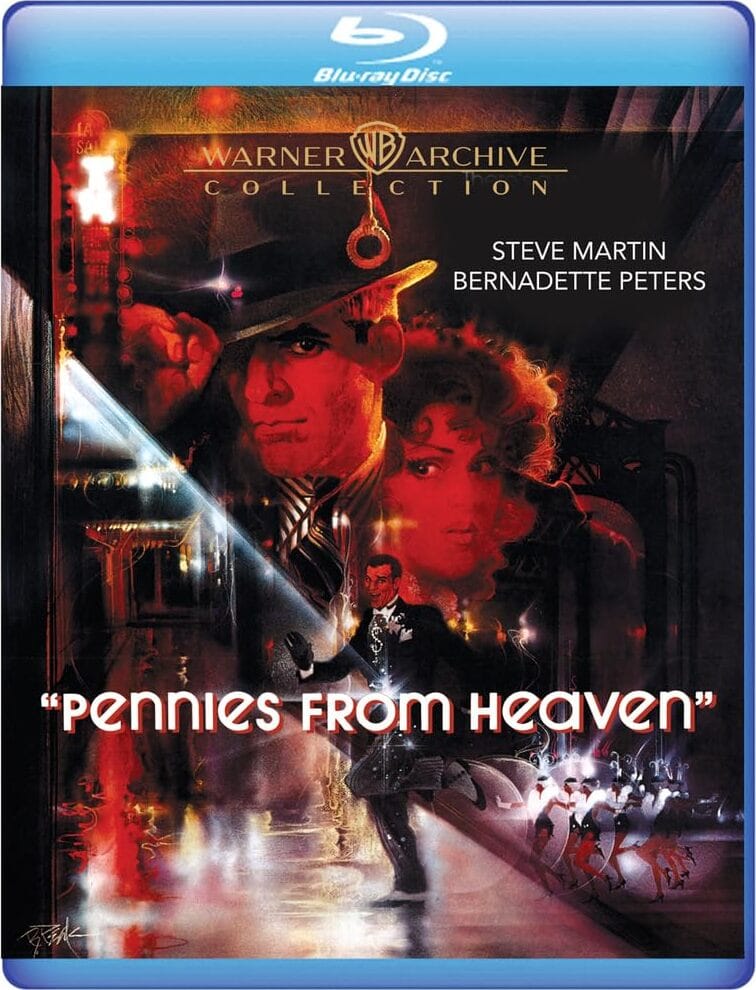
Specifically, let’s start with Pennies from Heaven, the 1981 adaptation of Dennis Potter’s daring BBC drama about a struggling sheet-music salesman in the 1930s who escapes his increasingly despairing life by imagining elaborate production numbers in which everything’s coming up roses. Martin’s first project after the $100 million smash of The Jerk, it was meant to showcase his versatility as an actor and a dancer, demonstrating he could be more than just a wild and crazy guy.
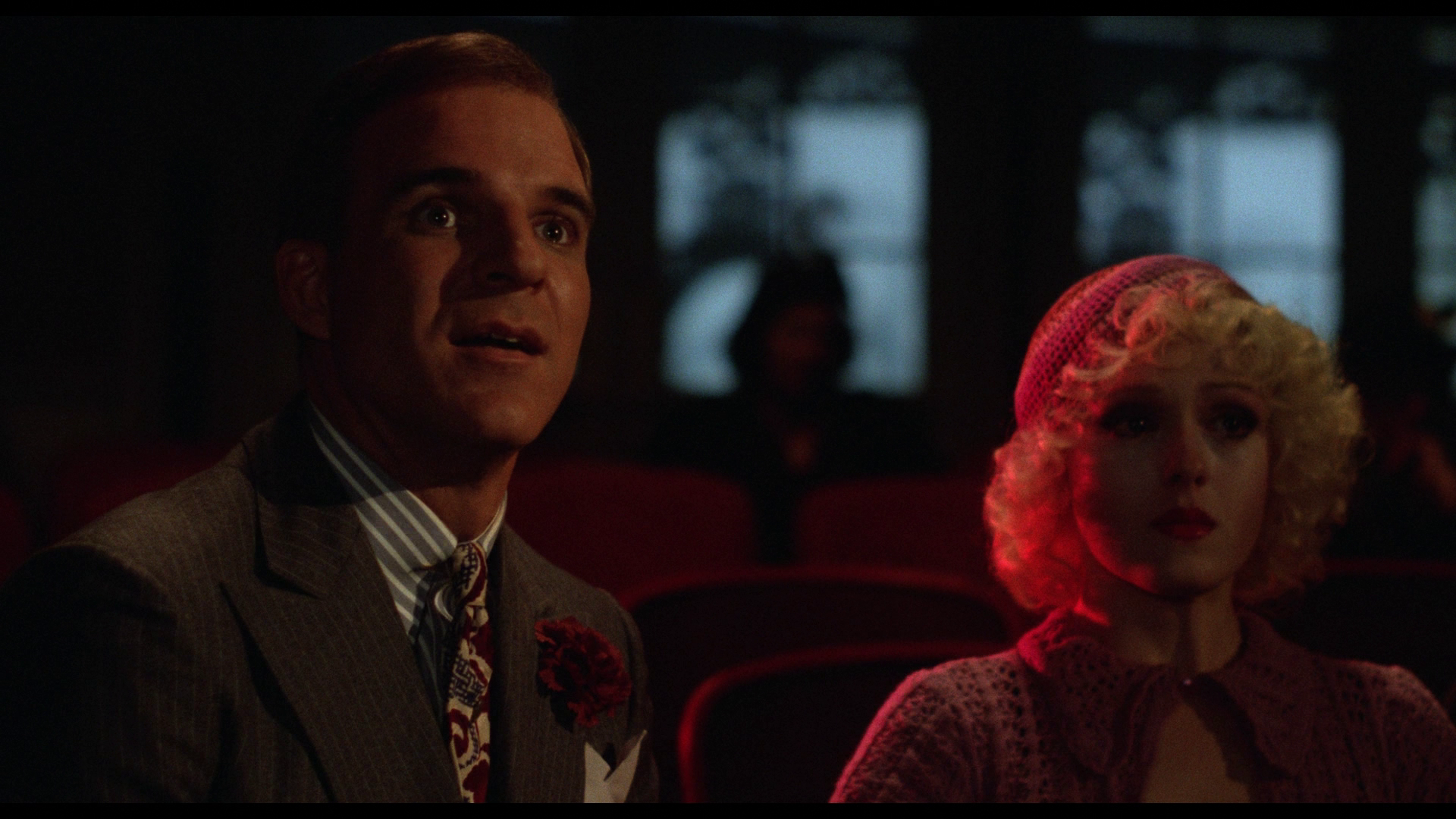
It was a huge swing at the time, and audiences simply were not ready to accept Martin as a complex lead in a dark character study. I also wonder whether the casting of his Jerk co-star Bernadette Peters led people to expect some sort of goof on Golden Age movie musicals. Pennies from Heaven is decidedly not that; director Herbert Ross takes the Depression-era setting very literally, shrouding the characters in gloom and darkness. The lightness of the musical fantasies – in which the actors mime enthusiastically to the tinny original recordings of “Yes, Yes,” “Life is Just a Bowl of Cherries,” “It’s a Sin to Tell a Lie” and other hits of the era – is played as entirely ironic.
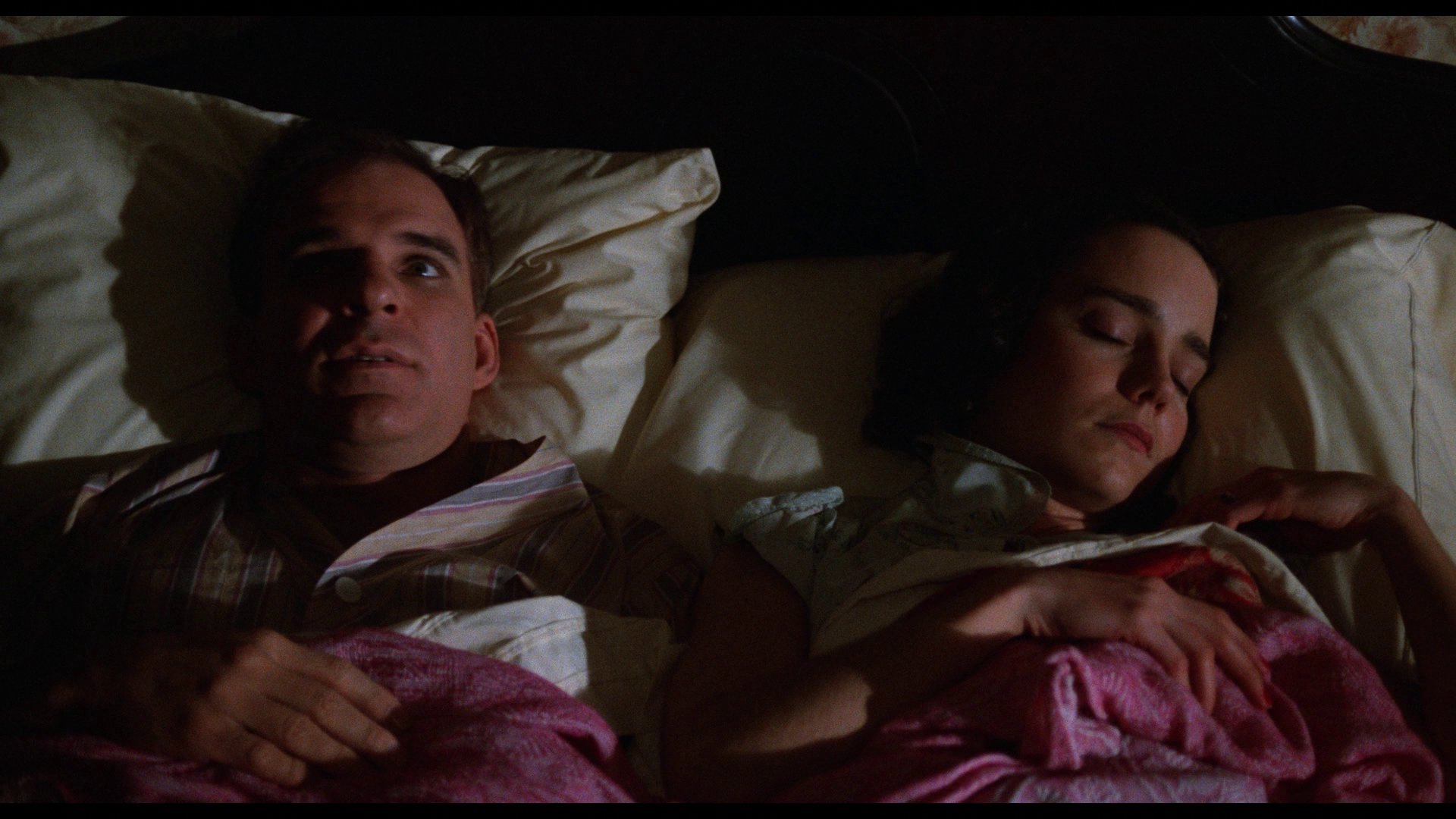
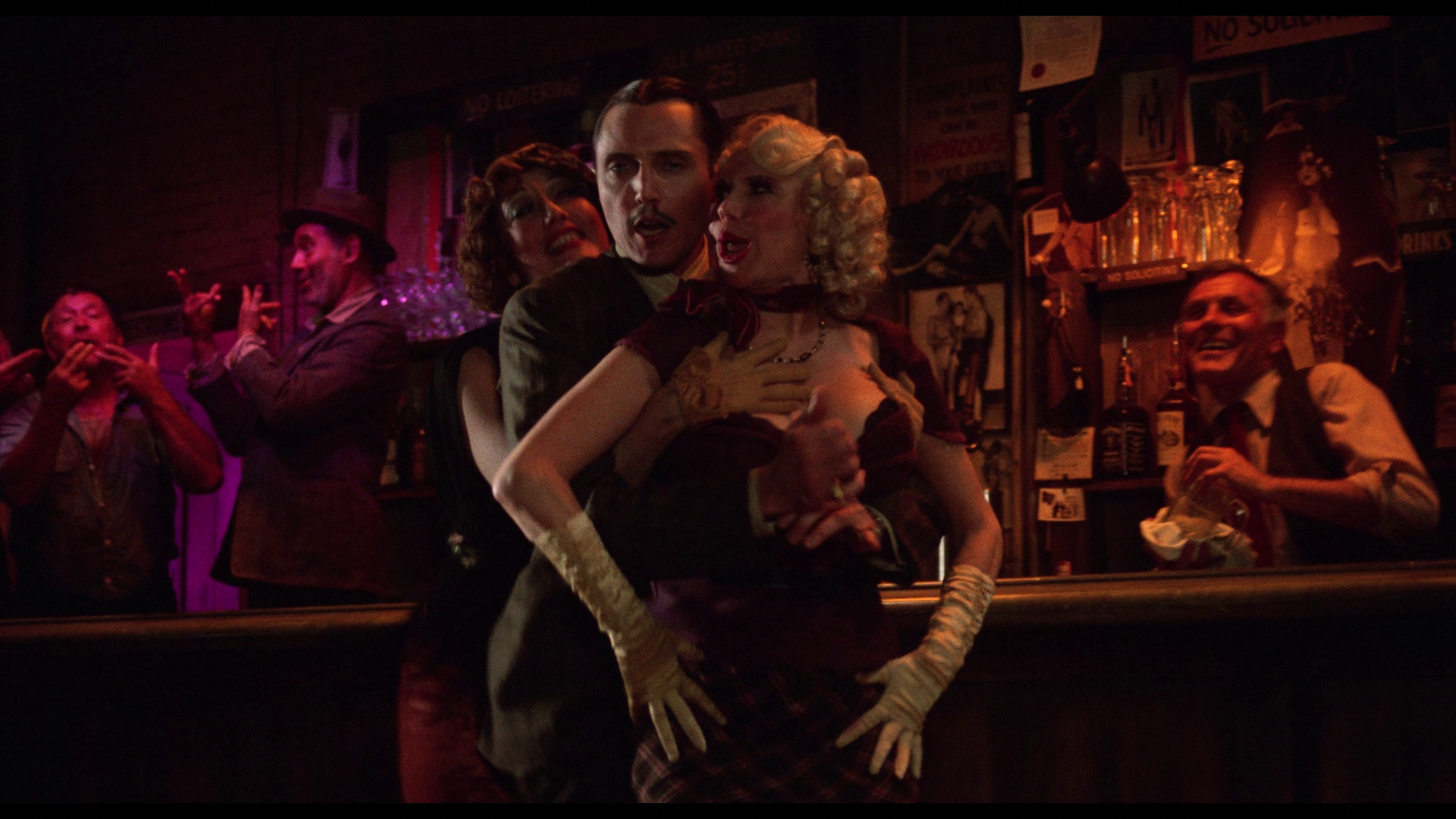
The story is Potter through and through, a catalogue of miseries stacked up on one another. Martin plays Arthur Parker, who responds to an initial setback by leaving his wife Joan (a soulful, heartbreaking Jessica Harper) for Peters’ schoolteacher Eileen, only to abandon her and return home. Now jobless and pregnant, Eileen falls into the circle a charismatic pimp (Christopher Walken, dripping with oily charm), and when Arthur finds her again she’s reinvented herself as a sex worker called Lulu. Things only get darker from there.
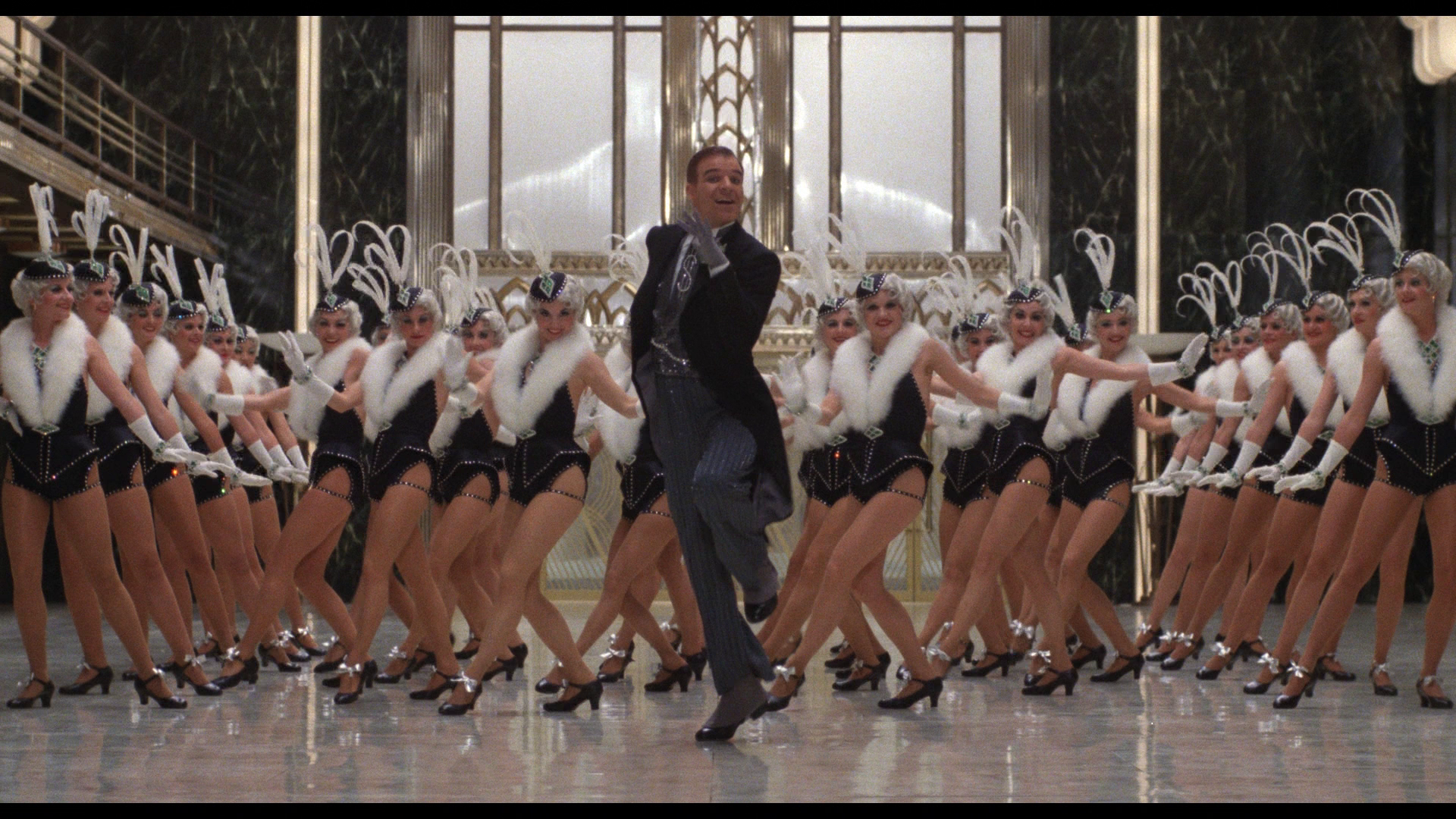
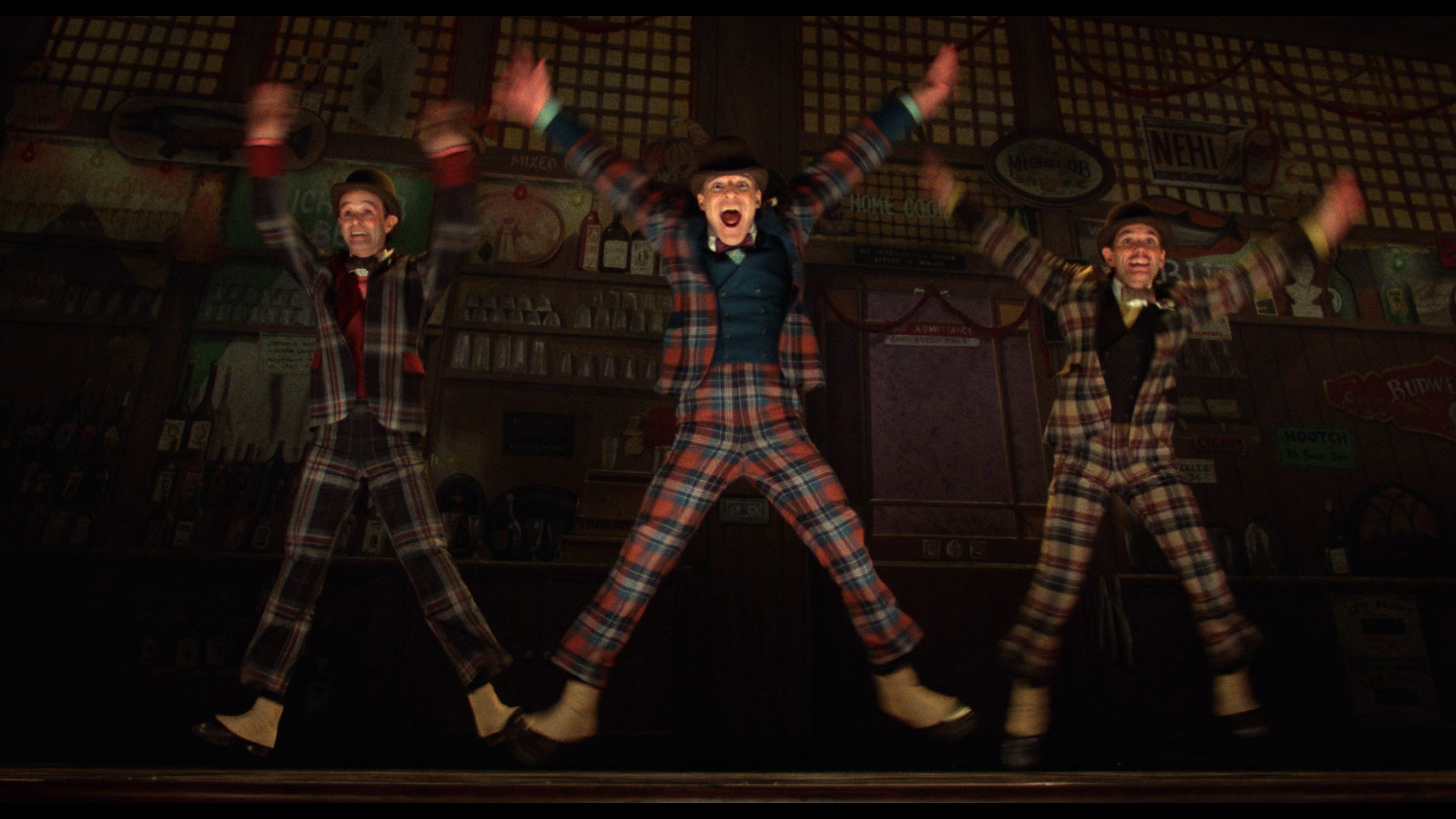
It’s a catalogue of miseries, sure, and it was certainly not what audiences were looking for in a Steve Martin holiday-season picture. But it’s good, and Martin is quietly great as the deluded Arthur, a pathetic man who’s convinced he’s been robbed of the happiness and security he deserves. (Potter was a prophet, folks.) The splashy production numbers – created in consultation with legendary production designer Ken Adam – feel like uncanny replications of the musicals of the era, populated by dancers whose frozen smiles and mechanical moves seem to mock the earnest performances of Martin and Peters. Only Walken gets to push against the contextual barrier in a stunning version of “Let’s Misbehave,” showing us the full force of Tom’s corrosive charms in a bravura number.
Martin doesn’t talk about Pennies from Heaven much these days – the only special features Warner’s beautifully restored Blu-ray, a scholarly commentary from critic Peter Rainer and a round-table session with Martin, Harper, producer David Chasman, executive producer Rick McCallum, editor Richard Marks, art director Bernie Cutler and costume designer Bob Mackie (!) – were produced for the 20th anniversary DVD some 25 years ago.
But it’s clear he took the film’s failure personally, throwing himself into a string of goofy genre projects, most of them directed by Carl Reiner. But he also made The Lonely Guy, which turned out to be a fascinating tug of war between Martin’s desire to play a grounded human being and Universal’s insistence on producing a Steve Martin comedy. And that’s what audiences wanted to see … so much so, in fact, that when Frank Oz was bringing the off-off-Broadway musical Little Shop of Horrors to the big screen, there was only one actor he wanted for the role of Dr. Orin Scrivello, DDS.
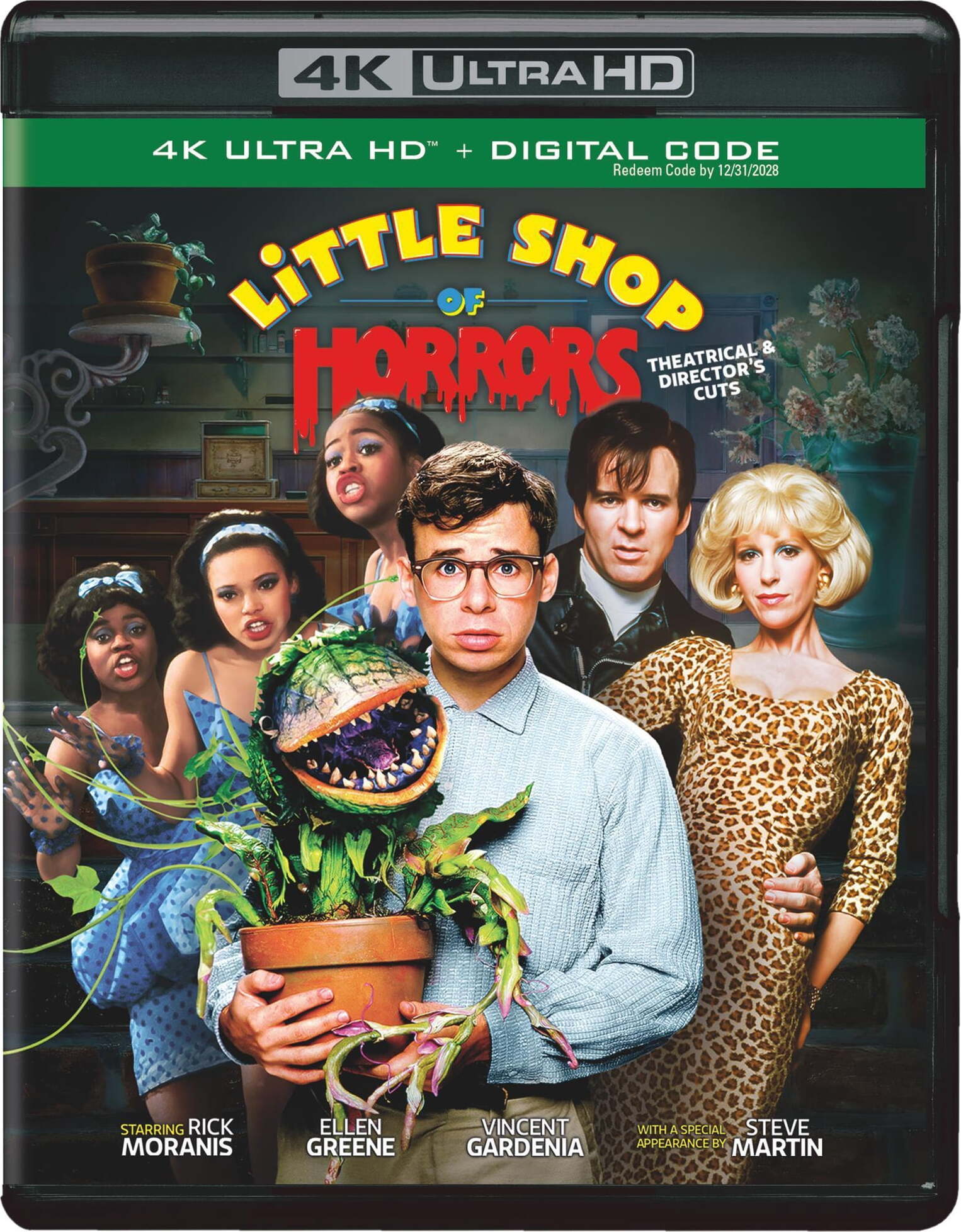
Martin’s nitrous-huffing sadist is just an extended cameo, really; in Howard Ashman and Alan Menken’s original stage concept, the role of Orin the Dentist was one of several bit parts played by a single actor. That couldn’t work on the big screen, so Oz brought in Martin to steal the show as the Elvis-coded greaser villain. My preview audience burst into applause when Martin first appears on-screen, riding his motorcycle against a very obvious rear-projection plate. And why wouldn’t they? He’s the best!
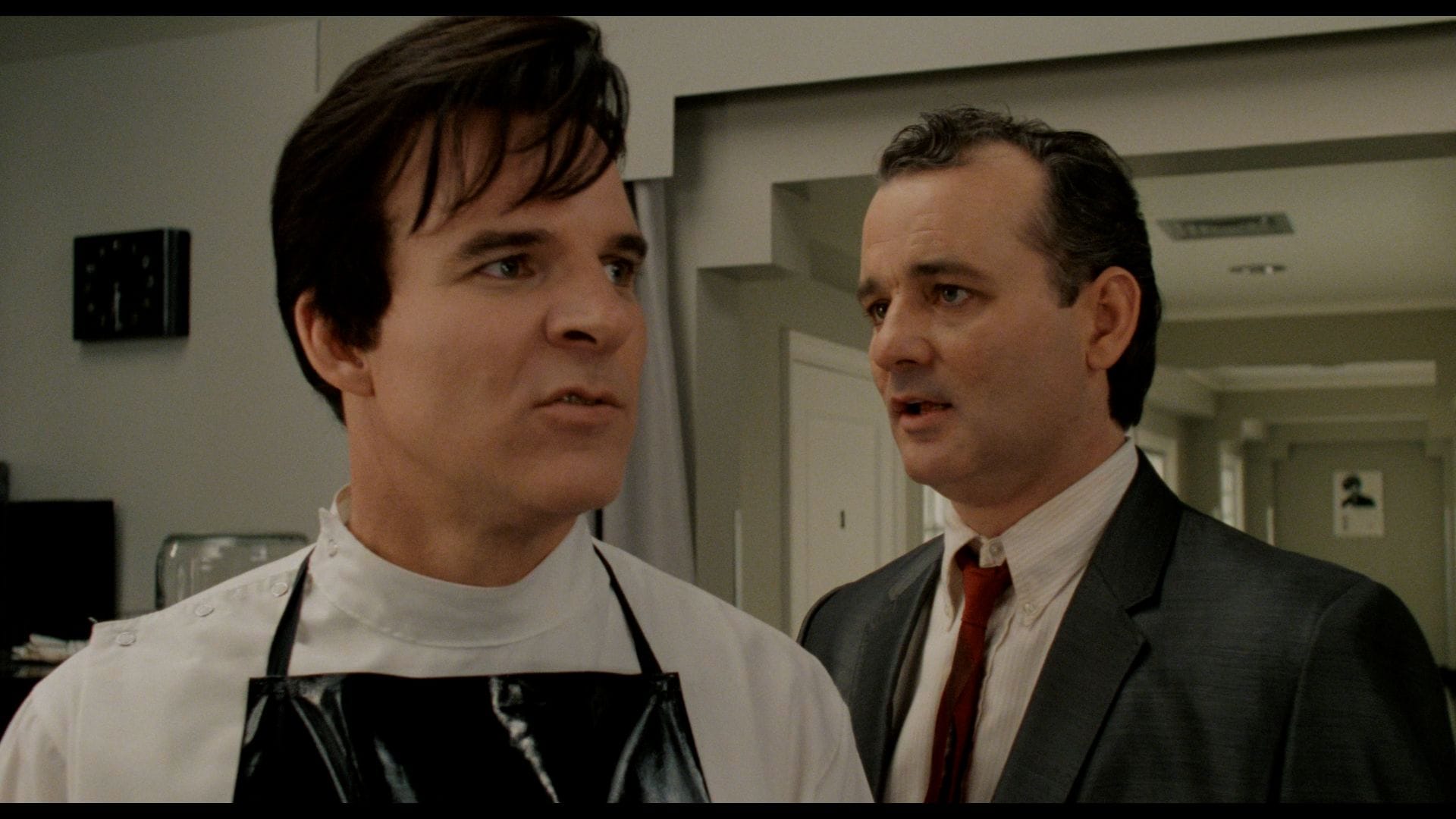
As a die-hard fan of the stage musical, I have some quibbles with the way Oz reshaped the material for the movie. Several great numbers were dropped or reworked into the dialogue, including the great duet between Orin and his hesitant assassin Seymour Krelborn. Maybe it’s just my Ashman and Menken worship – the musicals they made together are among the best of their era – but it’s always felt to me like cutting the songs makes the movie feel even stagier than the play.
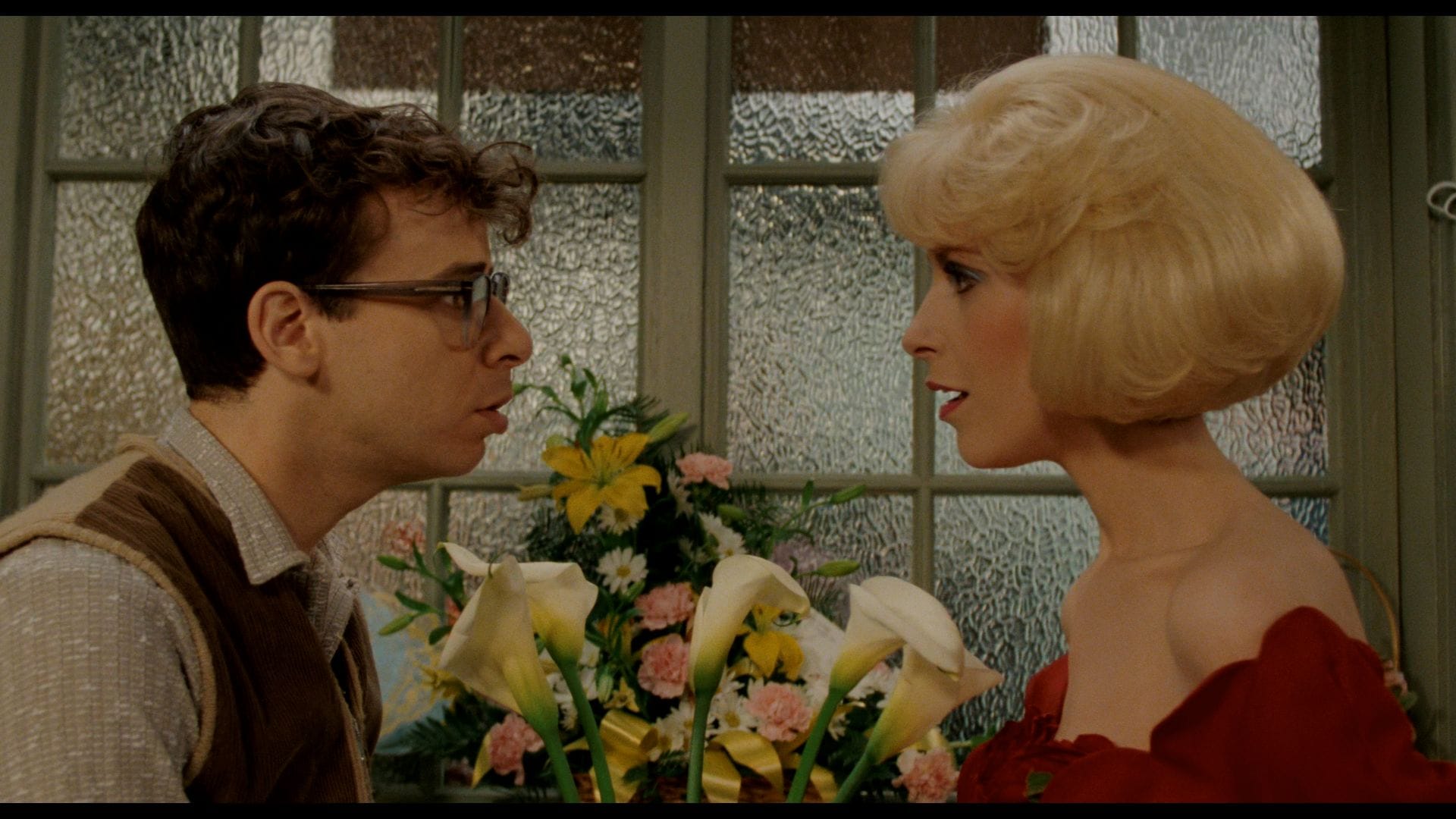
Not that Rick Moranis isn’t a great Seymour, or that Ellen Greene isn’t the definitive Audrey, having originated the role on stage. And the deliberate artifice I mentioned earlier is a lovely way to connect the movie – shot entirely on Pinewood’s 007 stage in England – to both its theatrical origins and the low-rent production of the Roger Corman movie that started it all. It’s also maybe why Oz’ original ending doesn’t work.
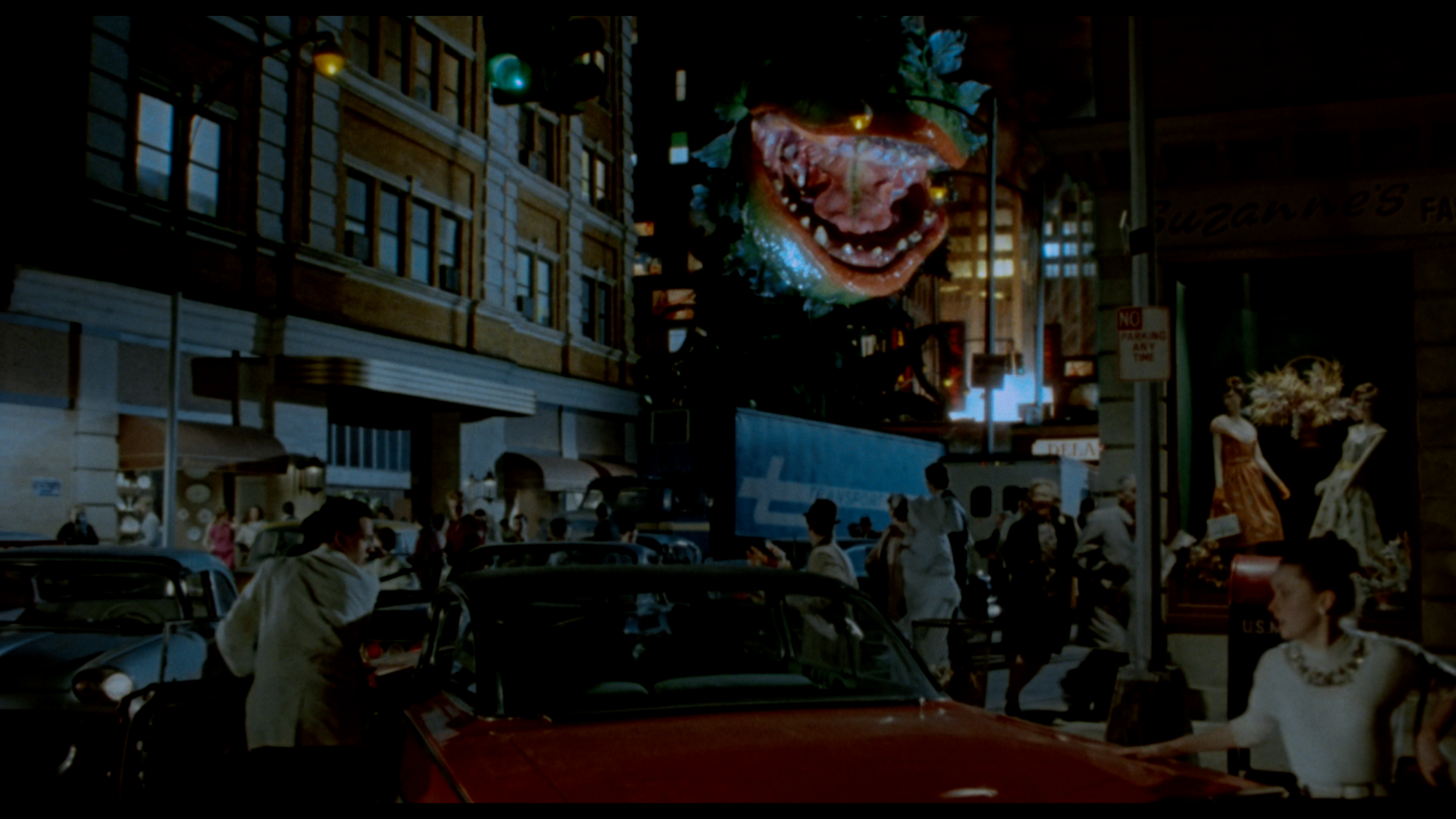
I know, I know! After the initial controversy, and all the various roadblocks to ever seeing it, it’s heresy to suggest the self-consciously cheesy “Don’t Feed the Plants” finale – with Seymour failing to stop Audrey II, leading to rampaging megaflora laying waste to American cities, kaiju-style – wasn’t the best ending for Little Shop ’86. But even now, with the last reel restored in UHD and remixed for Dolby Atmos, it’s clear that Oz loses control of the picture once it expands beyond the confines of Mushnik’s Flower Shop. You can see the strain start in the DC version of “Mean Green Mother from Outer Space,” which is much tighter in the theatrical cut.
The miniatures and process effects are glorious, and the song is a lot of fun, but the sequence goes on way too long, losing power with each successive re-creation of ’50s sci-fi chaos. We just watched Seymour feed his beloved to the monster, and fail in his attempt to destroy Audrey II; it worked onstage because of the illusion of live performers and puppetry, but the cinematic suspension of disbelief works against the story’s intentions here.
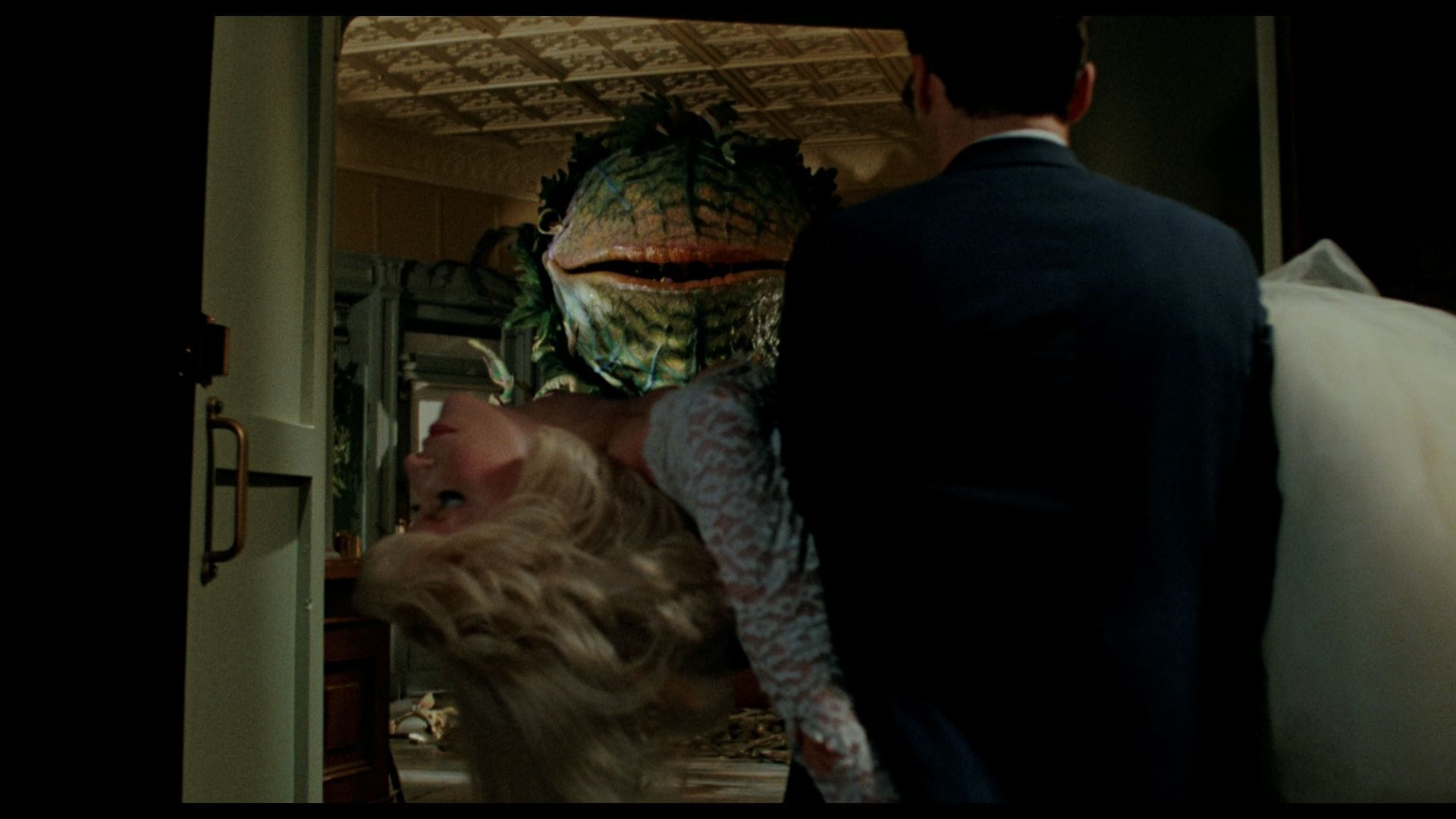
It’s just too much to ask. The replacement ending, with a last-minute win for Seymour and a cheeky “The End?” style coda that feels more in line with the era, really was what this version of Little Shop needed.
Fortunately, both versions of the movie are included on Warner’s 40th anniversary 4K release, splendidly restored in UHD and remixed in Atmos – though that track is missing a couple of Levi Stubbs’ warbles when Audrey II is electrocuted at the end of the theatrical cut. (Hopefully Warner will offer a corrected disc at some point; until then, you can switch to the original theatrical stereo for the intact audio.)
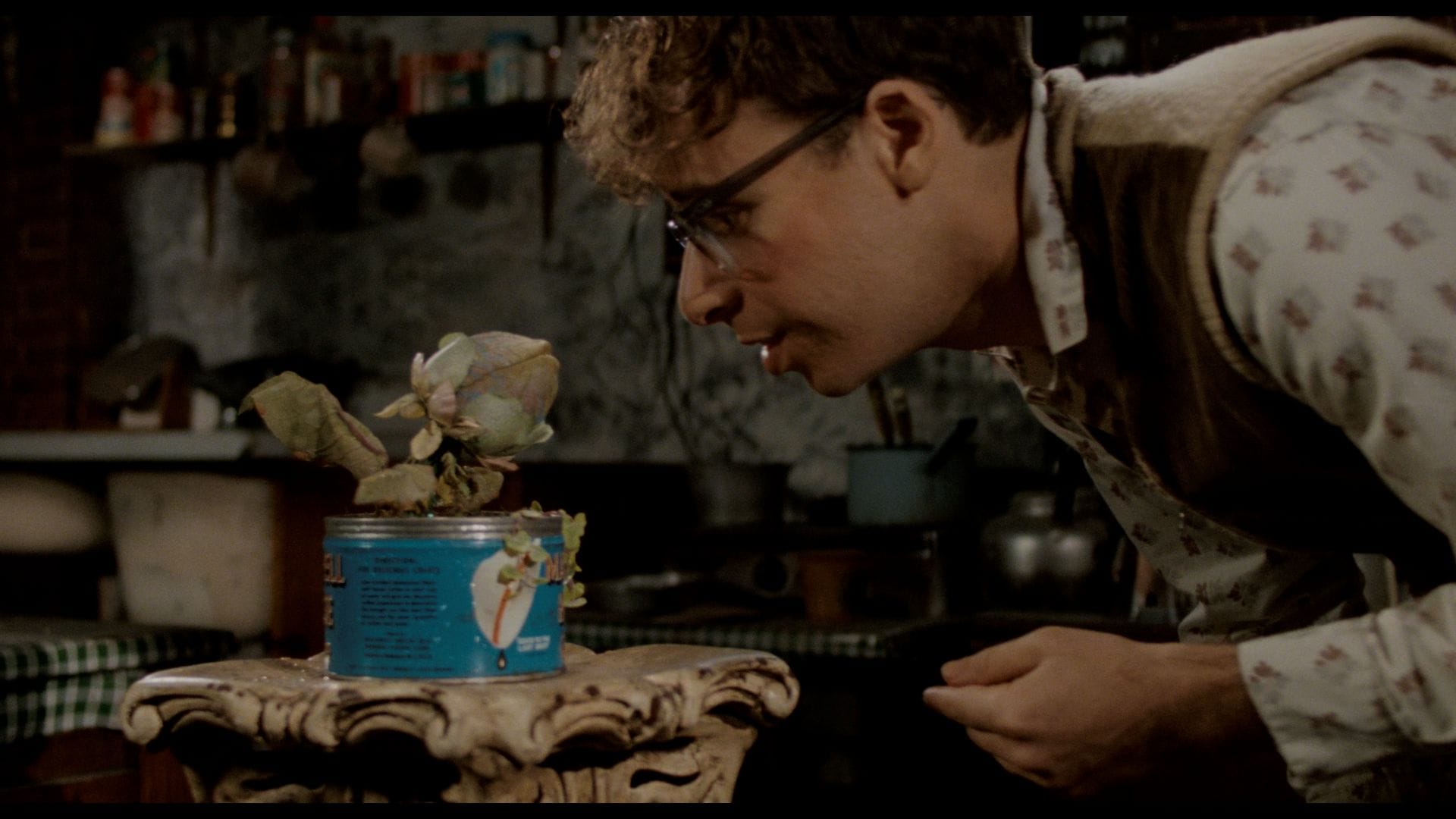
Most of the extras from previous discs have been ported over: Oz’ DVD audio commentary for the theatrical cut, the isolated original ending (also with optional Oz commentary), a production featurette, nine minutes of outtakes and deleted scenes and a piece on the director’s cut from the 2012 Blu-ray. The theatrical trailer and teaser have been left out, but you can find them online.
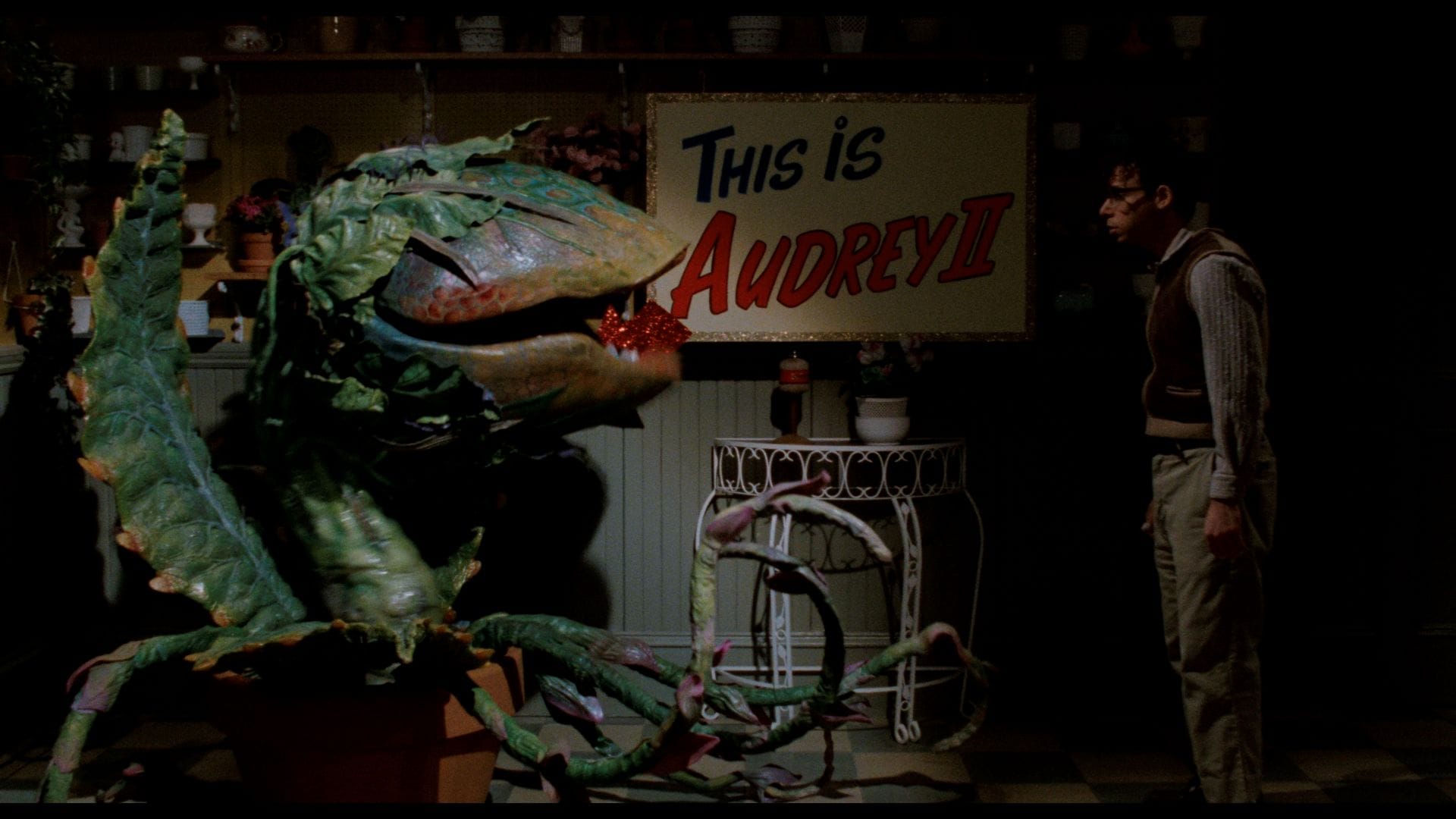
Warner has also commissioned two new featurettes, featuring Oz and Greene looking back at the production and its unique challenges. “To Feed or Not to Feed: For the Love of Little Shop” is a fun collection of set stories; “Mean Green Mother: Creating Audrey II” zooms in on the revolutionary animatronic work of Lyle Conway in creating Audrey II, with effects artists Bran Ferren and Richard Conway chiming in to celebrate their late colleague and offer the jaw-dropping fact that the puppet hydraulics were so cumbersome that any shot in which Audrey II speaks or sings had to be filmed at half-speed to get convincing lip movements … meaning both Moranis and Greene had to act opposite the puppet in slow motion. It makes the movie feel like that much more of a miracle, even if they had to fix the ending.
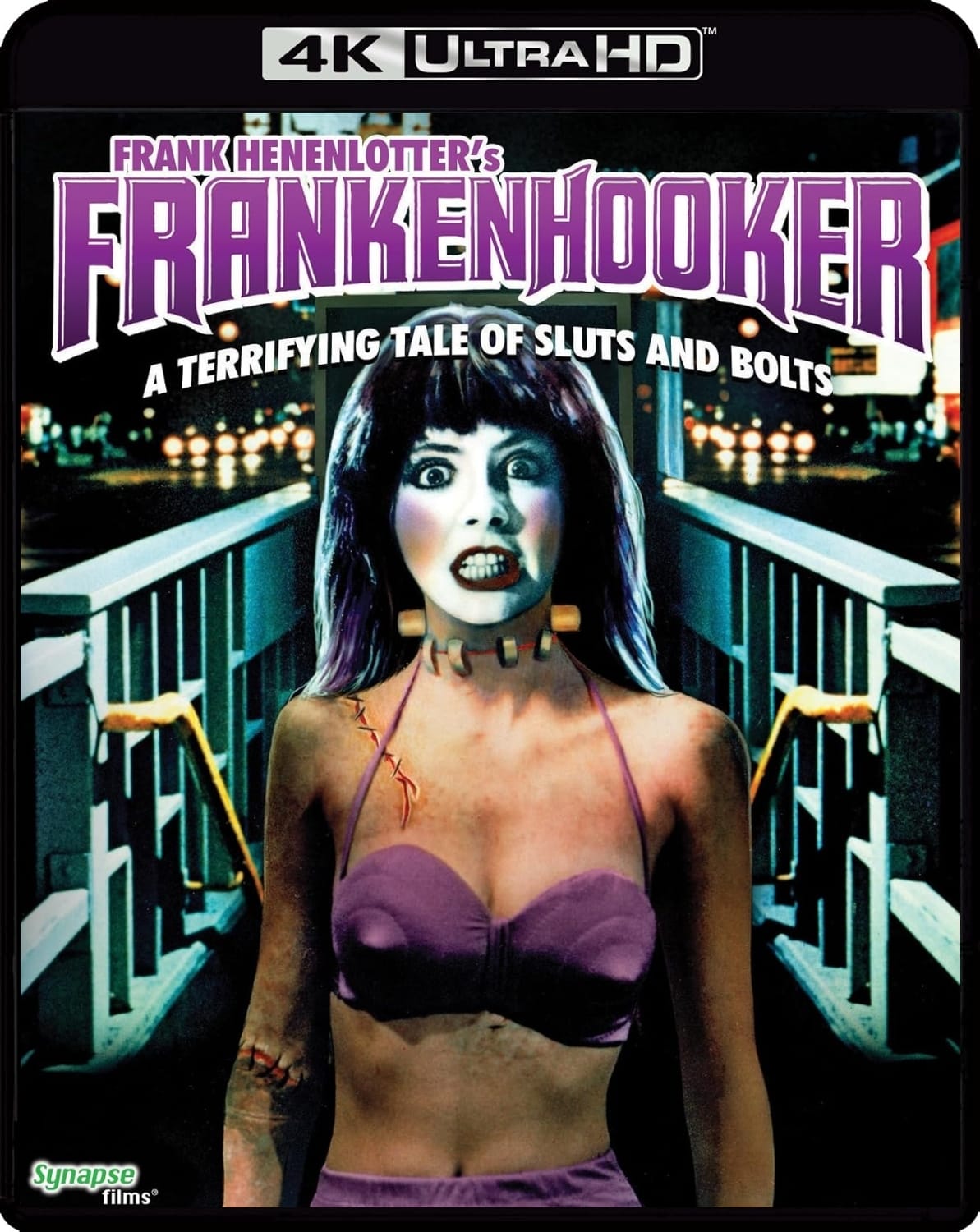
Pivoting from Little Shop’s soundstage Manhattan to the real thing just a few years later, here’s Frankenhooker, which Synapse Films released in a 4K/BD special edition this past spring. MVD Entertainment Group just released the 4K platter in a standard edition, so you don’t get the fancy slipcase (or the remastered BD) but you do get an almost shockingly pristine copy of Frank Henenlotter’s grindhouse delight, which looks and sounds better than I’ve ever seen it – and I saw a fresh 35mm print back in the day!
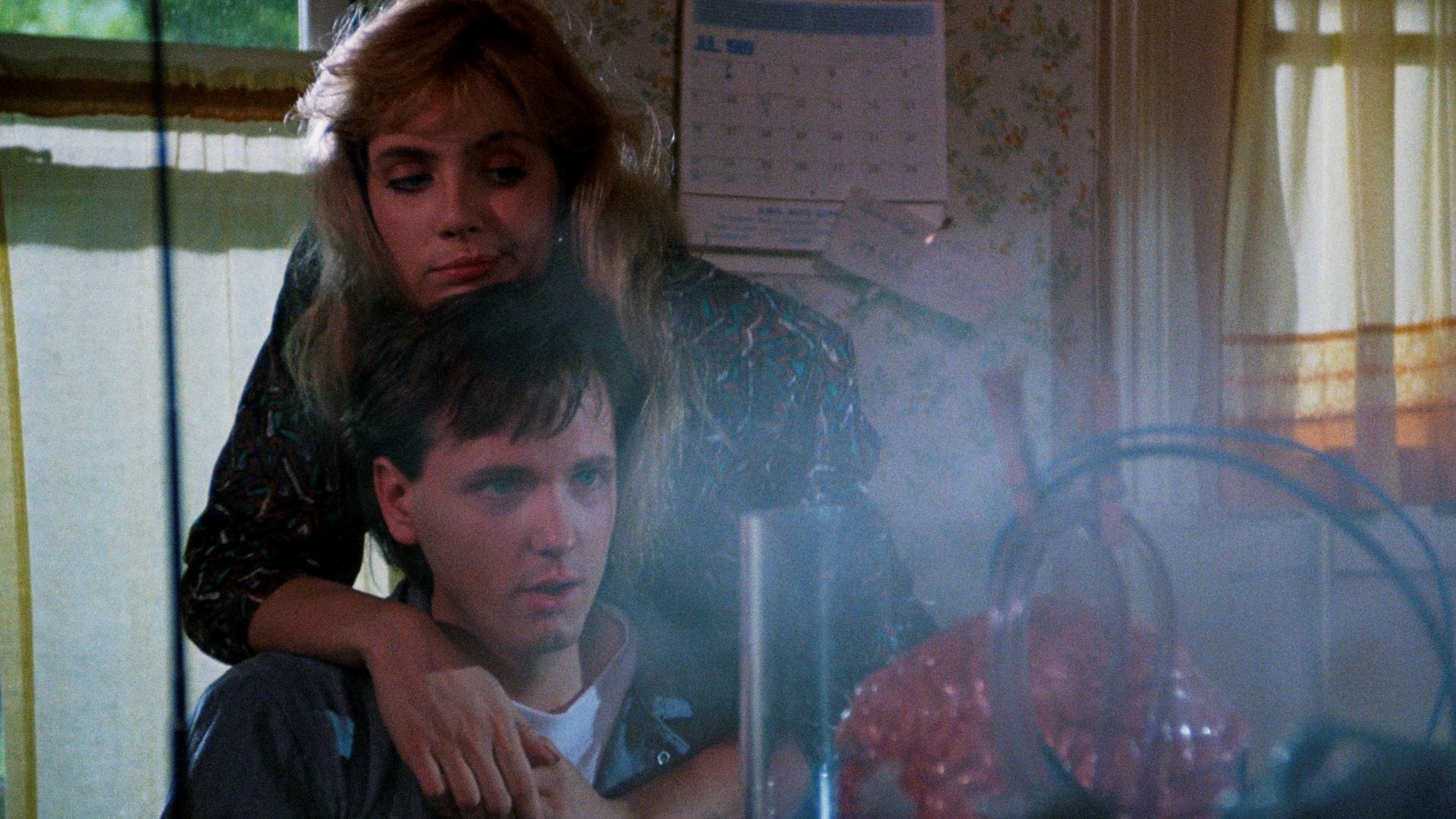
That was at TIFF 1990, when Henenlotter was the enthusiastic grindhouse filmmaker who’d already given us the splatter comedies Basket Case and Brain Damage; Frankenhooker was positioned as another such hybrid, centering on New Jersey weirdo Jeffrey Franken (James Lorinz), a “bio-electric” tinkerer whose fascination with creating life in his garage comes in handy when his sweet fiancée Elizabeth (Patty Mullen) dies in an accident involving a remote-controlled lawnmower. Heartbroken but determined to bring Elizabeth’s head back to life atop a new body, the monologuing Jeffrey cruises Times Square for sex workers with the right parts, which he acquires in a literally explosive fashion.
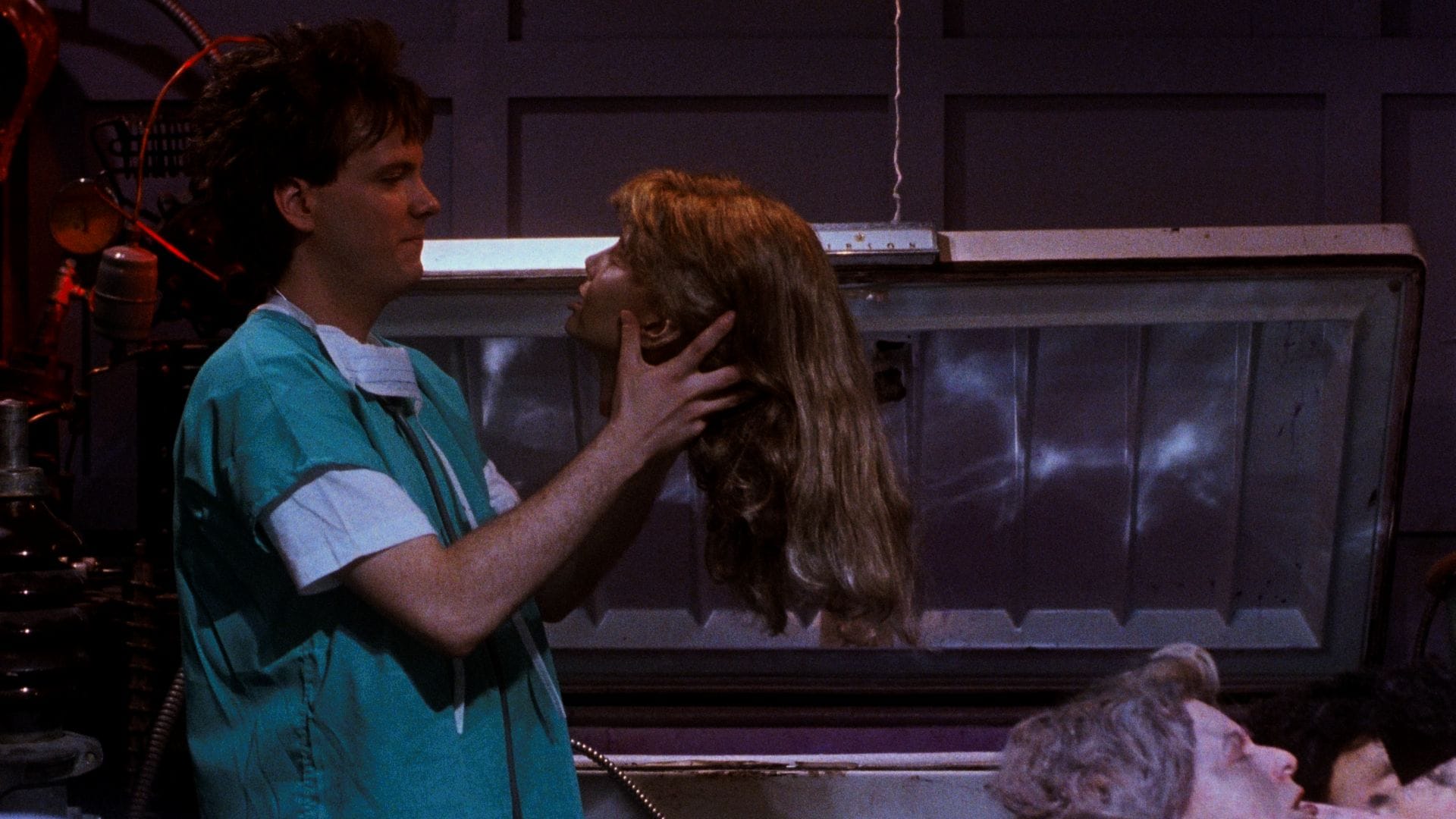
It’s all just an excuse for the reanimated Elizabeth to go stomping around Manhattan looking for johns, which is where Frankenhooker abandons horror entirely and just leans into the fun of it all. Mullen finds something downright adorable in the Frankenized version of Elizabeth, both in her physical comedy and her chipper delivery of come-ons like “Wanna date?” and “Goin’ out?” (The character’s earnest Jersey affect is not an act, as you’ll see in the 2006 interview with Mullen that’s included on the disc.) More gore follows, all executed gleefully by makeup effects wizard Gabe Bartalos, but it’s Mullen’s performance that holds the whole thing together. It’s incredible to me that she didn’t have a long career in genre projects after this.
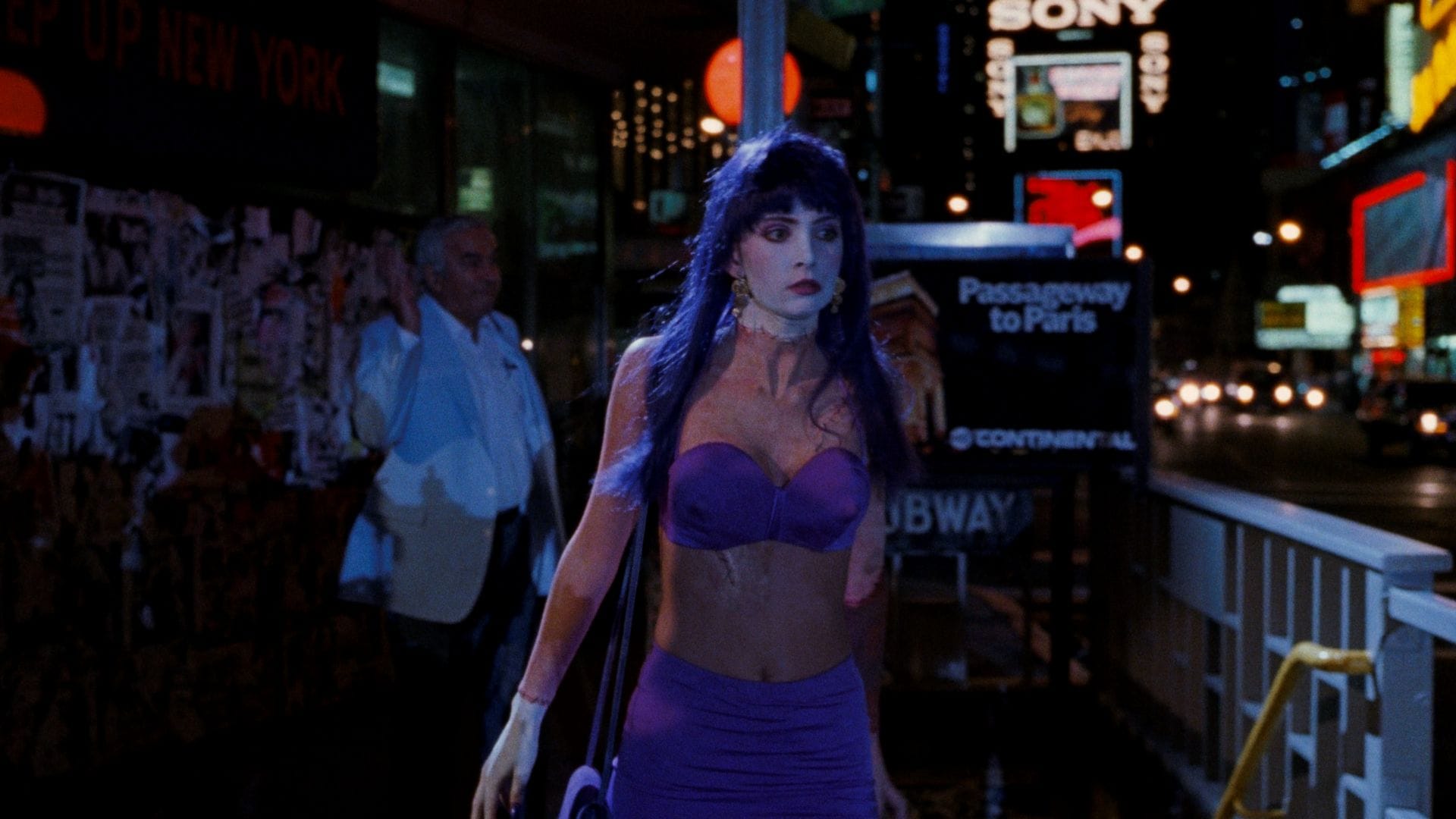
Previous releases of Frankenhooker have ranged from shoddy to pretty good; I have the Arrow Films UK Blu-ray, and aside from some minor print damage I would have thought that master was as good as the movie could get. Synapse’s 4K restoration is even better. Created “from the archival uncut original 35mm vault materials” with an HDR grade that plays up the signature purple of Jeffrey’s reanimation formula and a level of detail that lets us appreciate every last fold and crease in Bartalos’ old-school effects, this is a perfect presentation of the feature. Synapse has even separated the dialogue stems for a 5.1 remix to make all of Jeffrey’s muttering properly audible for the first time. And if you were wondering how muddy he sounded before, the original theatrical 2.0 mix is also included.
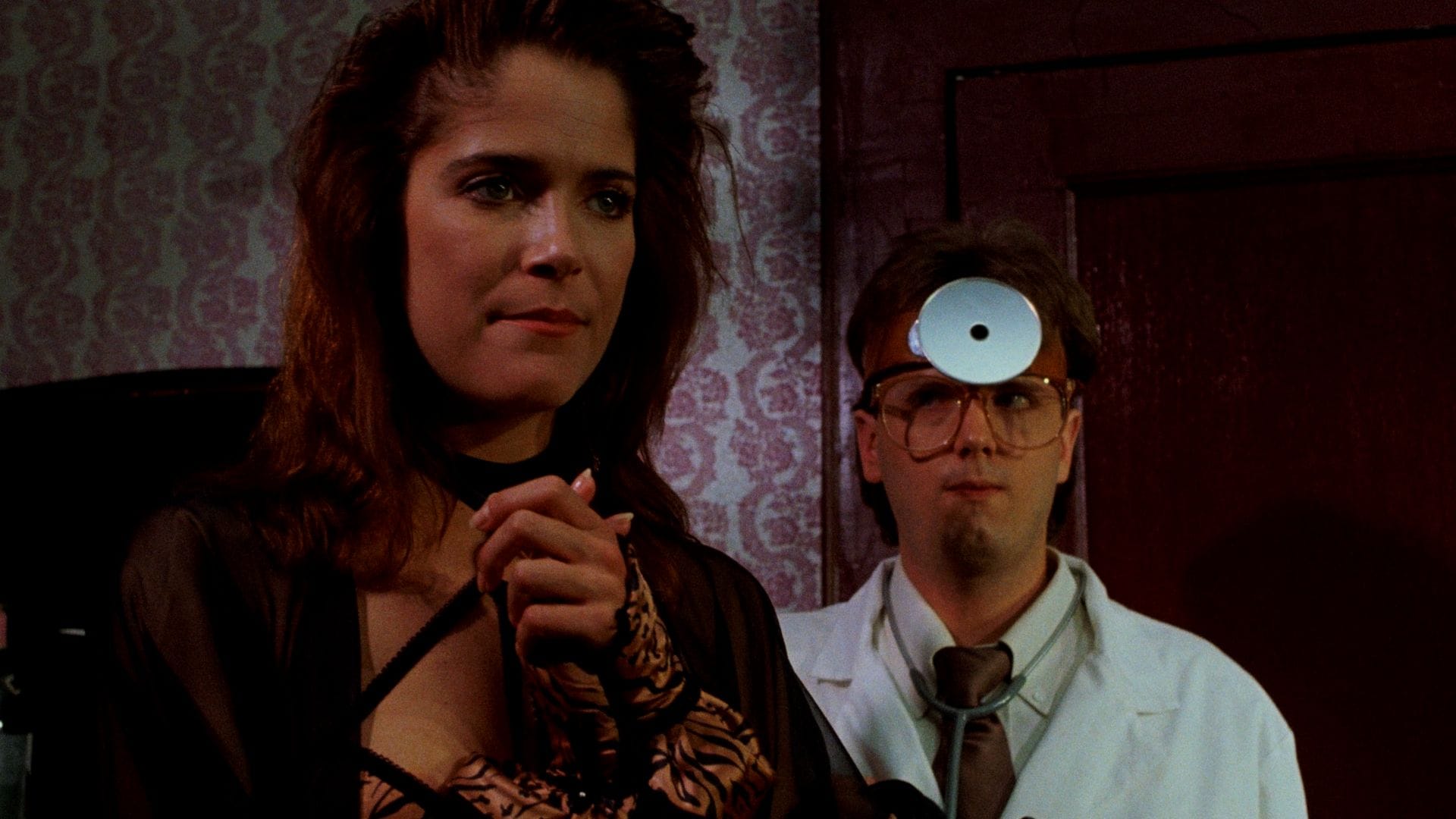
Special features are sourced from Unearthed Films’ 2006 DVD release: In addition to the aforementioned catch-up with Mullen, there’s a chatty commentary from Henenlotter and Bartalos, a fun look at the makeup effects “hosted” by Bartalos and an interview with Jennifer DeLora, who plays one of Jeffrey’s victims and has some extremely vivid set stories, complete with Polaroids. (The extras commissioned for Arrow’s disc – a new introduction and commentary from Henenlotter and Lorinz, and a 40-minute retrospective documentary – remain exclusive to the UK.)
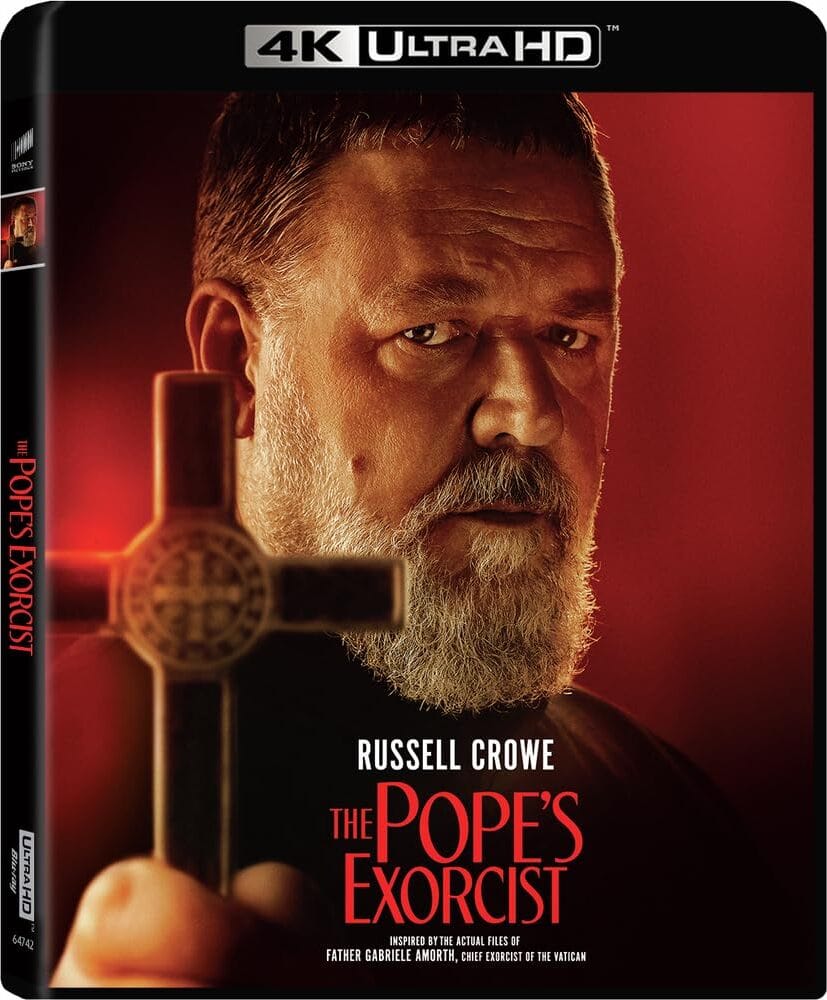
If you’re looking for something that has a different balance of silly and scary – or at least tries to take the “scary” seriously – there’s always The Pope’s Exorcist, the 2023 Russell Crowe possession thriller. Incidentally, this Russell Crowe exorcism movie should not be confused with Joshua John Miller’s The Exorcism, which was a different Russell Crowe exorcism movie; that one, which I saw back when it was called The Georgetown Project, was a meta riff starring Crowe as a disintegrating actor who finds himself working on a horror movie not unlike The Exorcist; despite having been directed and co-written by Joshua John Miller, the son of actual Exorcist star Jason Miller, it was not especially successful at the meta thing, or at the horror thing, but Crowe must have enjoyed the experience because here he is again, exorcising stuff.
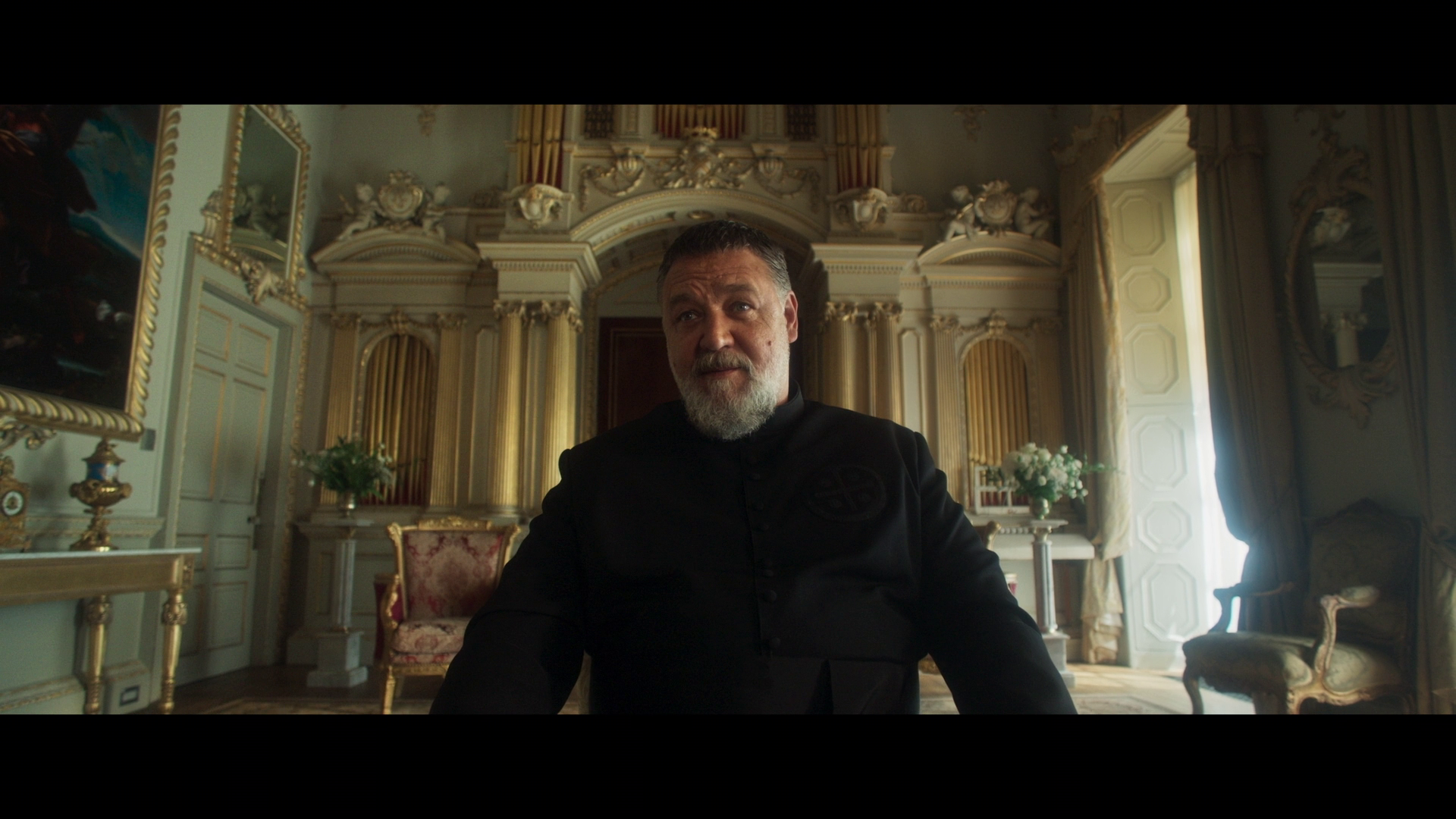
And you know what? The Pope’s Exorcist is pretty entertaining for what it is, engaging with all the clichés The Exorcism was too self-conscious to enjoy. Director Julius Avery, who made the entertaining WWII action-horror mash-up Overlord, is pretty good at genre pastiche and delivers an unapologetic, unironic possession movie, with a loose and cheerful Crowe as the Vespa-riding Father Gabriel Amorth, the Holy Father’s go-to guy for demon confrontations. (William Friedkin made a documentary about him and everything!)
The real Amorth died in 2016, insisting he’d performed some 30,000 exorcisms over the decades of his service, one of them involving a young boy in 1987 who claimed to be possessed by an ancient demon who’d stalked Amorth across the decades. The movie takes both Amorth and his patient at their word.
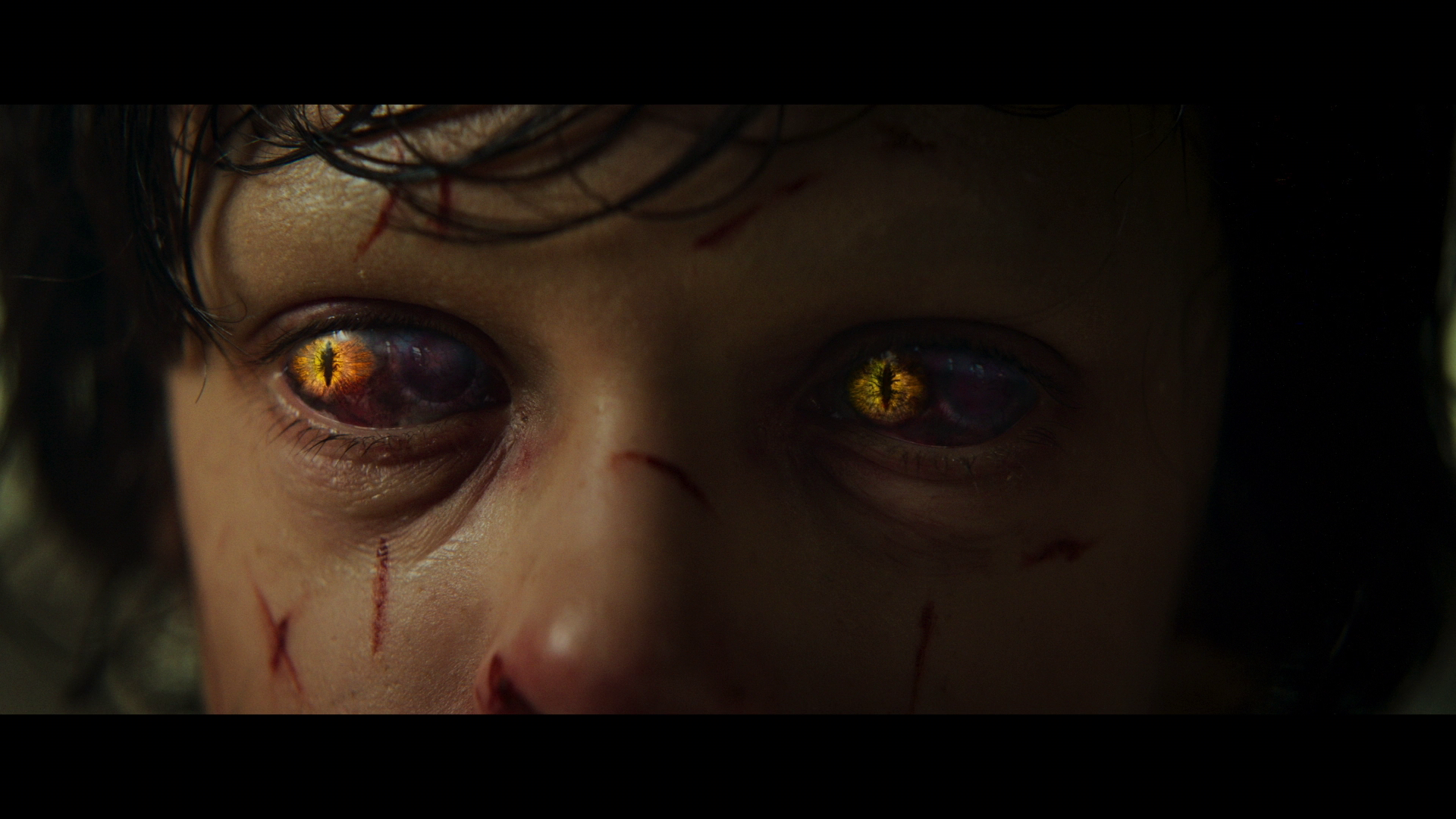
Does The Pope’s Exorcist reinvent the Exorcist playbook? Absolutely not! It follows it beat for beat, in fact, with Amorth showing up to back up untested priest Esquibel (Woman of the Hour’s Daniel Zovatto) in the struggle to save the possessed child and his family from the foul-mouthed infestation. But Avery and his DP Khalid Mohtaseb make every moment look great, which I assume is the reason Sony is upgrading The Pope’s Exorcist to 4K three years after its Blu-ray release. (The Atmos audio is an improvement over the BD’s DTS-HD 5.1 track, too.)
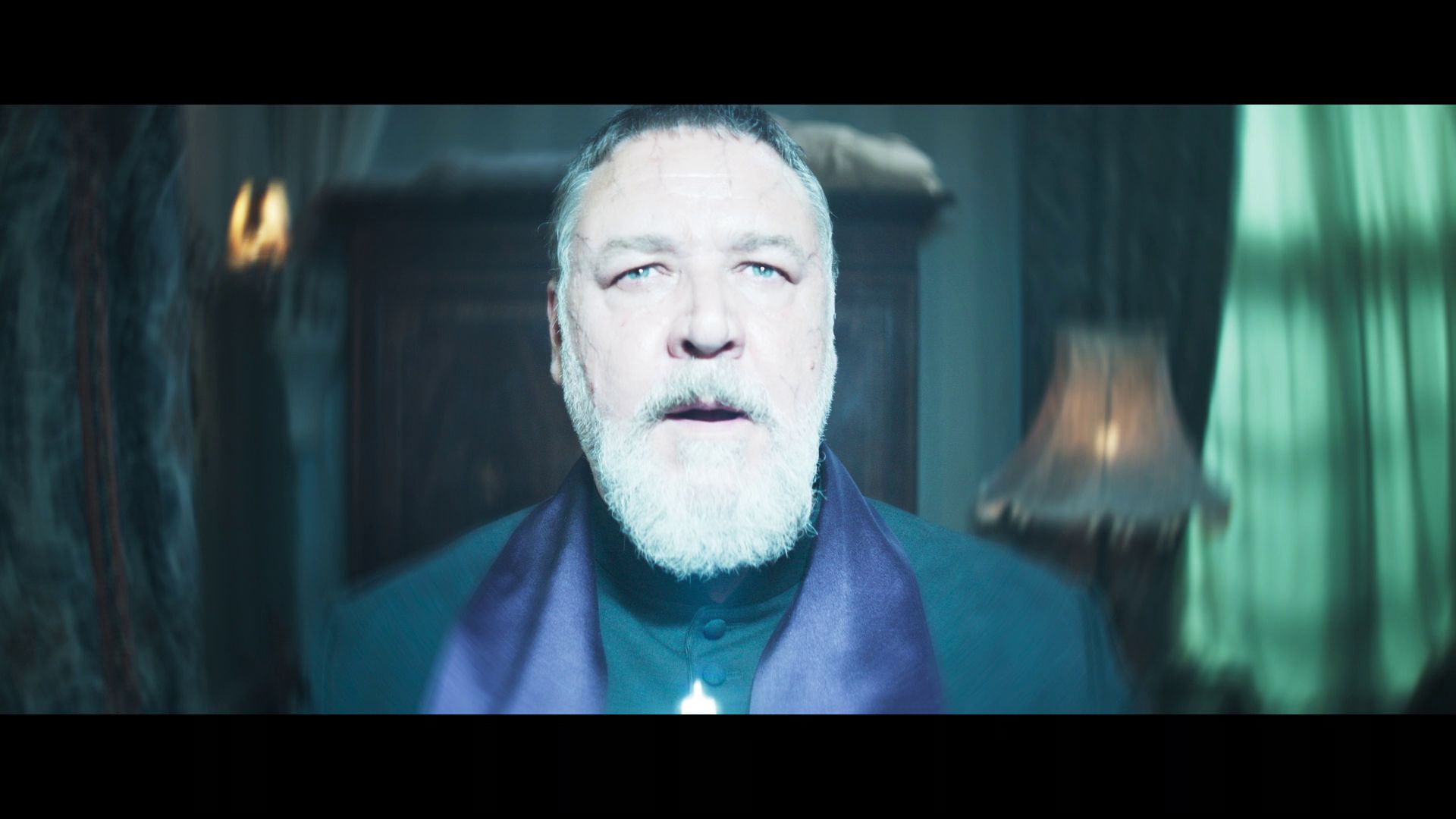
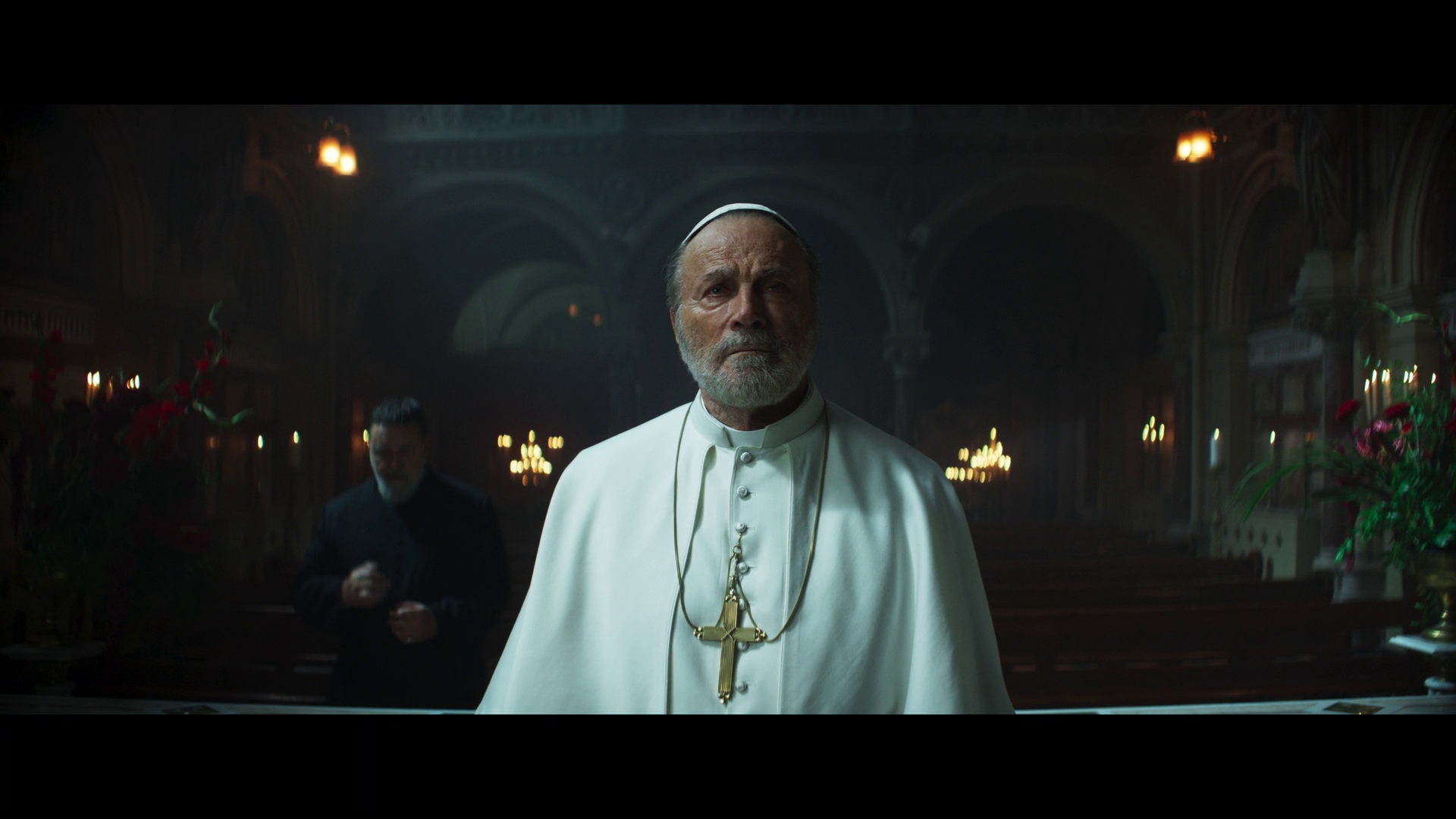
The disc also includes the two short featurettes that appeared on the Blu-ray, which offer some brief biographical details about the real Father Amorth – and a couple of clips from Friedkin’s documentary – while also letting Crowe, Avery and producer Jeff Katz discuss the project in broad, enthusiastic terms. No one talks about the decision to cast Franco Nero as an entirely unconvincing stand-in for Pope John Paul II, but I suppose some mysteries must remain unexplored.
Pennies from Heaven is now available on Blu-ray in the Warner Archive Collection; Little Shop of Horrors is now available in 4K from Warner Bros. Discovery Home Entertainment, unless they’ve already changed the company name. Frankenhooker and The Pope’s Exorcist are now available on 4K from Synapse Films and Sony Pictures Home Entertainment, respectively.
Up next: There’s a new Masters of the Universe in town, and a new special edition of The Frighteners. That’s a lot of skulls, but ’tis the season. And Friday’s What’s Worth Watching will have all sorts of worthwhile recommendations, so if you’re not already on the paid tier you should consider upgrading that subscription! Five bucks a month for all these extra words, it’s a great deal!