
Spring Cleaning
In which Norm catches up to the recent releases of DROP, OPUS and THE WEDDING BANQUET.
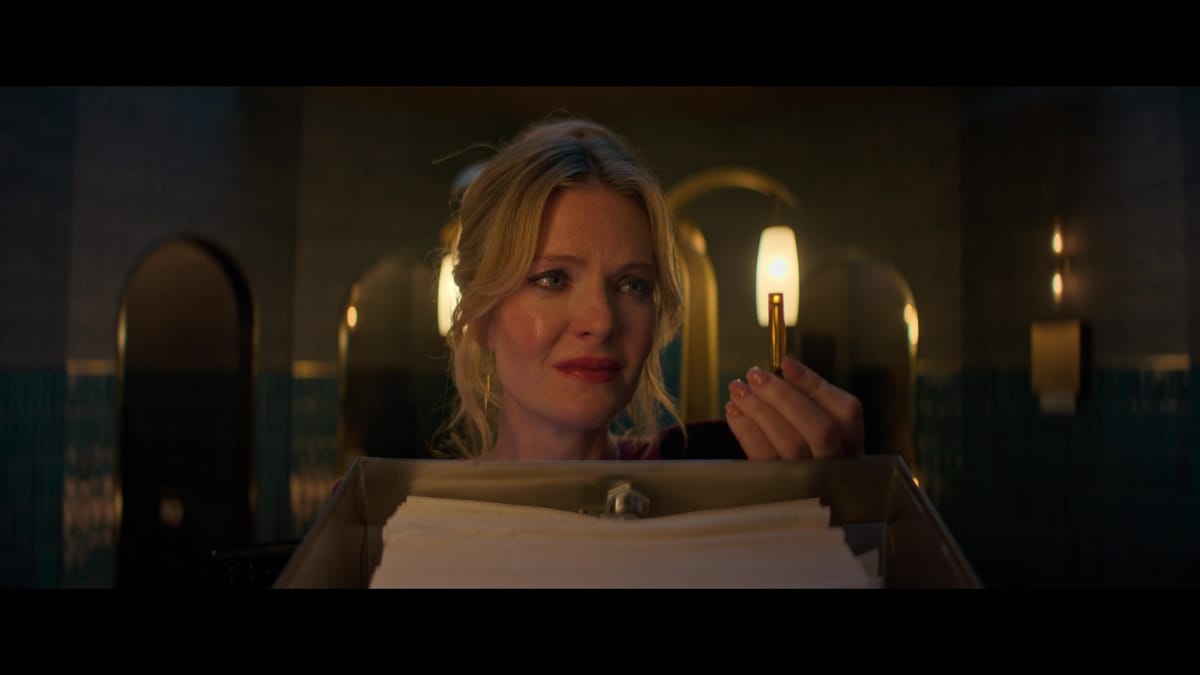
Regular readers of Shiny Things may have noticed I haven’t been exactly keeping up with the release schedule of late. And while “eh, what do you want, this is free” would usually be a valid explanation, in this case it’s not! It’s really not!
Quite a few titles, from a number of different labels, have taken longer than expected to reach reviewers in recent months, though they’re all getting to stores and consumers on time. Anecdotal evidence suggests that this is because media copies are only going out once the retail requirements are fulfilled, which – combined with the immediate sellouts of certain 4K titles over the last year – strongly suggests the labels are racing to meet consumer demand. Which is a good thing, as I see it: It means people still want discs.
It could also mean the studios only pressed an absurdly small number of those titles and had to rush another production run, but I’m skeptical; that could have happened with something like Elevation’s Last Breath but surely Warner’s 4K Lethal Weapon would have had higher expectations.

Same for Universal’s June 10th release of Drop, which only reached the Canadian media last Friday – almost a full month later than expected. But here we are, and I’ll fold in a couple of VVS Films’ latest arrivals for you as well.
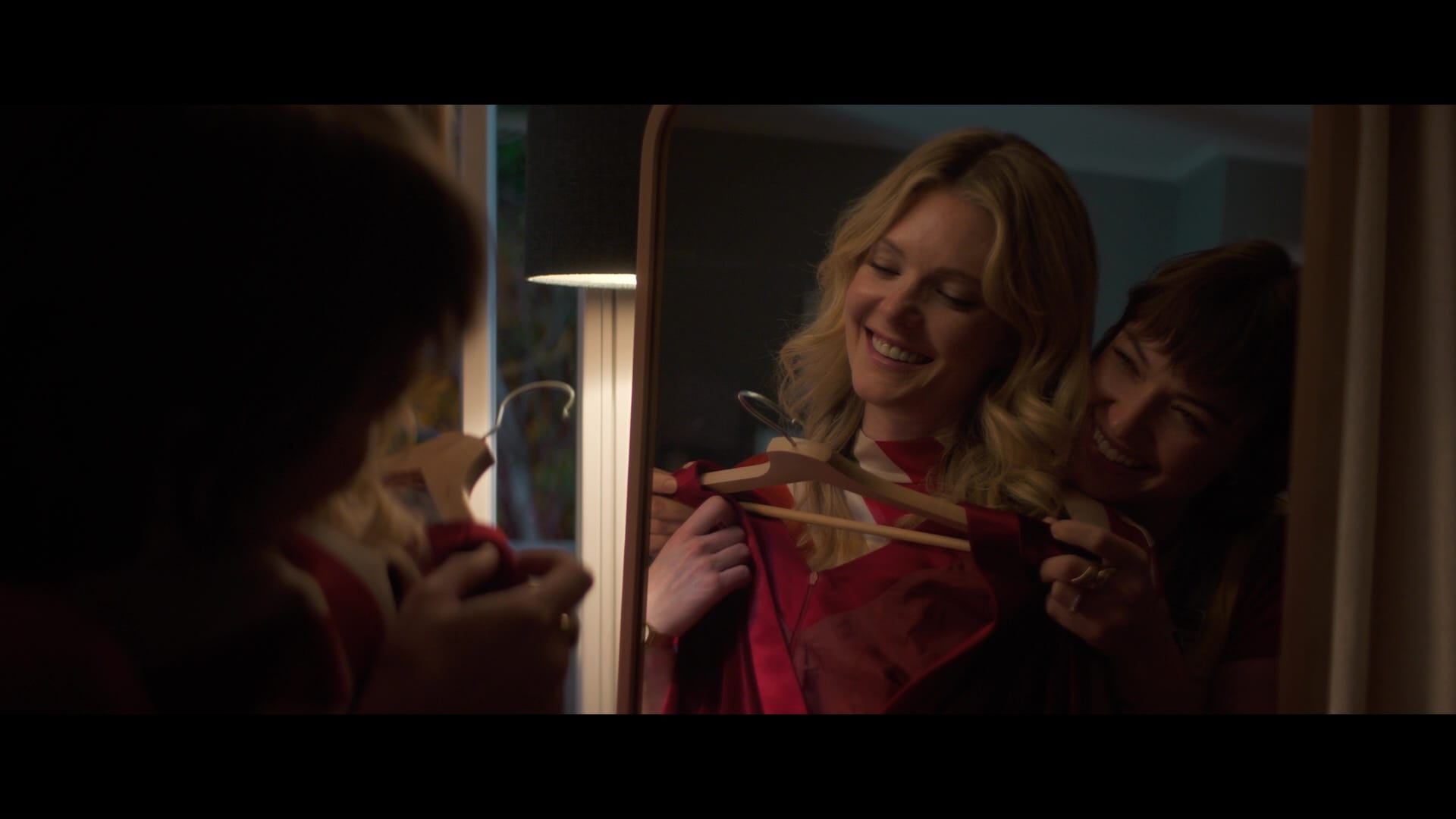
Drop is a quintessential high-concept picture, following a nice young mom named Violet (Meghan Fahy) on her first date with a photographer named Henry (Brandon Sklenar), who is also nice. It’s a meaningful event for Violet, who’s sort of tucked herself away with her young son since the death of his abusive father. But no sooner has she stepped off the elevator into the fancy skyscraper restaurant, someone within fifty feet of her starts dropping memes and messages into her phone. Silly at first, but slowly more menacing: Don’t say a word. Don’t seek help. Get the SD card out of Henry’s camera. Fail to comply, and the guy you saw in your home will kill your son and sister.

It's a textbook Hitchcockian premise – an ordinary person suddenly forced to navigate a world of danger and menace – and one that always benefits from a restricted location. I’m thinking fondly of the way Wes Craven and Jaume Collett-Serra used the confinement of an airplane in Red Eye and Non-Stop, respectively. Drop’s director is Christopher Landon, who demonstrated a sure hand with genre pictures in the Happy Death Day movies and Freaky, among others; he was briefly set to direct the next Scream movie, and Drop suggests he would have been a decent fit for the polished, classical style of that franchise. But I’m glad he made Drop, because Drop has all the fun of a Scream picture without any of the expectations.
Just as every Scream is inevitably a whodunit, Drop is all about Violet figuring out who’s pulling the strings, and everyone’s a suspect: Is it the woman who welcomed her but seemed averse to eye contact? The pleasant bartender, who was a little too quick to get her drinking? The single guy in the corner, who’s constantly on his phone? The piano man who played her half-joking request? The lonely-hearts couple trying out a dating app for the first time? The waiter, who can’t possibly be as incompetent and clueless as he seems? Or is it her actual date, who may also be too good to be true?
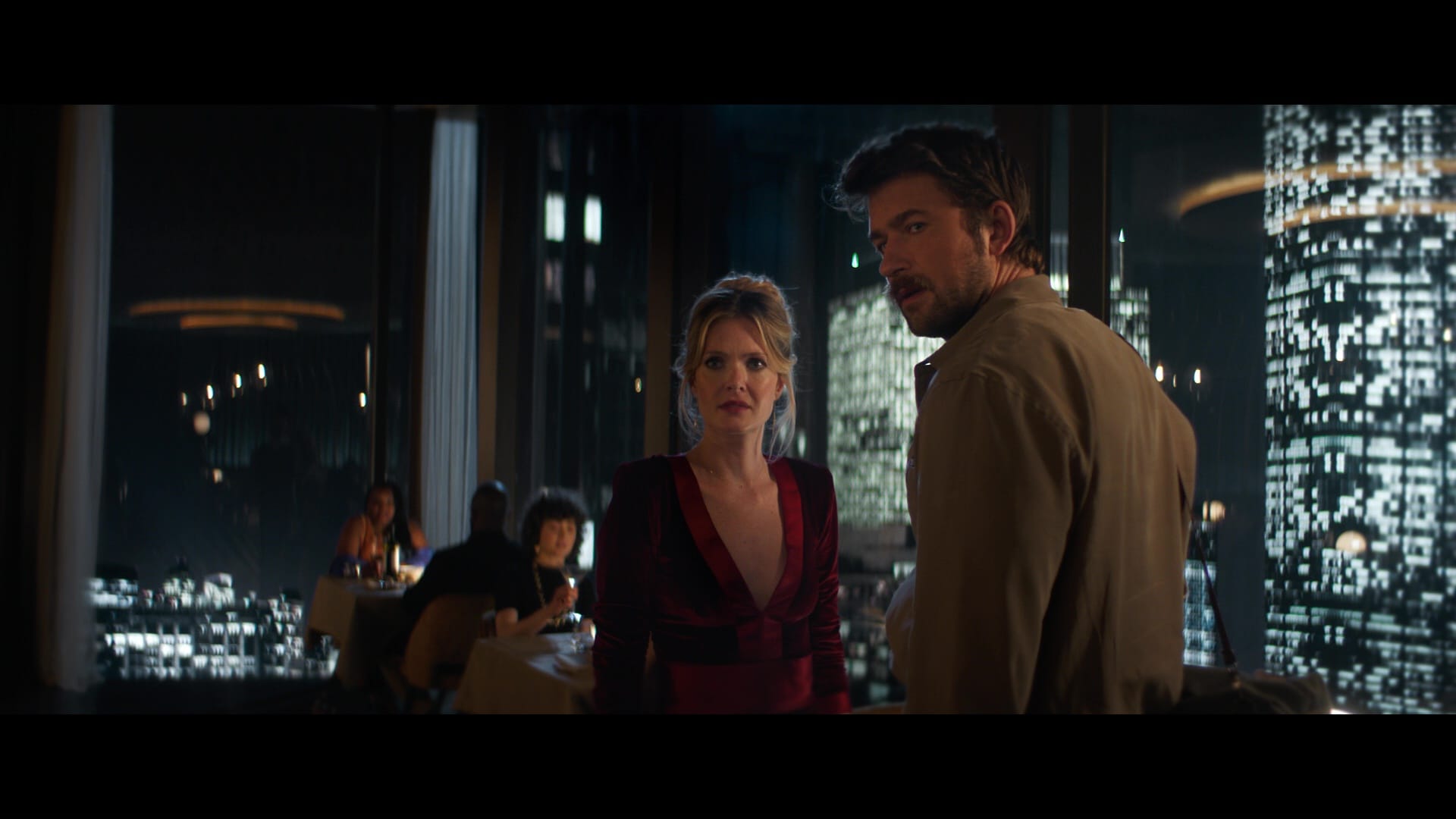
I would never dream of telling you, of course, but I will say that the identity of the dropper is ultimately a secondary concern; as in all of these movies, what’s much more interesting is watching the hero work with extremely limited resources to figure out why this is happening and what the villain wants while appearing to go along with their demands. And Fahy, who popped in the second season of The White Lotus, is really good at juggling conflicting emotions and motivations; you can watch her sit and think for minutes at a time, and Landon is more than content to do so.
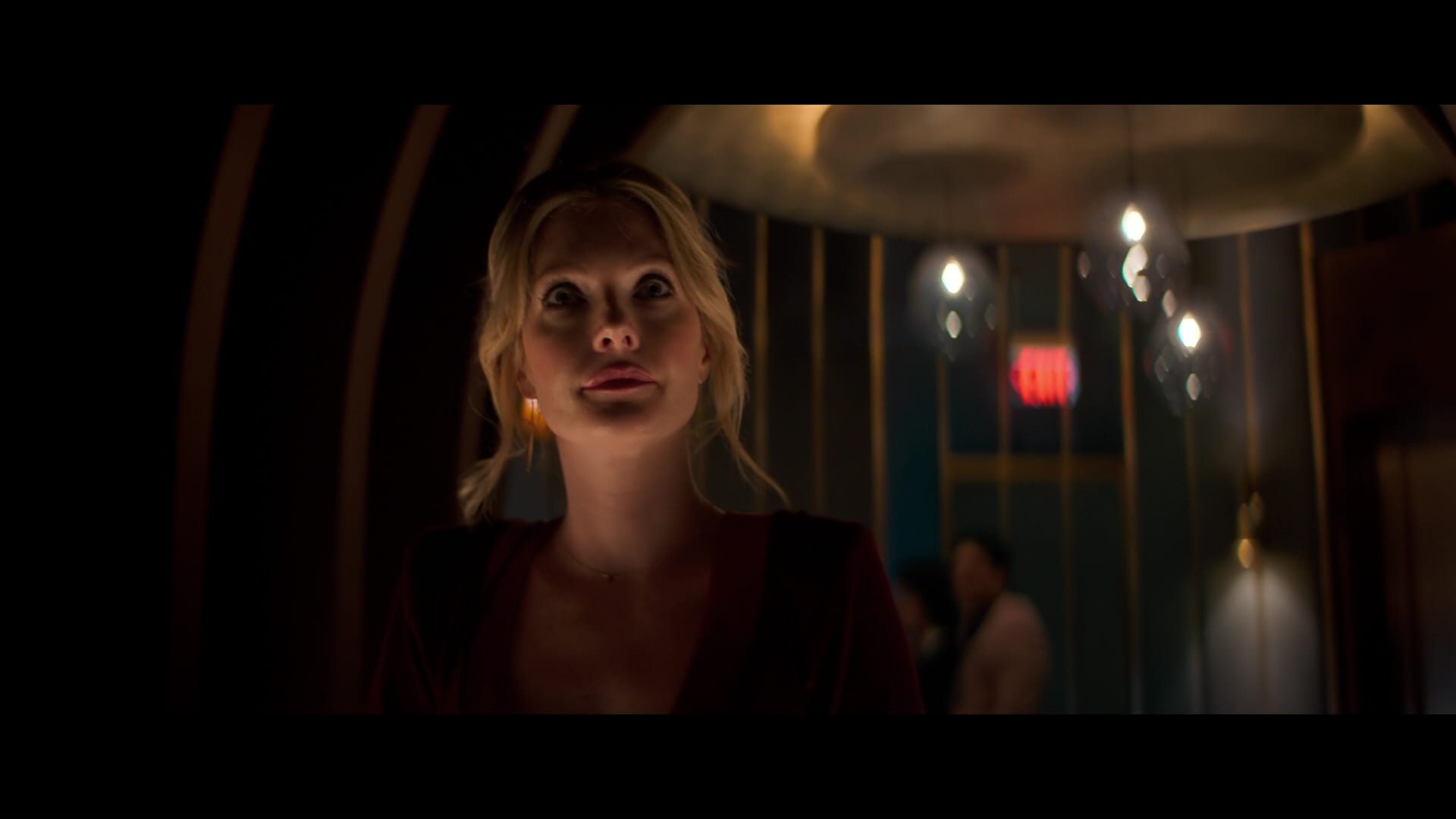
Running a lean hour and a half before the credits roll, and featuring a supporting cast filled with actors you vaguely recognize – I’ve seen Sklenar in half a dozen movies, apparently, but couldn’t tell you who he played in any of them – Drop doesn’t aspire to do anything more than keep you in your seat, and it does so in a very satisfying fashion. And it looks great on Universal’s 4K disc, a razor-sharp presentation that makes every detail of that restaurant pop and sparkle – even as the walls seem to close in around Violet. The Dolby Atmos audio also creates a funhouse landscape, with Bear McCreary’s anxious score creeping around us along with the clinking silverware and bustling drink trays.
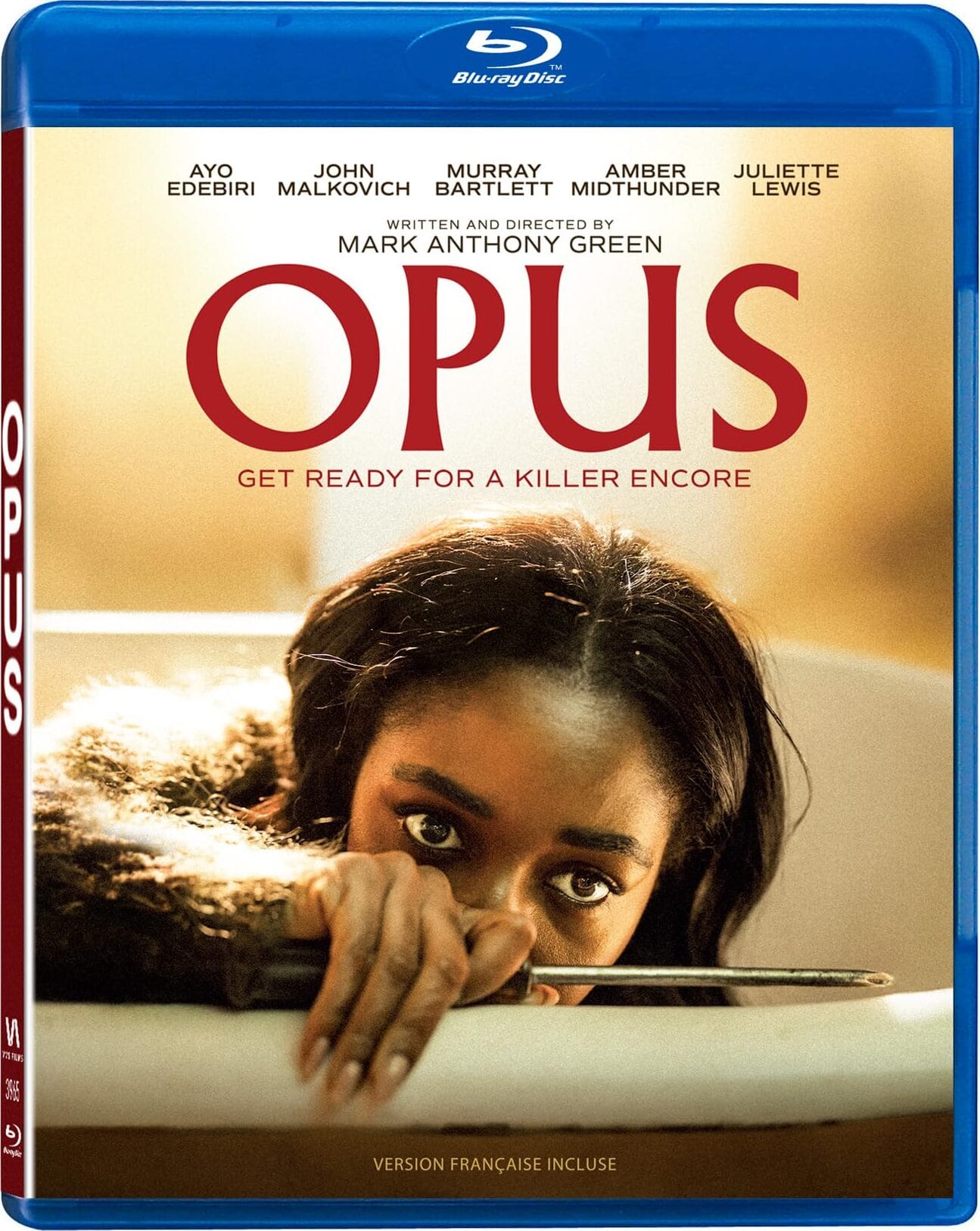
An elaborate scheme in a single location is also at the heart of Opus, as it happens, though that location is a little more expansive than a restaurant in a skyscraper. The bulk of the film takes place at the desert compound of reclusive rock god Alfred Moretti, who’s releasing his first album in almost three decades and has summoned a few veteran journalists to join him for a listening party. Most of them are people who knew him in the old days – except for Ariel Ecton, a 27-year-old rookie to whom Moretti has inexplicably extended an invitation.
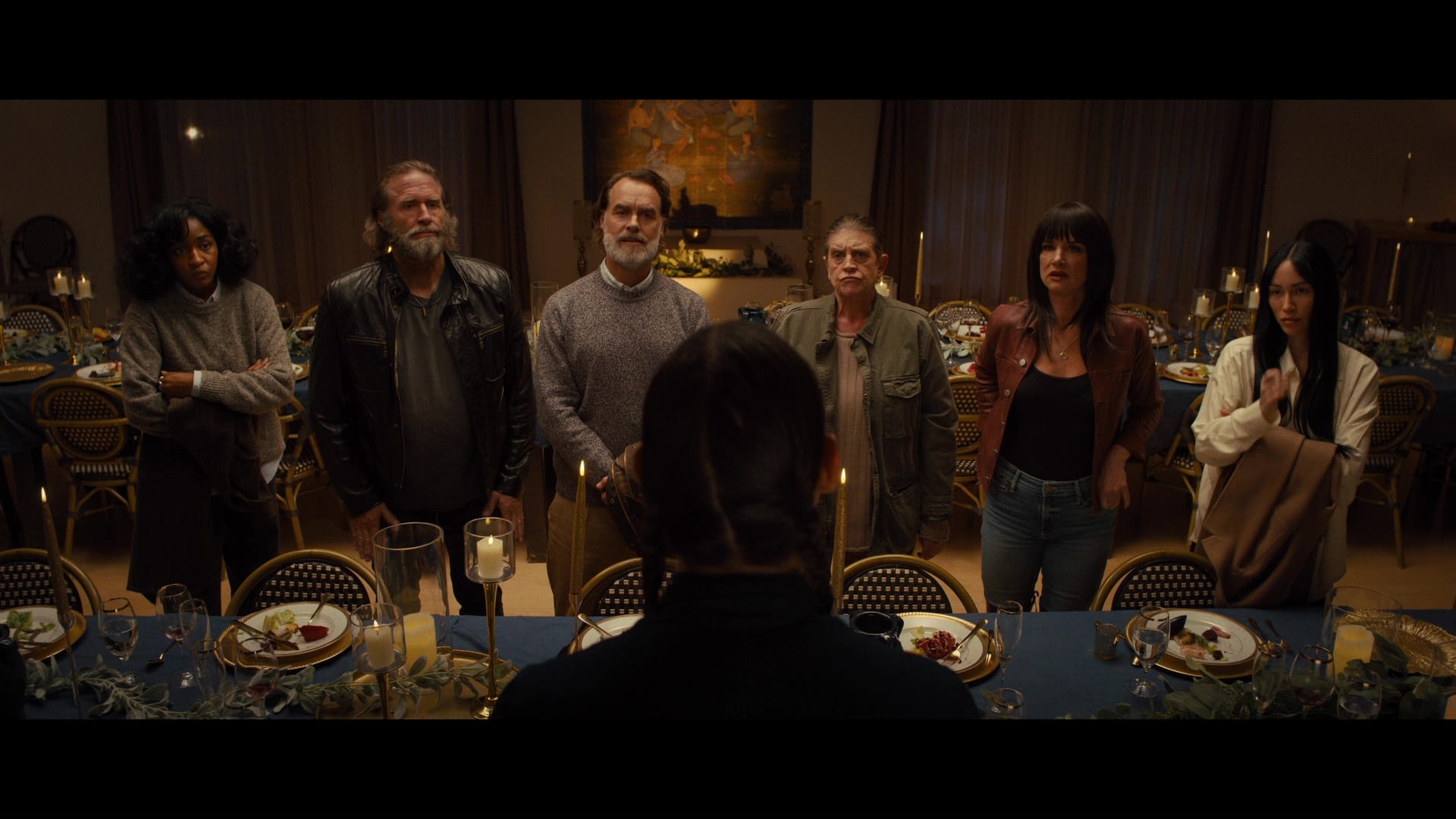
It’s weird, right? But things get even weirder upon arrival, as Ariel and her fellow guests discover that Moretti has been anything but idle during his retreat from public life. Dude’s gone and built a cult – and the only question is whether it’s a case of a vain, indulged celebrity surrounding himself with eager sycophants or an indication that something far more sinister is going on.
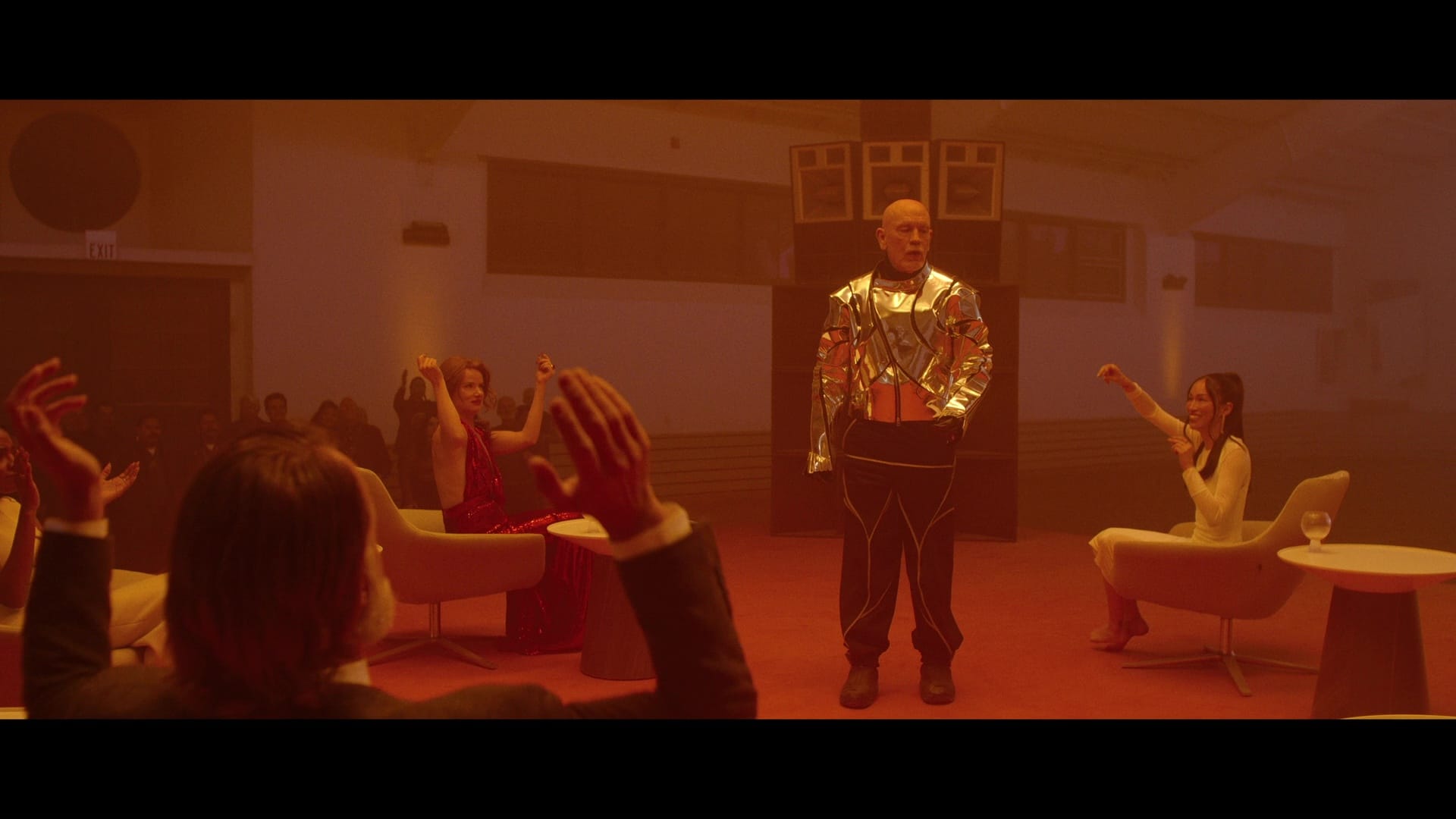
That’s Opus, and that is pretty much all Opus is, watching the jaded pros dismiss Moretti’s every weird request and indulgence as mere eccentricity – besides, the food here is great and have you been to the spa? – while Ariel gets twitchier and twitchier because these people are clearly up to something. You can see every twist coming from a mile away, but that’s fine because first-time writer-director Mark Anthony Green has no illusions that he’s telling a new story: Opus is an unapologetic mash-up of Karyn Kusama’s The Invitation and Ari Aster’s Midsommar. A less generous term might be “ripoff,” but A24 also produced Midsommar so I guess this is at least an authorized cover version.
In any case, Ayo Edibiri is an endlessly watchable hero as Ariel, resourceful and self-assured and quick to politely call bullshit when no one else will – and John Malkovich is fully on board with the game Moretti is playing with her. Their scenes together are easily the best thing about the movie: Moretti likes Ariel, and warms to her, and she can’t help but be a little charmed. Edibiri and Malkovich play those interactions with an endearing lightness; this isn’t a case of Jodie Foster subtly maintaining a ten-feet gap between herself and Anthony Hopkins.

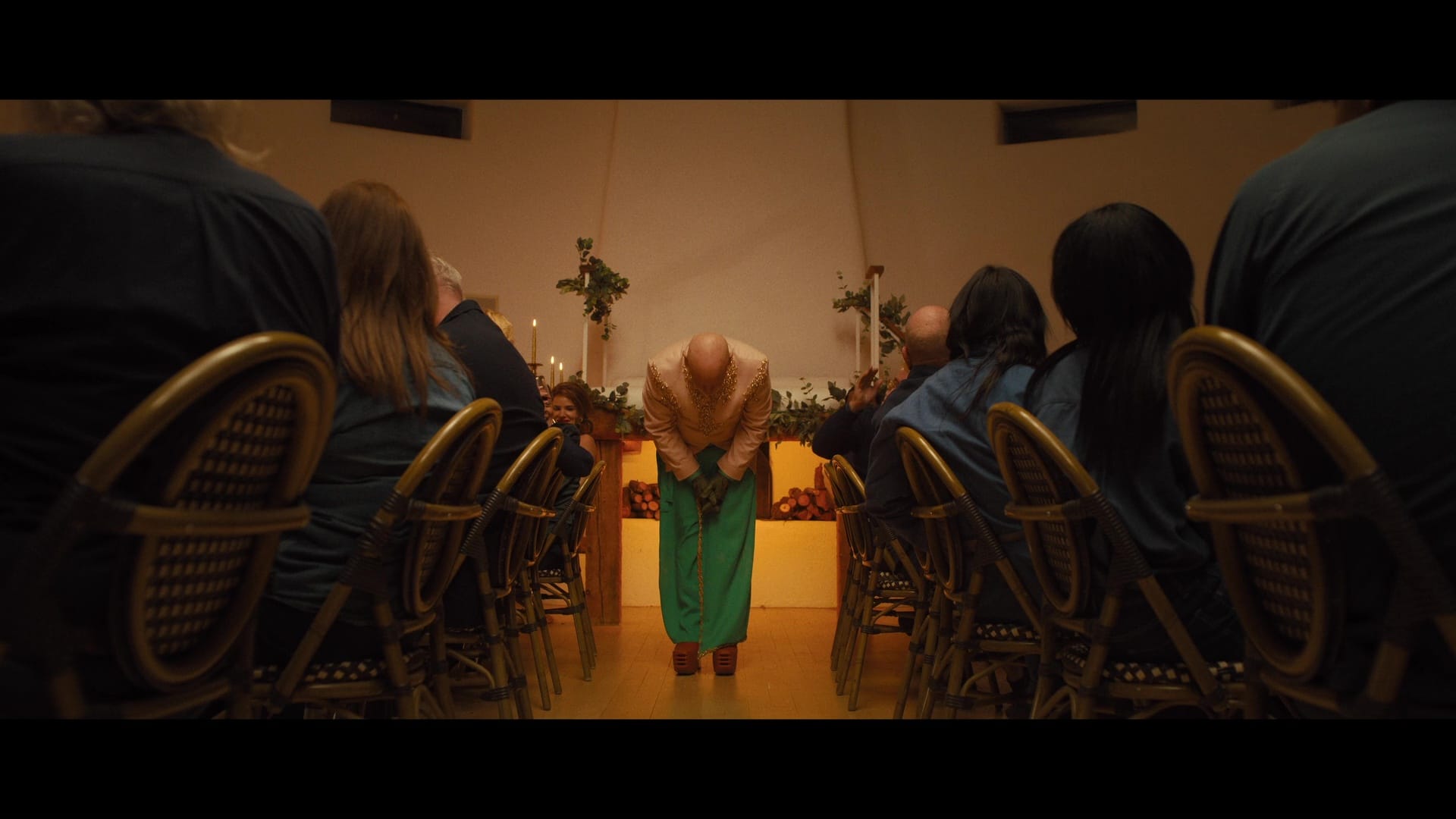
It’s just two people enjoying a conversation. The other stuff – the shaving, the compulsory oyster shucking, the puppet show, the spooky “concierges” following the guests everywhere – that’s just weird stuff in the background. Until it isn’t.
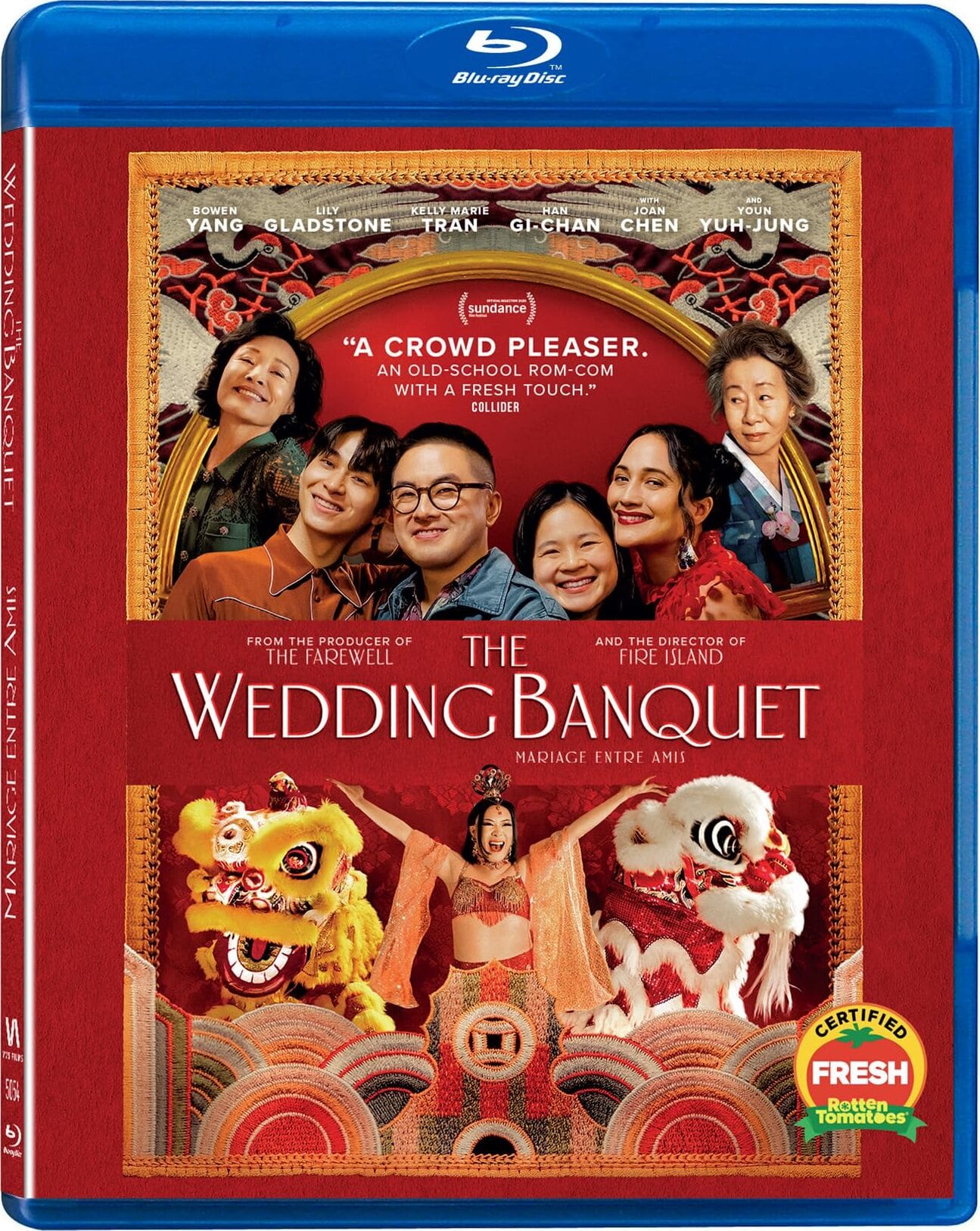
Speaking of complicated relationships, Andrew Ahn’s The Wedding Banquet also arrived from VVS this week – and isn’t a thriller at all. Neither is it a comedy, despite what its marketing might have you believe. What it is, though, is a really sweet and engaging movie about two queer couples whose lives are thrown into calamity by old-fashioned visa issues.
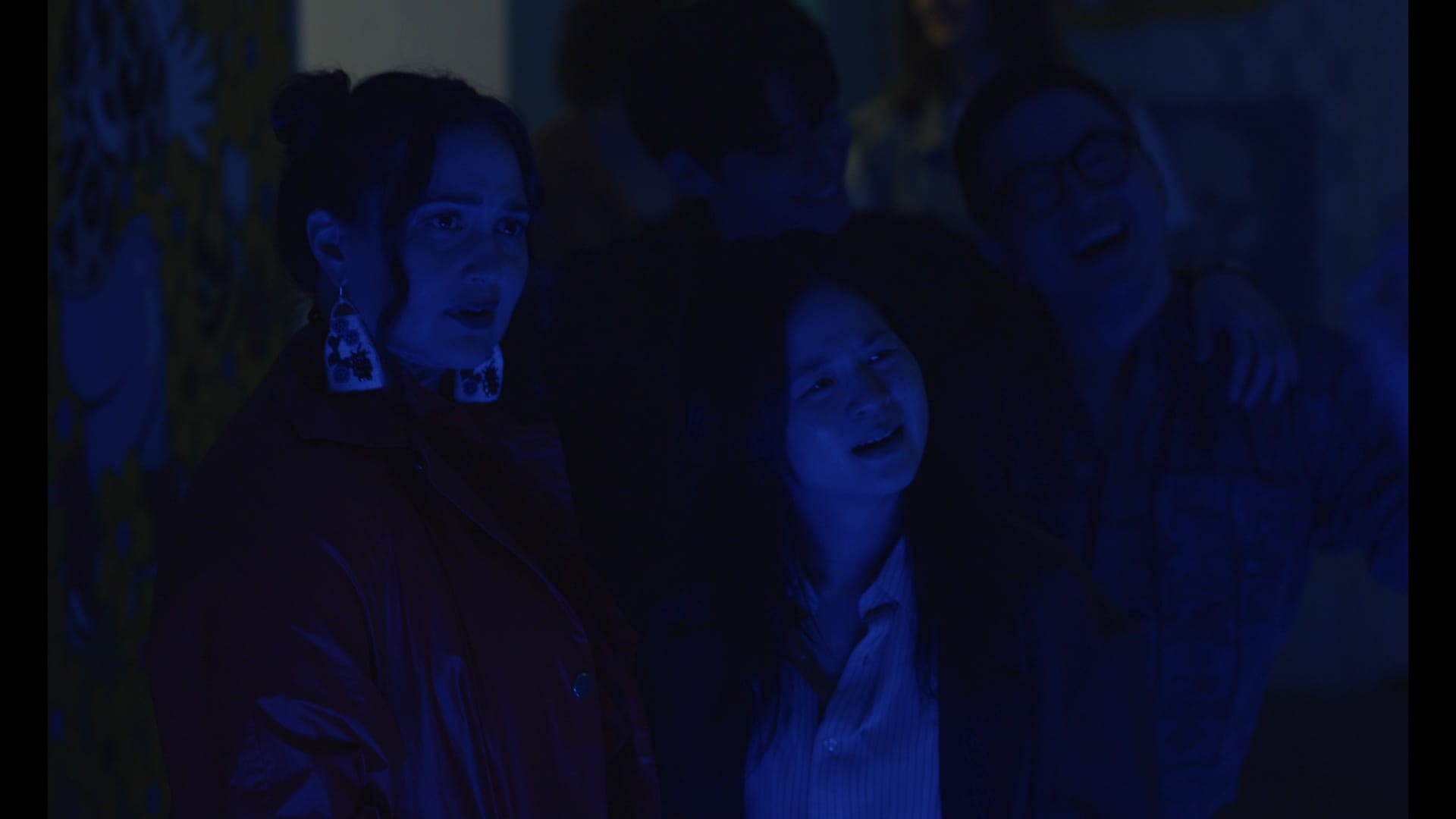
Angela (Kelly Marie Tran) and Lee (Lily Gladstone) are trying to have a baby. Angela’s best friend Chris (Bowen Yang) lives in their garage with his artist boyfriend Min (Han Gi-chan). But Min’s student visa is expiring, and his wealthy grandmother Ja-young (Youh Yun-jung) expects him to join the family business in Korea. Min proposes to Chris, but Chris doesn’t want to be a husband of convenience, so Min suggests he marry Angela, and pay for the IVF treatment she and Lee can’t really afford.

It's a perfect plan, until Ja-young insists on coming over to stage a proper Korean wedding – like, at the end of the week – forcing both couples to pretend to be people they’re not and bringing all of their entangled issues to the surface.

The story’s central conflict comes straight from Ang Lee’s 1993 breakout movie of the same name, which was also hid a moving relationship drama underneath its farcical premise. Draw them in with a comedy of manners and wallop them with feeling: You can totally see why Emma Thompson picked Lee to direct her adaptation of Sense and Sensibility.
But Ahn’s new adaptation – the director shares script credit with Lee’s longtime collaborator James Schamus – adjusts almost everything else, inventing new characters and removing old complications to acknowledge thirty years of queer advocacy and progress, and allow for new problems and new possibilities: In Lee’s original, for example, the bride of convenience was single and straight. I do not think it’s a coincidence that Ahn’s breakout feature Fire Island was also an Austen riff, bringing the bones of Pride and Prejudice into an entirely new context.

And no disrespect to Lee’s original, but Ahn has room to create richer, more distinct characters for his Banquet, and the actors at his disposal are more than happy to flesh them out. Yang and Tran have great glum-pal energy as Chris and Angela, who share both a tendency towards worst-case thinking and an unspoken shorthand that helps them rally each other when they need it most. Han is the farce engine as Min, whose way of handling a problem is to act on his first thought, and then get annoyed when other people don’t immediately join him. (I may have recognized this tic a little too quickly.) And Gladstone plays the opposite notes as the long-suffering Lee, who loves all of these people – especially Angela, of course – but also has her own stuff going on.
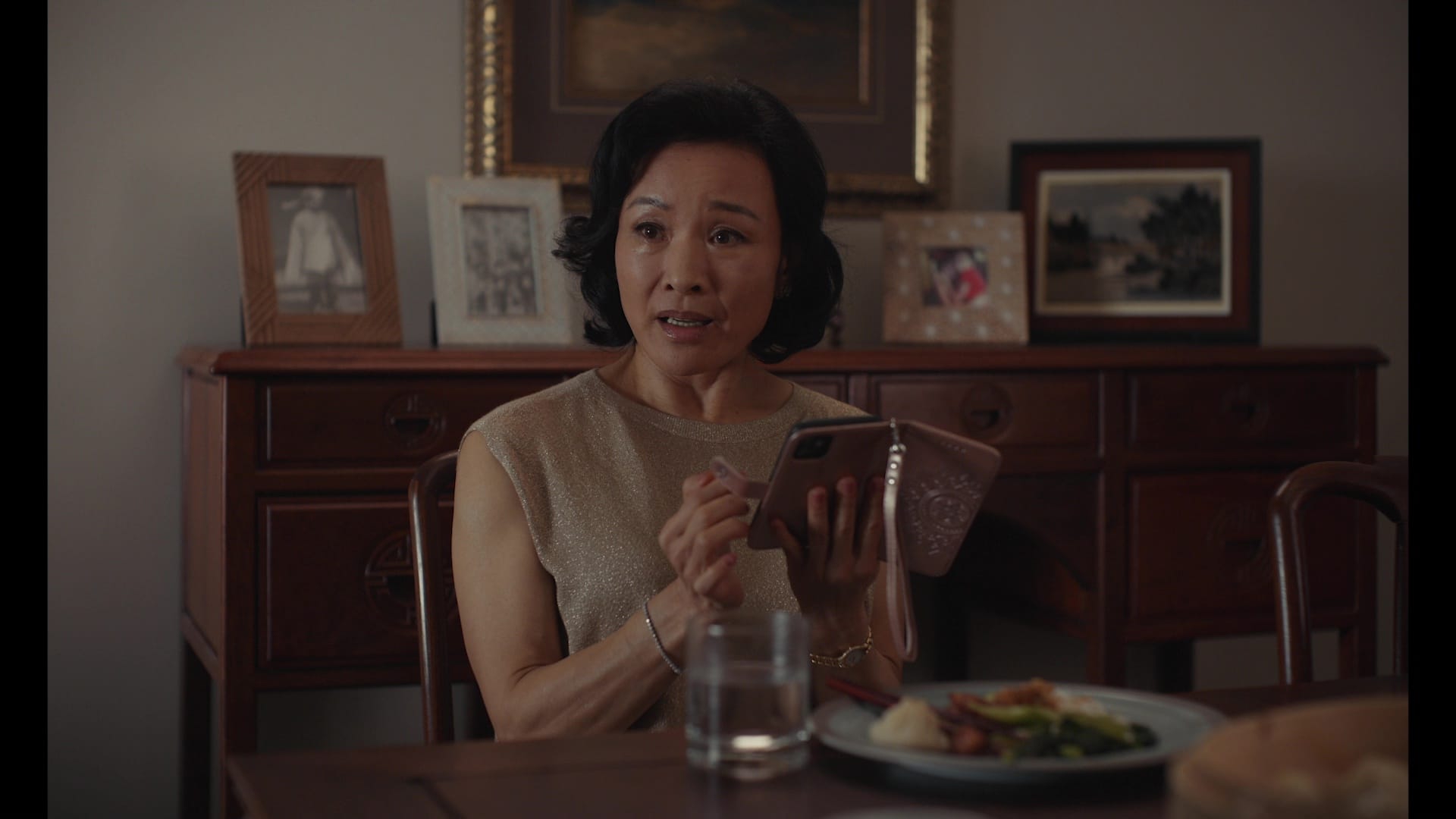
The supporting cast is also exceptional: There’s Youh, who played the grandmother in Minari and here carries a similar undercurrent of empathy, complicated by tradition and self-knowledge, but Joan Chen and Vancouver actor Bobo Le also turn up in the small but key roles of Angela’s smothering mom and Chris’ cousin Kendall, who serve as sounding boards and button-pushers as needed. Ahn builds a generous world for everyone, even giving Emma Yi a tiny little arc as a lawyer at Ja-young’s company and squeezing in references to Star Wars and Kelly Reichardt for the super-fans. This Wedding Banquet is ebullient against all odds, just like its heroes.
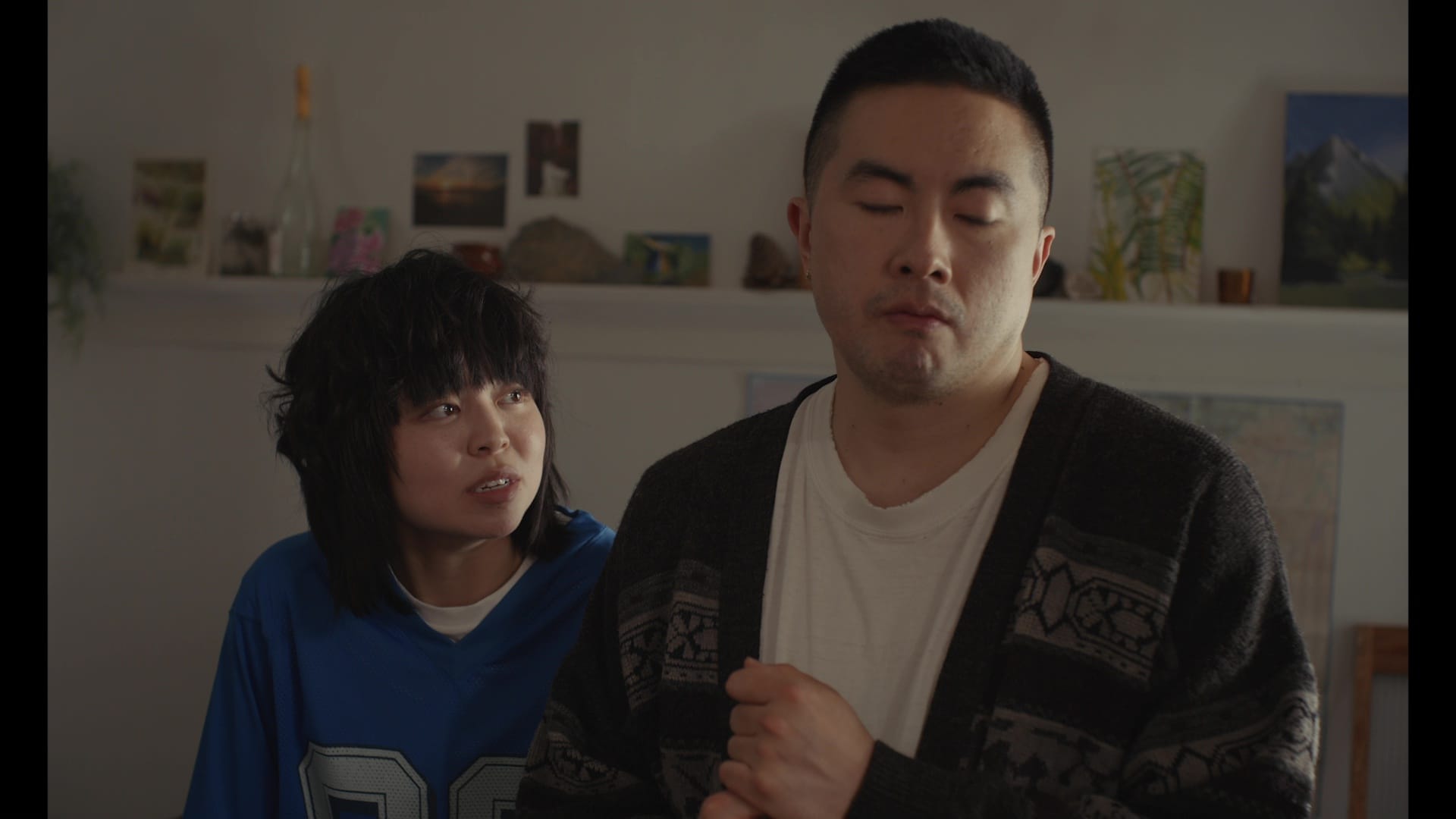
Sadly, there are no special features on either VVS Films’ Canadian Blu-ray or Decal Releasing’s US disc – just the movie, presented in 1.66:1 with 5.1 audio. (Dolby TrueHD in Canada, DTS-HD in the US.) It looks and sounds great, letting Ki Jin Kim’s cinematography showcase the not-so-subtle differences between Lee and Alice’s comfortably ramshackle home and the sparkling corporate offices and wedding venues Min’s scheme pulls them into. It’s a shame there’s no commentary track – I would have loved to hear Ahn joined by executive producers Lee and Schamus, for instance – but I think his movie says everything it needs to say.
No extras on Opus, either, which does feel surprising considering how hard A24 went on the theatrical marketing. Maybe it’s a licensing thing, as the third-party releases of the company’s films rarely offer as much as the in-house discs. (You should know that while the packaging notes the aspect ratio as 1.78:1, that’s only the case for a few minutes; the bulk of Opus is presented at 2.39:1, as it was theatrically.)
Drop is packed by comparison, offering the standard Universal suite of supplements: A commentary track by Landon, who’s as relaxed and informative as he always is, and three featurettes amounting to about 15 minutes of interviews and behind-the-scenes footage.
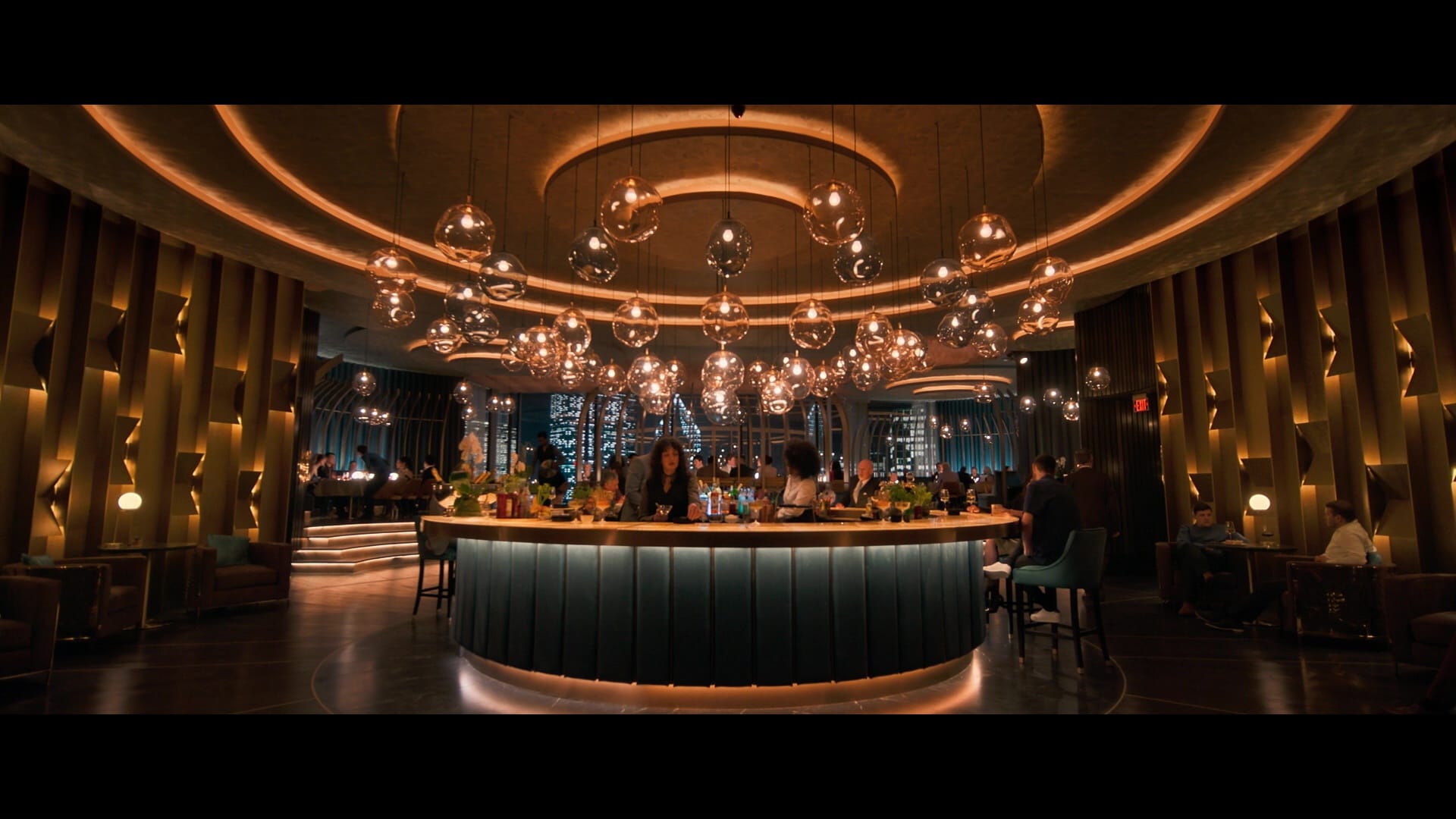
“A Recipe for Thrills: Making Drop” accounts for almost half of that, with Landon and his cast discussing the shoot, the script and the stunt work, while “A Palate for Panic” focuses on the elaborate restaurant set where the bulk of the action takes place, with a fun look at the dishes prepared for the actors, and “Killer Chemistry” does a quick dive into Violet and Henry’s budding relationship and the actors who play them. Nothing groundbreaking, but they get the job done – just like the movie.
Drop is available now in 4K/Blu-ray combo and BD-only editions from Universal Studios Home Entertainment; Opus and The Wedding Banquet are available in Canada from VVS Films; The Wedding Banquet is also available in the US from Decal Releasing.
Up next: Those new Arrow upgrades of Dark City and Swordfish won’t review themselves. Seriously, I’ve asked them.