
Marching As To War
In which Norm spins up the new releases of IS GOD IS, MORTAL KOMBAT II and PRESSURE.

The best thing about watching movies for a living is the element of surprise. Some of my greatest experiences over the decades have come from sitting down to a screening – or spinning up a disc, or clicking on a link – and being absolutely gobsmacked by a work of art for which I was entirely unprepared. I tell you this because I’m worried I’ll oversell Aleshea Harris’ Is God Is. But I don’t think I can.
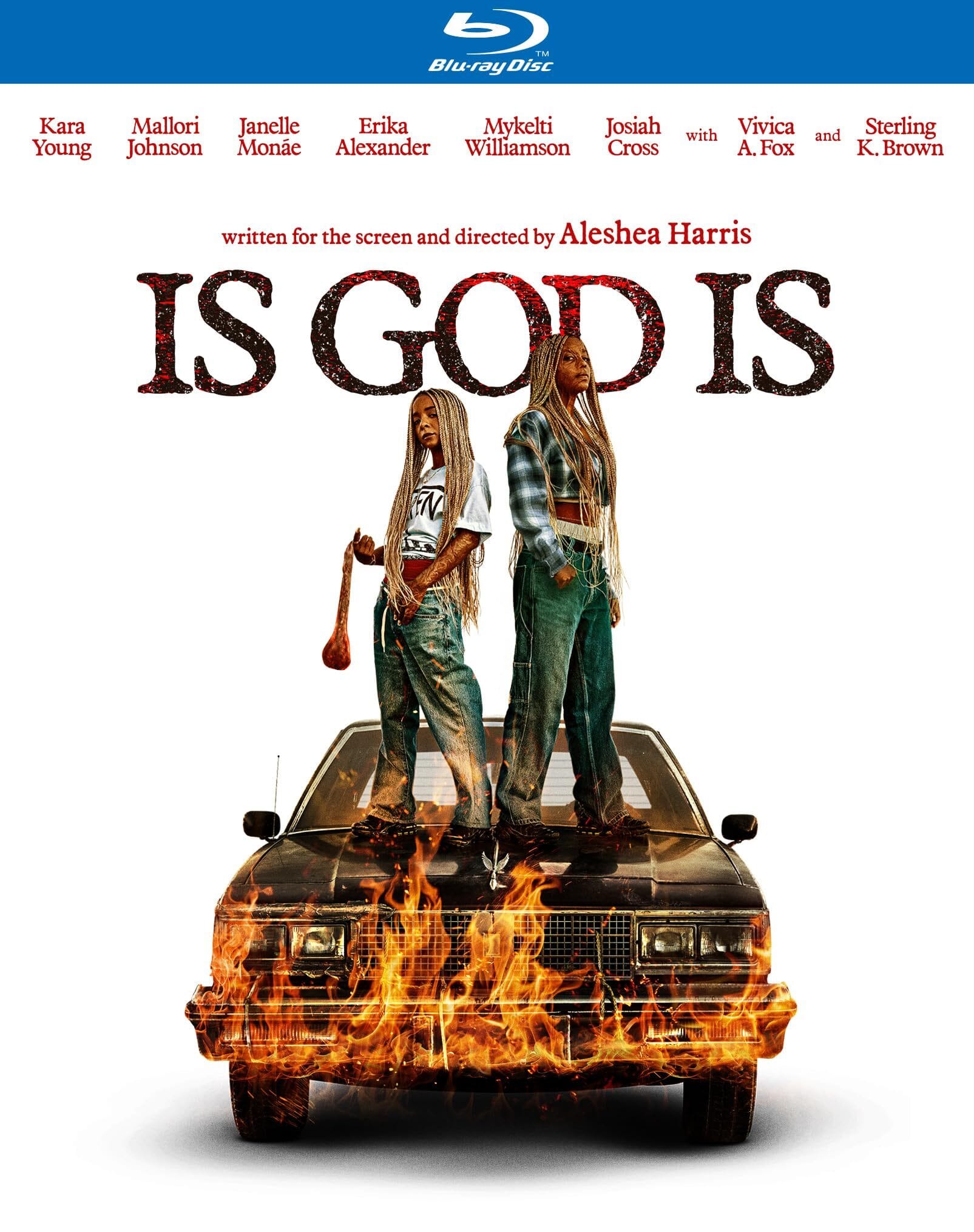
A Southern Gothic parable about twin sisters on a mission of revenge, Is God Is stars Kara Young and Mallori Johnson as Racine and Anaia, two women who bear the scars of a horrific house fire deliberately set by their father when they were children. Anaia got the worst of it, though it’s clear Racine didn’t get away unscathed.

They’ve grown up in a series of foster homes, with Racine taking the role of Anaia’s protector; they’ve also spent those years believing their mother died in that fire, which turns out not to have been the case. In the opening scenes, they learn she survived, and that she’s reaching out to them from her deathbed. That visit is the first chapter of the episodic story, which follows the twins as they set out to find their father, and kill him, at their mother’s behest.
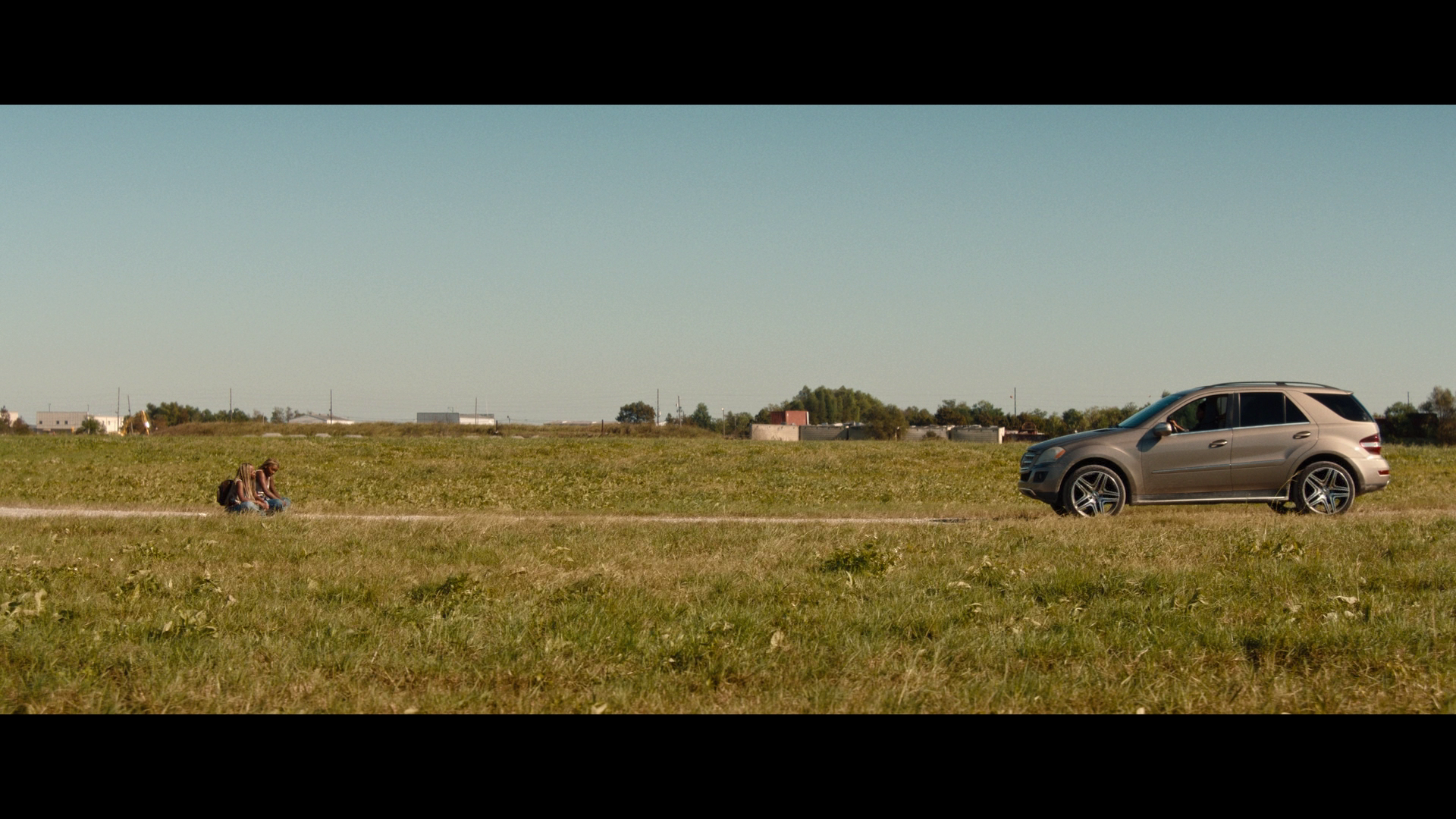
The biggest complement I can offer Is God Is is that I cannot imagine how this worked on stage. Harris has opened up her story into a full-on road movie while still keeping most of its quasi-mystical elements in the dialogue. The vague settings of the Northeast, the Dirty South and the Valley are now more concrete locations, but the twins still speak reverently of their mother, played by Vivica A. Fox, calling her either “She” or “God” – since she is their creator – and regard their father, played by Sterling K. Brown, as someone who doesn’t even deserve to be called by his name. (He’s only ever referred to as “The Man.”)
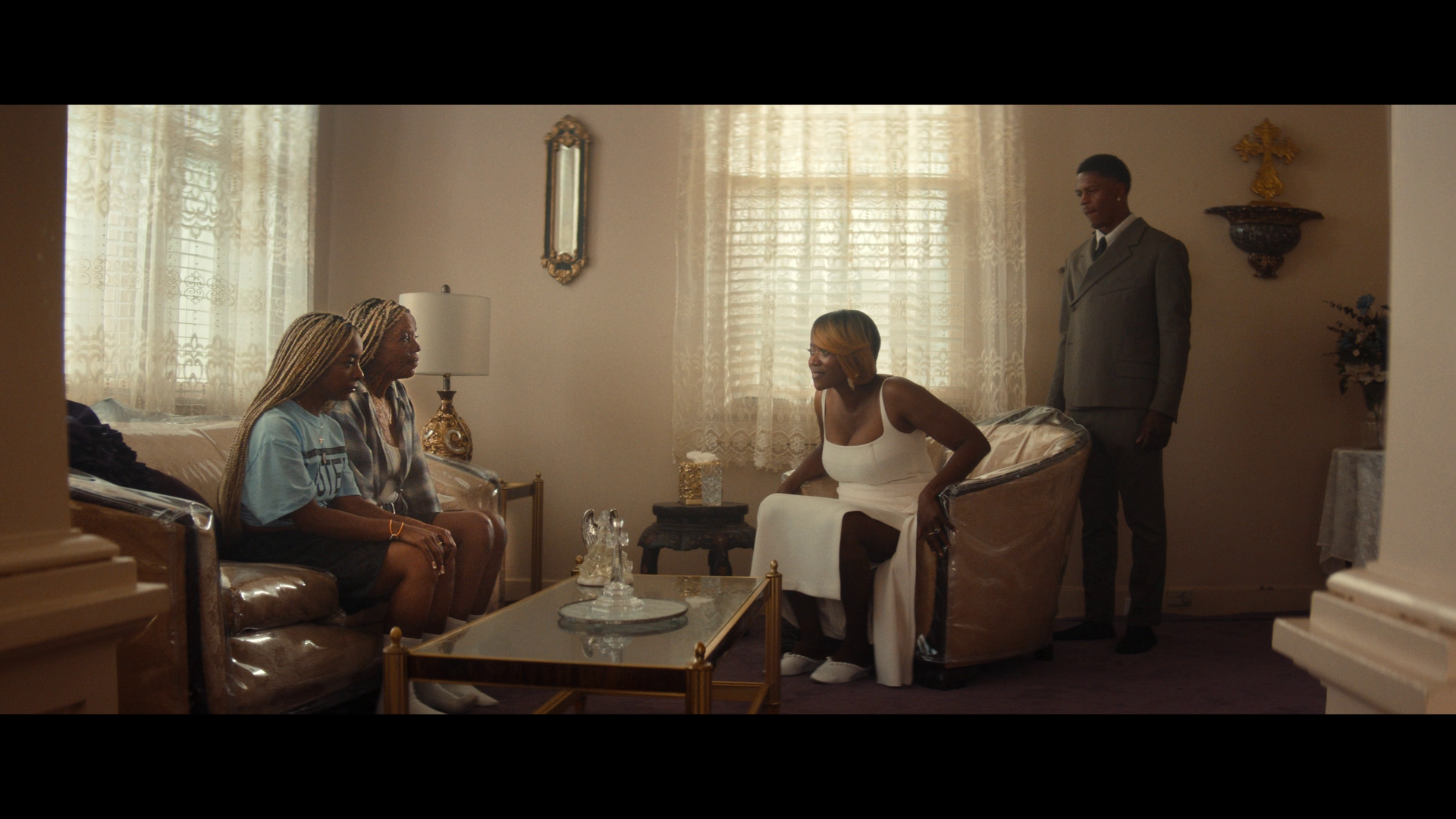
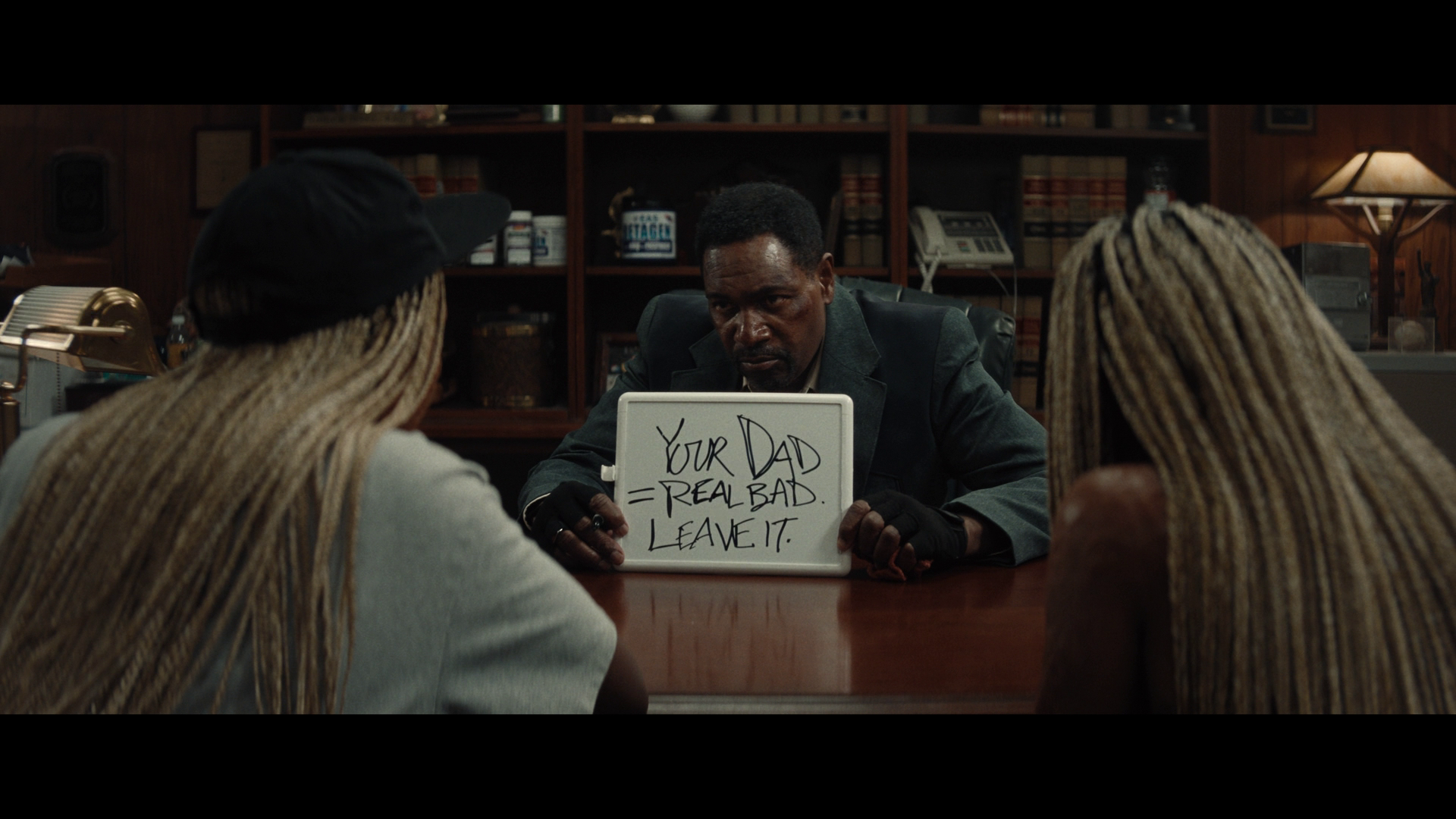
The twins set out on their quest, moving from one lead to the next. There’s a church deacon (Erika Alexander) who was with him for a while, and a defense attorney (Mykelti Williamson) who made the mistake of taking his case. Josaiah Cross, Janelle Monáe, Xavier Mills and Justen Ross also turn up as people whose lives are tangled up with The Man, or have been. And at every stop, Racine gets angrier and Anaia gets more conflicted.
Racine has taken to carrying a sock full of stones with her, the better to dispense primal justice on anyone who gets in their way; Anaia is more of a talker than a fighter, hoping to understand where they came from and why their father is who he is. It’s less important to Racine, who’s spent so long fighting for her sister that she can’t imagine ever stopping. Young and Johnson are able to carry so much unspoken truth in their bodies, on their faces, that we never question what these women are prepared to do for one another. We just hope it won’t come to that. Or maybe we hope it will.
Using the rhythms of a sun-baked revenge picture to develop her characters one step at a time, Harris builds a compelling story about the cost of vengeance – what the wronged are willing to do, why they’re willing to do it, and to whom. There’s at least one other allegory – one about how the devil can be a charming fucker when he wants to – but even taken as pulp entertainment, Is God Is distinguishes itself from the first frames.
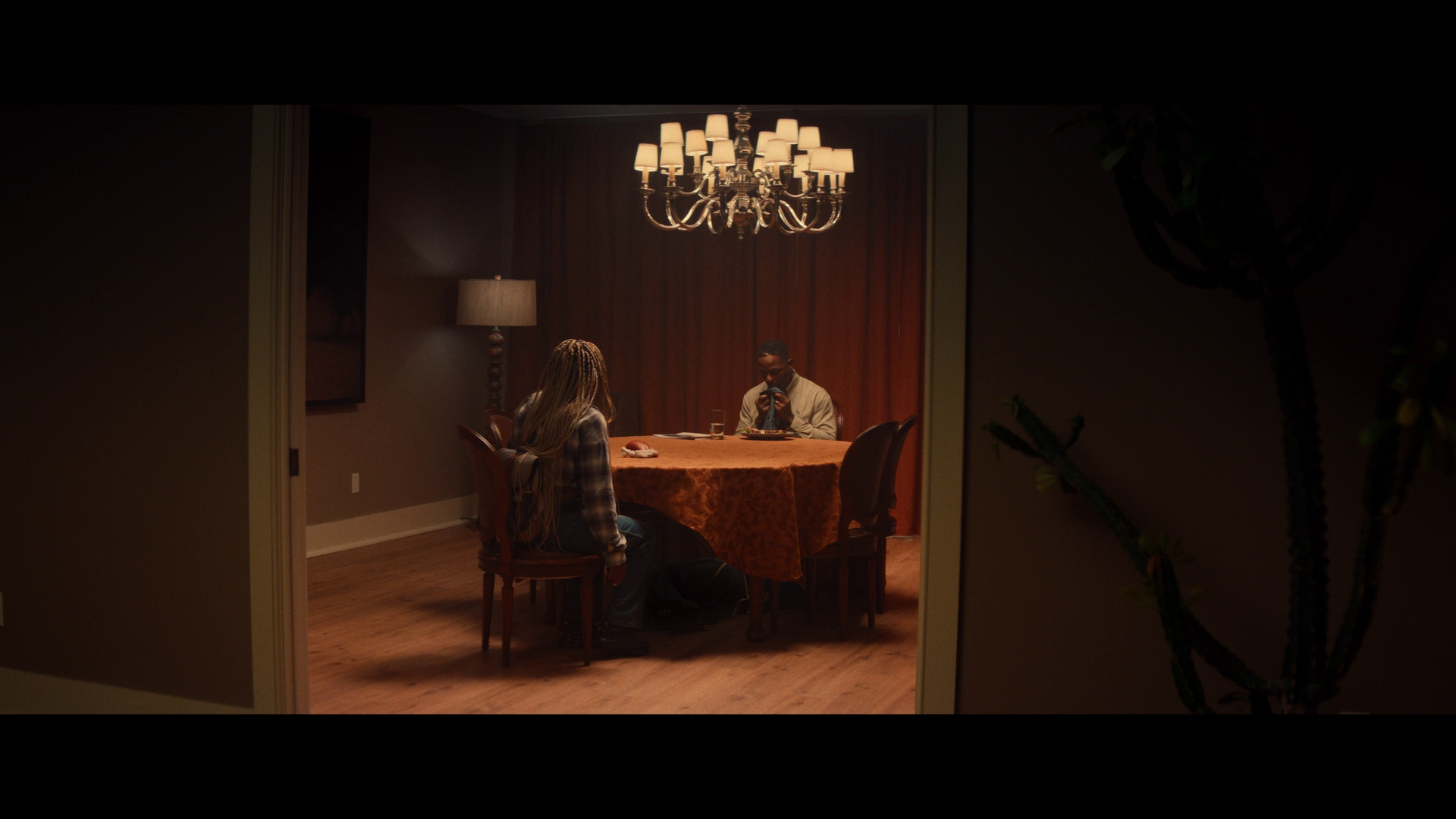
Alexander Dynan, who’s shot most of Paul Schrader’s recent features as well as After Love and last year’s The History of Sound, does fantastic work here, infusing ordinary spaces – a bedroom, a church, a storefront office, a well-appointed home – with an underlying wrongness, suggesting they’ve all been infected with the same pervasive rot. Like I said, there’s a whole mess of ideas floating around if you care to look.
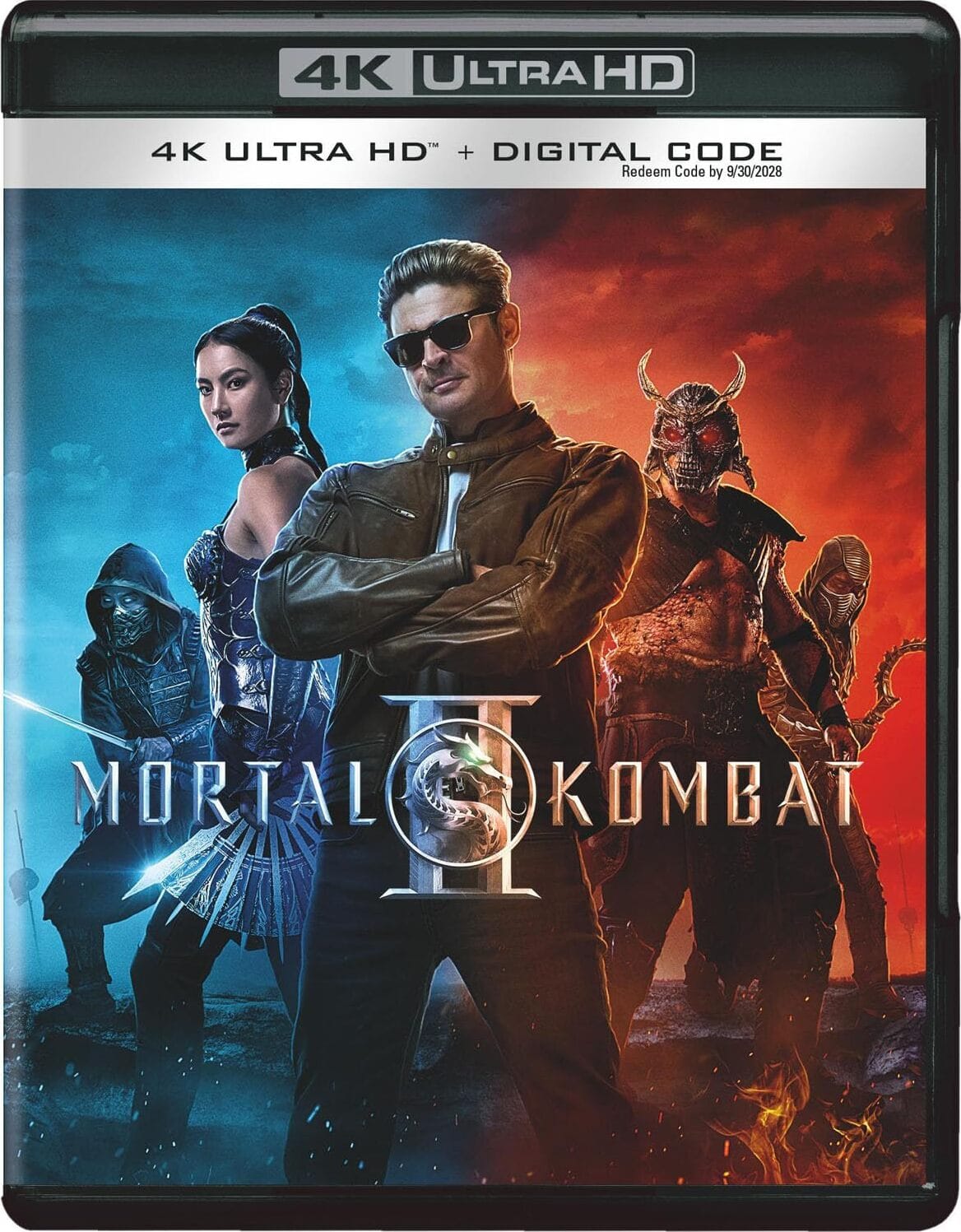
Speaking of pure pulp entertainment, you know what else was pretty good? Mortal Kombat II! I can’t say I was impressed by Simon McQuoid’s initial attempt to reboot the action franchise five years ago – it lacked both the style and the eccentricity of Paul W.S. Anderson’s first run at the property, in 1995 – but McQuoid’s sequel is looser and sillier, shrugging off the Chosen One mythmaking and throwing us straight into the fray: Mortal Kombat is back on, with Shao Khan (Martyn Ford), the sinister warlord of Outworld, just one tournament away from taking possession of Earthrealm. And somehow, Lord Raiden’s team of noble warriors have to convince a has-been ’90s action star named Johnny Cage (Karl Urban) to join their quest. They tell him he’s their only hope; he thinks they’re Big Trouble in Little China cosplayers.

So, yeah: It’s Galaxy Quest. And it works.
In the supplements for MKII, McQuoid and producer James Wan explain that the trick to making this movie work was treating the tournament as the B-story so the personal journeys of Johnny and his Outworld counterpart Kitana (Adeline Rudolph) could play out in the foreground.
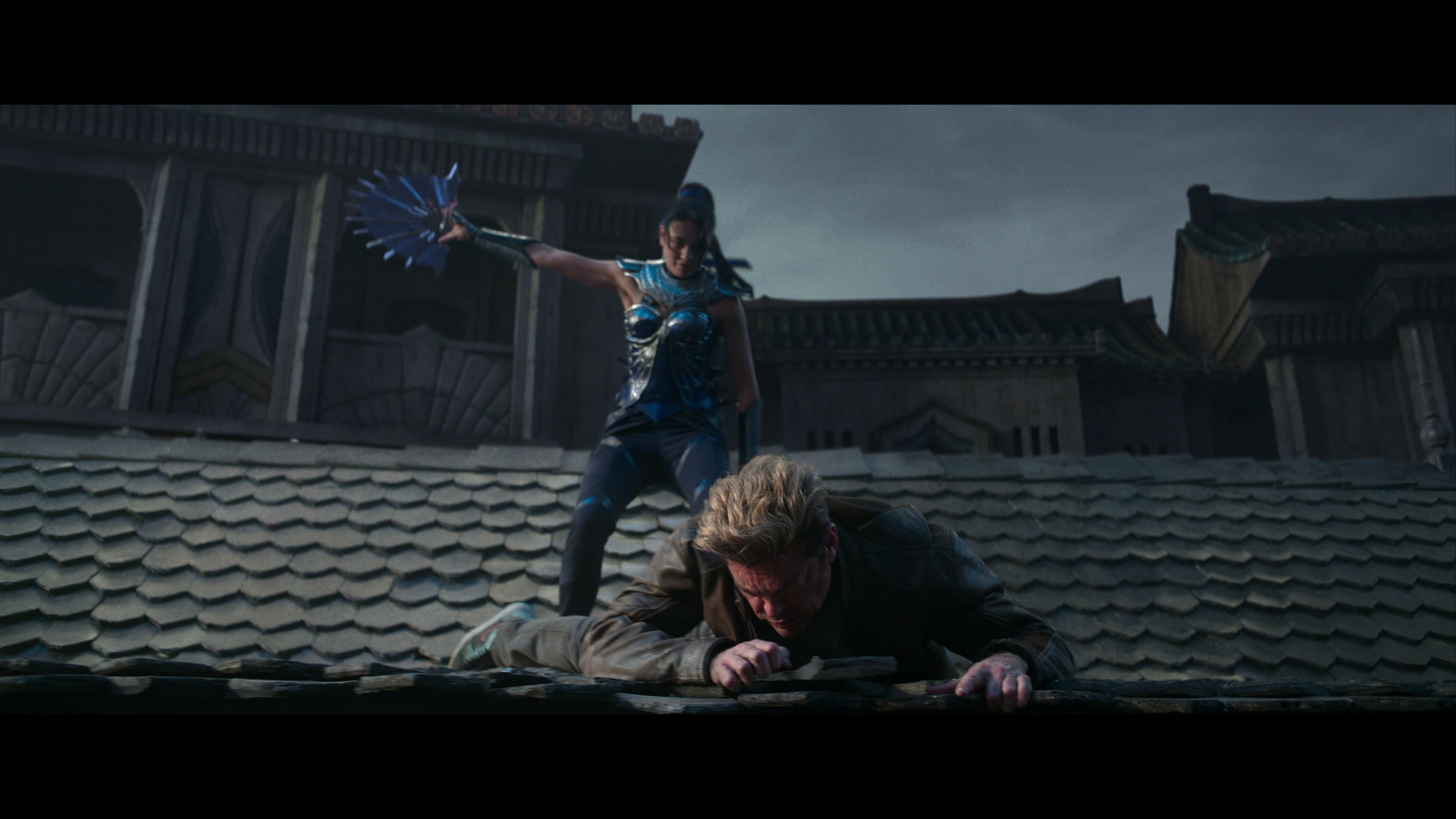
The other thing that works is that Kitana wipes the floor with Johnny in the second reel, knocking him out of the tournament and letting him wander around the realms on little missions. So you’ve got Karl Urban as the Han Solo of the franchise – or the Jack Burton, I guess – cutting through all the mythology with a dismissive quip or an unexpected workaround. Punch the bad guy in the nuts! It always worked in the ’90s!
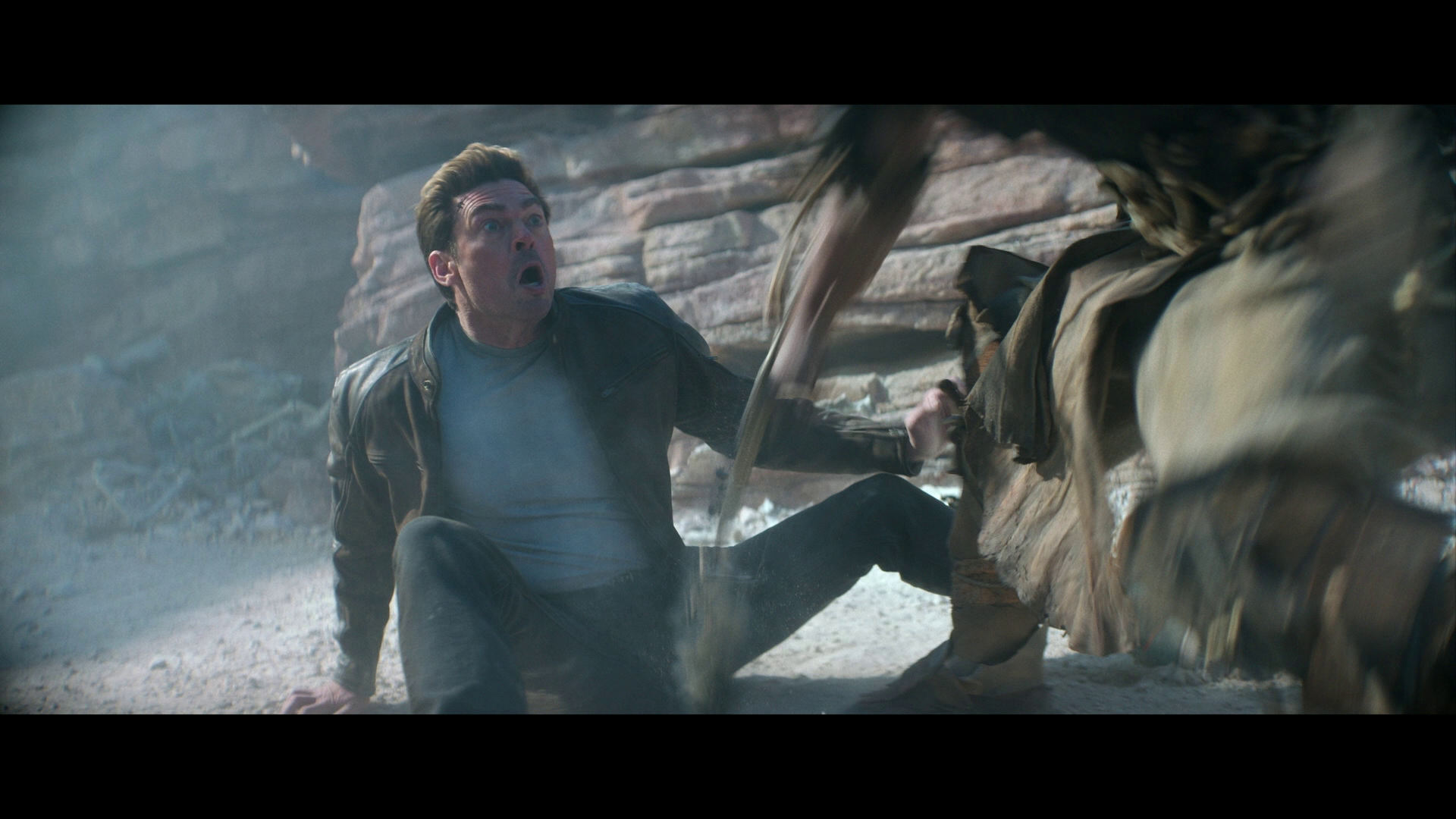
This gives McQuoid and screenwriter Jeremy Slater – who’s new to the property but has plenty of genre experience, having created both the Exorcist and Moon Knight TV series and co-written Godzilla X Kong: The New Empire and Coyote Vs ACME – to have a lot more fun this time around, bouncing various characters off each other inside and outside the tournament situation to see how the combinations play.
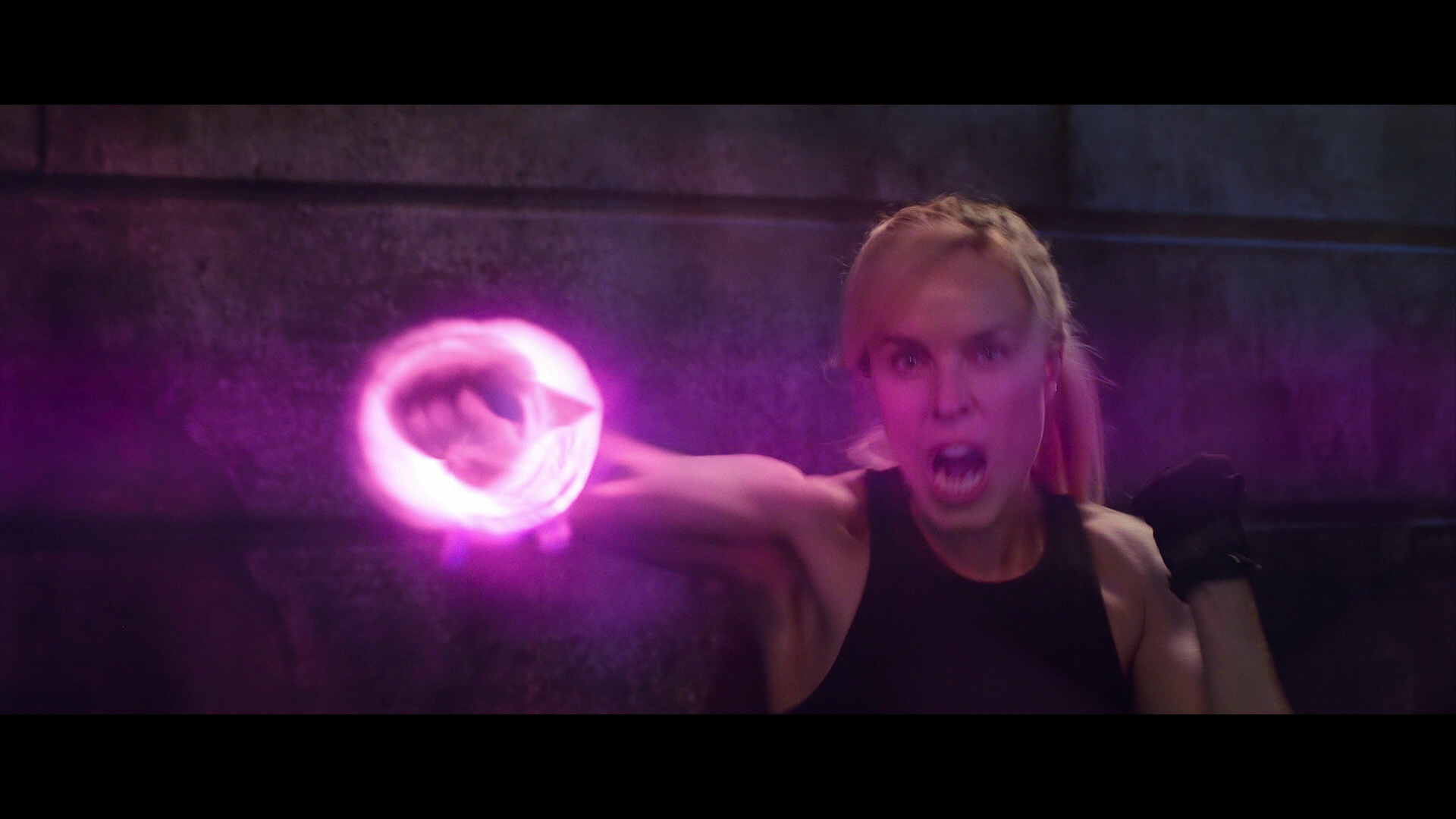
Some of them remain duds: Jessica McNamee’s Sonya Blade, Mehcad Brooks’ Jax and Lewis Tan’s Cole Young still don’t have much in the way of compelling narratives, though Jax now has cool robot arms. The actors do their best, and they’re pretty lively in the fight scenes, but the movie just isn’t as interested in them this time around.
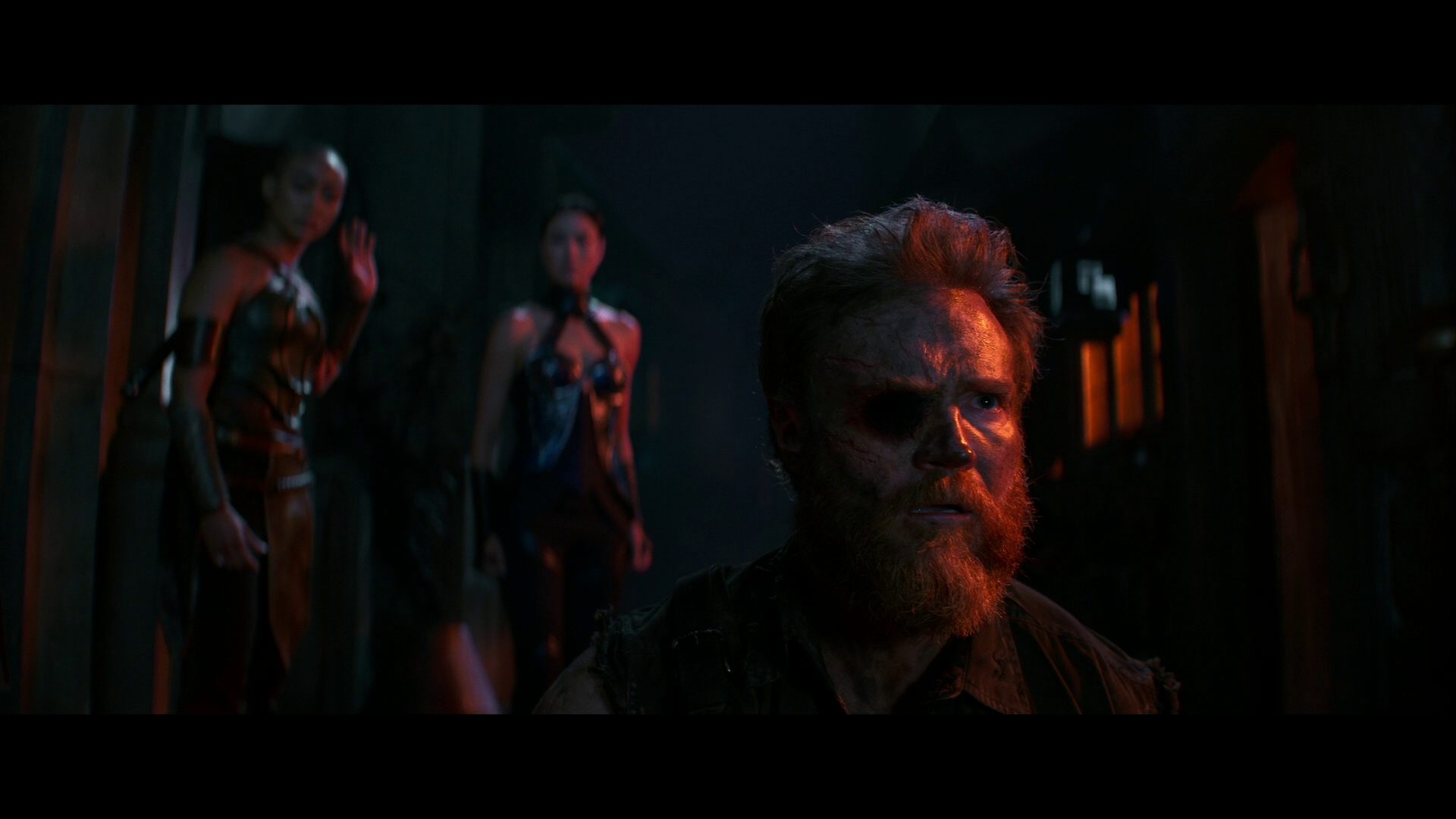
Fortunately, because this is Mortal Kombat, dead fighters don’t need to remain dead! Champions killed in the last movie can come back as evil revenants, or find peace in hell, or just get resurrected and tricked out with an eye that shoots lasers for comic relief, as is the situation with Josh Lawson’s obnoxious mercenary Kano. It’s all a little ridiculous, but now that Johnny’s around to point that out, everybody can relax into it and have a good time with all the kicking and punching. Which is, after all, the most important thing.
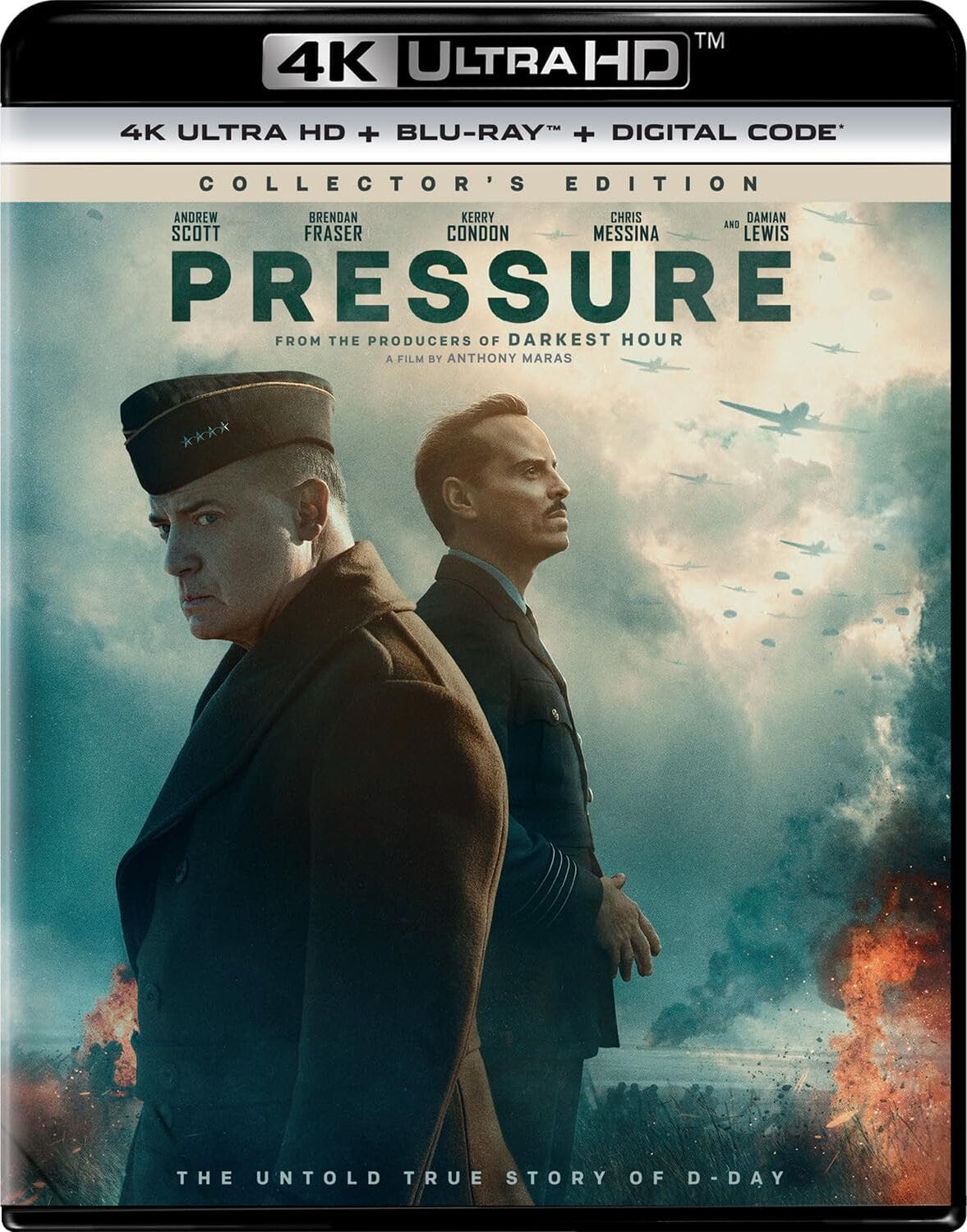
There is no kicking or punching in Anthony Maras’ WWII drama Pressure, which is probably for the best. But Maras’ film carries a different kind of tension: How do you tell a suspenseful story when everyone knows the ending?
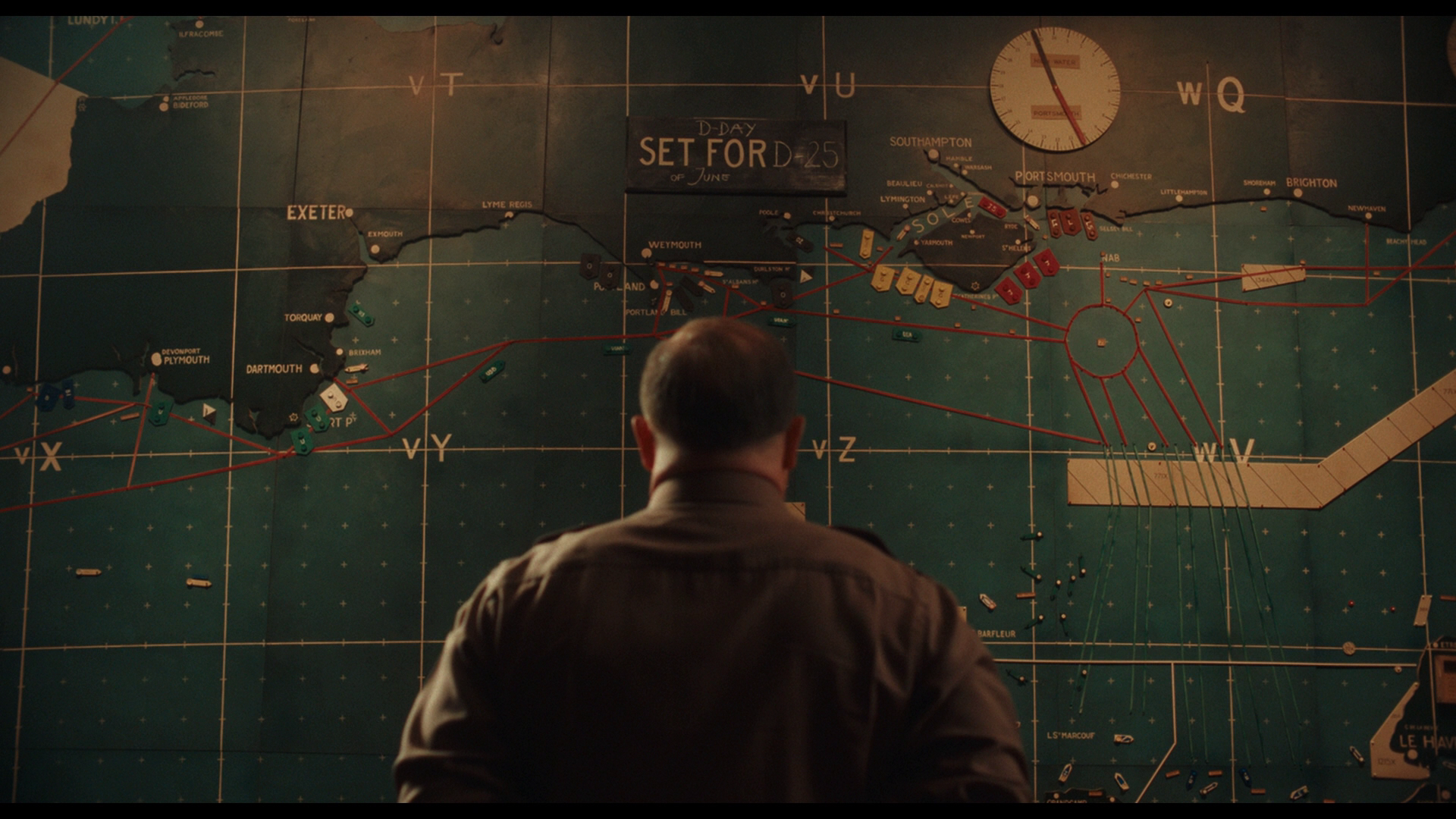
The Allies invaded France by air and sea on June 6th, 1944, punching a hole in the Nazi occupation of Europe and beginning the long march to Berlin. D-Day was the turning point of WWII. It happened, and it’s extremely likely that anyone sitting down to watch this movie – or the play upon which director Anthony Maras has built his adaptation – will be familiar with the details.
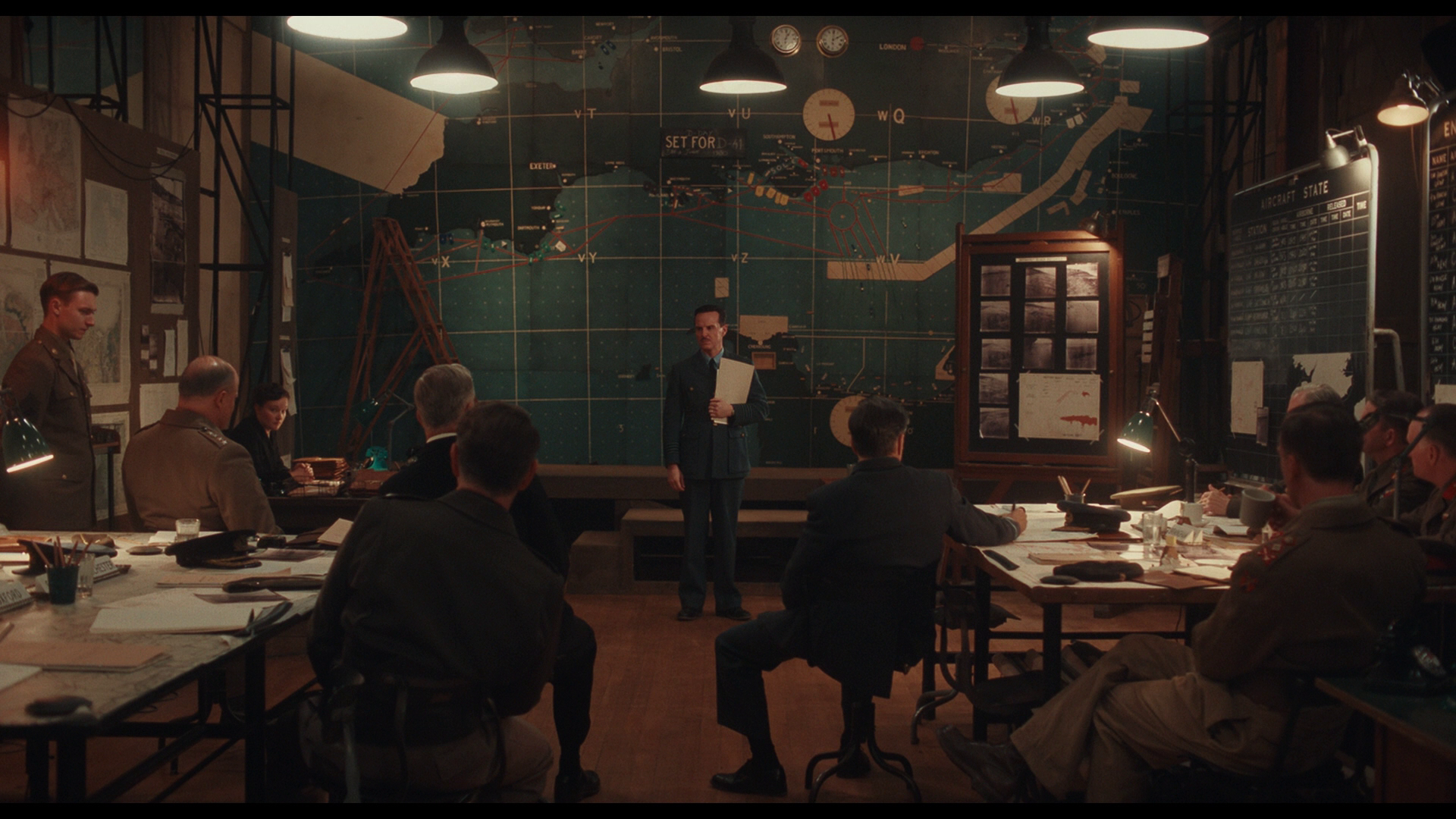
But that’s the hook of David Haig’s stage play: What if the details aren’t what you thought they were? Pressure drops us into the weekend before Operation Overlord, following the deliberations of American and British experts to determine whether the weather in Normandy would favor the Allies rather than the Nazis. Eisenhower’s man, Irving Krick, was certain the original date of June 5th would be clear and calm; Churchill’s chosen meteorologist, James Stagg, saw disaster in the storm fronts forming over the Atlantic, and insisted Eisenhower postpone the invasion until more hospitable conditions arrived.
Hindsight being 20/20, we now know Stagg was right and Krick was wrong, but of course on June 3rd the choice to postpone – putting the assembled forces on indefinite hold and virtually guaranteeing the plans for the operation would break containment – seemed an untenable risk. So Pressure focuses on the challenge before Stagg: To refuse to go along with the group and stand behind his analysis, risking not just his reputation but the outcome of the war. It’s a pretty dramatic gambit, honestly.
And yes, by its very nature Pressure embraces the mythology of the Complicated Genius – Stagg was right, after all – but it also dares to ask a provocative, dramatic question: Can an audience still invest in a heroic underdog if that underdog is kind of a prick?
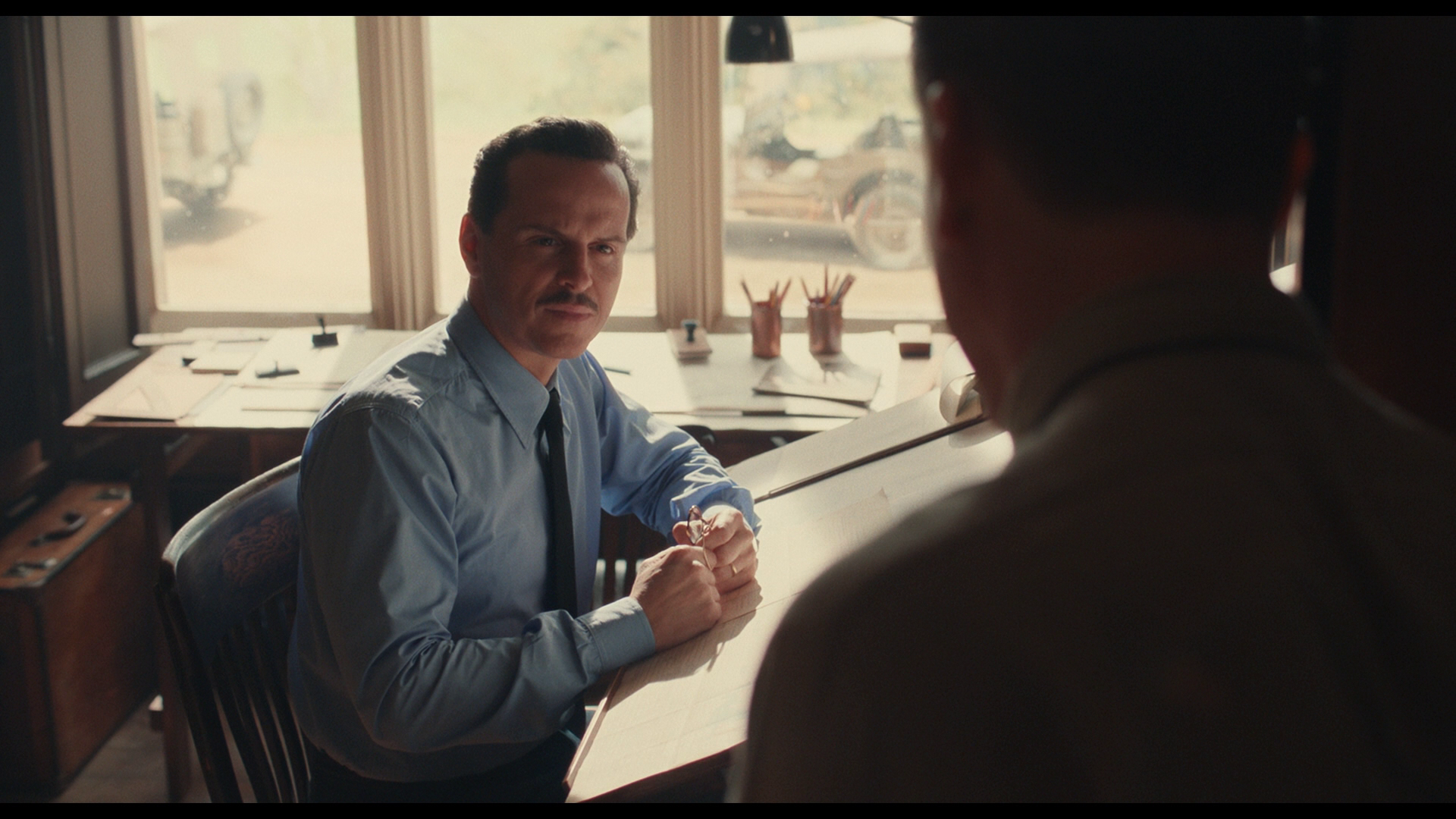
That’s the way Andrew Scott chooses to play Stagg, at least, and though his ill temper is given some context – his wife is about to have a baby, they’ve spent the last four years in a London under siege, and of course the fate of the free world is literally riding on his analysis – he doesn’t back away from the character’s less appealing qualities. (The very first thing Stagg does on arriving at Southwick House is alienate his staff by ordering an end to any and all recreational activities that might be available to them.)
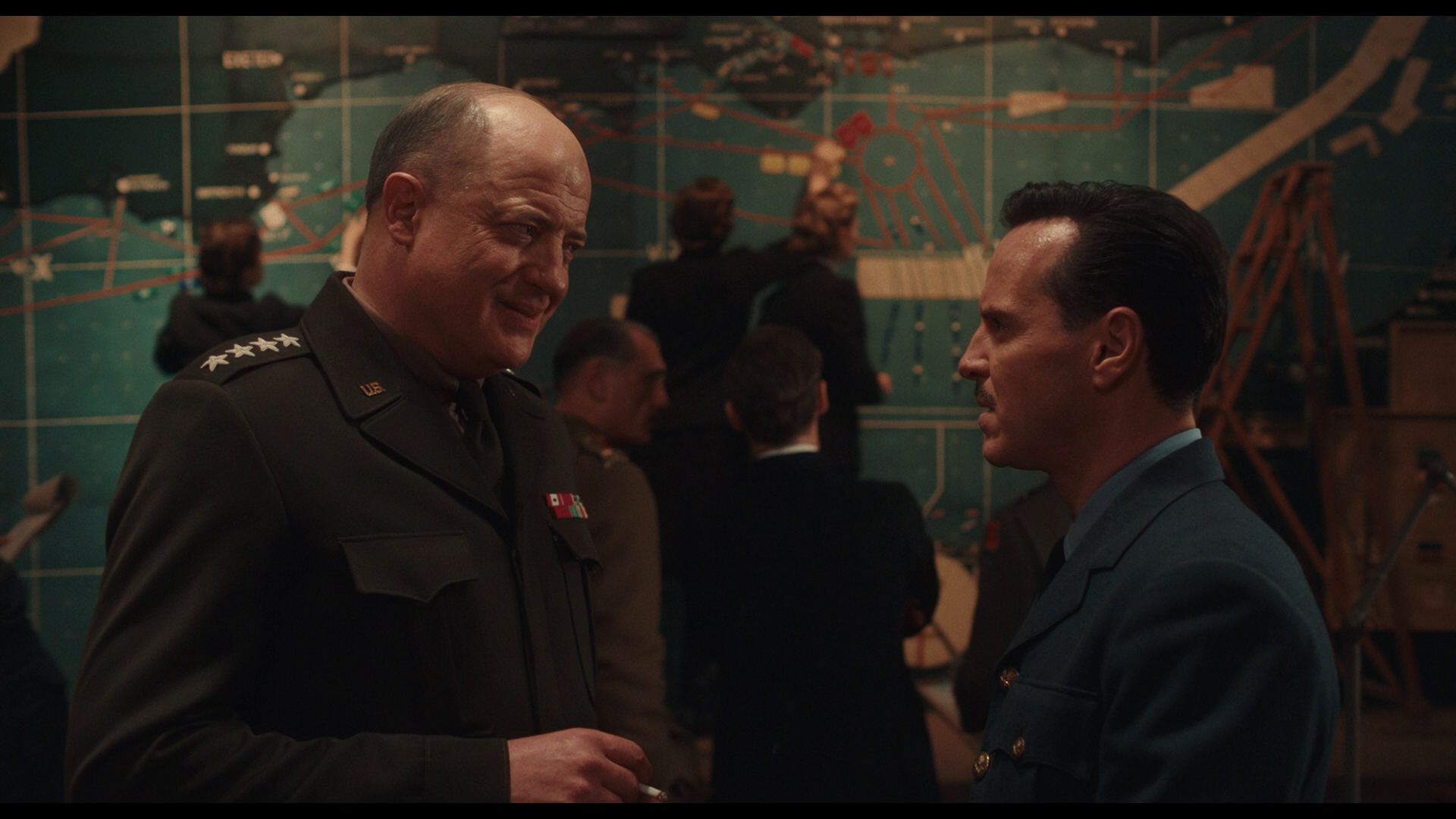
Brendan Fraser doesn’t shy away from the challenge of Eisenhower, either. The actor’s voice and eyes might remain empathetic – it’s frankly impossible to ask Fraser to play someone without a soul – but he captures the bearing of a man who’s no longer willing to entertain uncertainty in his advisers, and cannot understand why this twitchy Scotsman can’t just get with the program. The Scotsman, for his part, can’t understand why the Americans can’t accept that he knows the local weather better than they do.
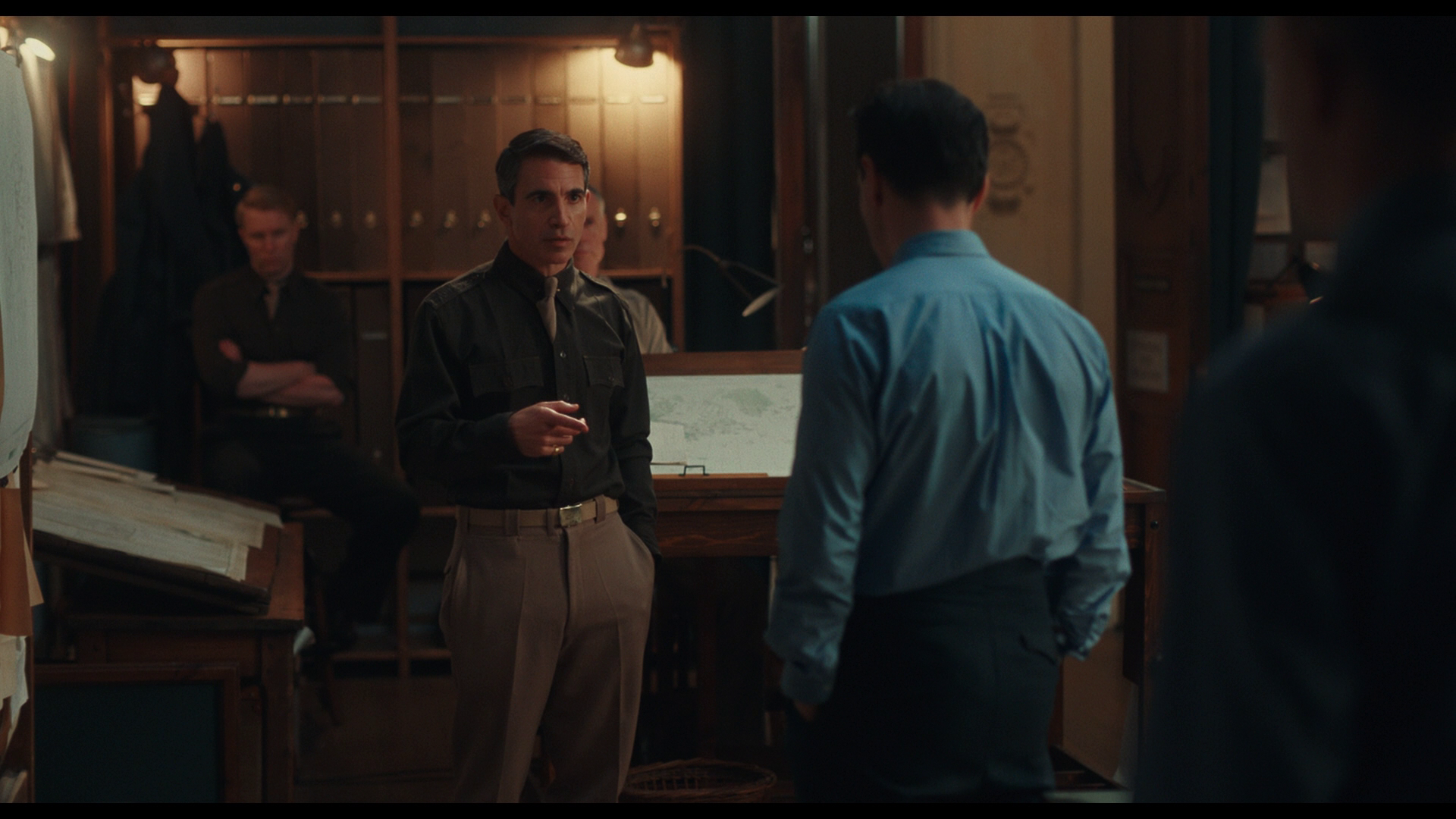
That’s the real conflict that drives Pressure, with Scott and Fraser playing their roles like warring kings, with Kerry Condon and Chris Messina serving as their sounding boards as Eisenhower’s personal secretary Kay Sommersby and Stagg’s rival Krick, respectively. We know how the invasion will unfold, but we don’t know how this one piece of it – arguably the most important piece – played out. And while Maras is maybe a little too eager to open the play up to a more cinematic scale, particularly in the final scenes, I can’t really say Stagg doesn’t deserve the victory lap he gets here. The guy did earn it.
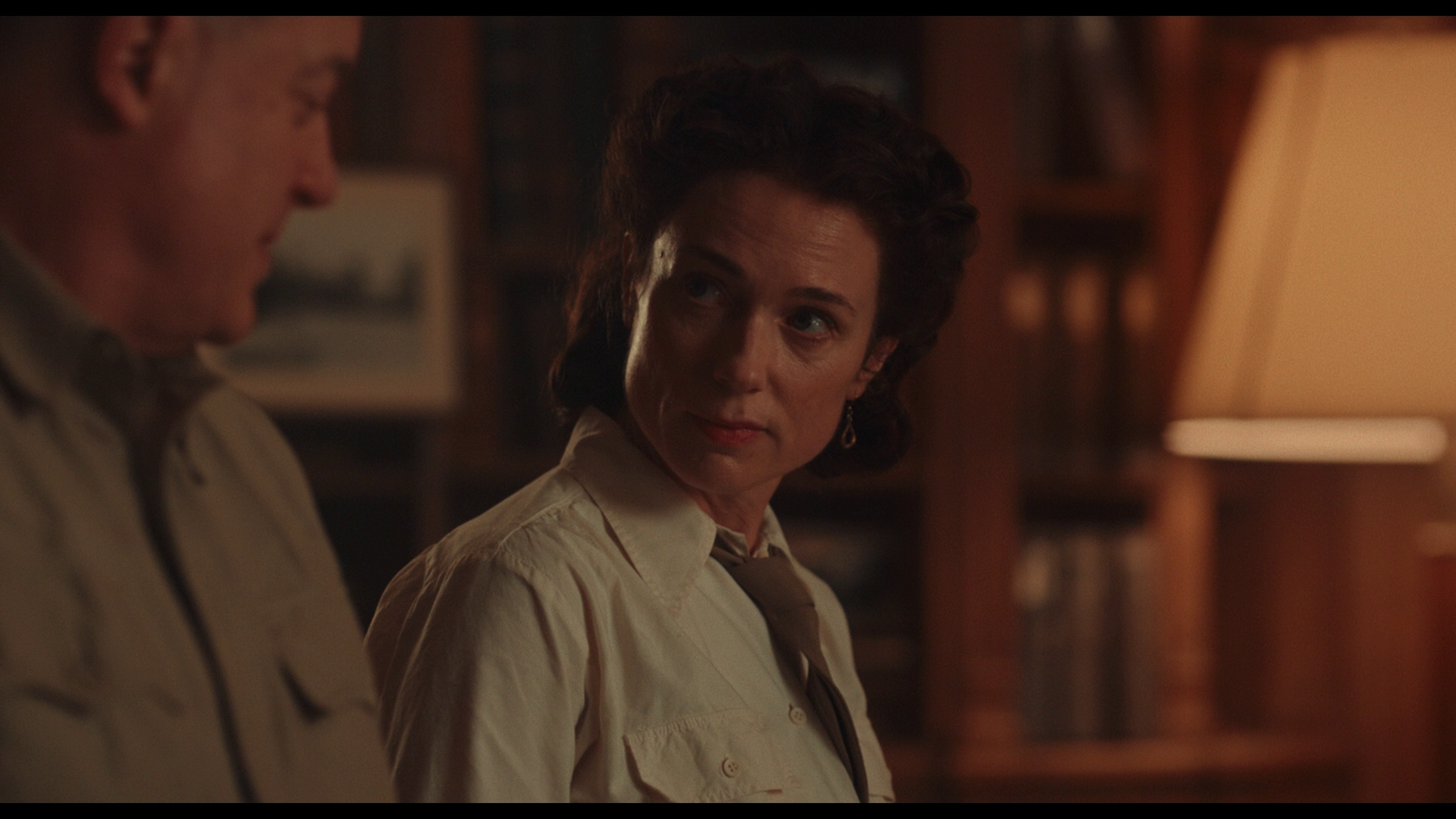
Pressure comes to disc in an excellent 4K presentation that makes Jamie D. Ramsay’s cinematography as vivid and varied as it was in theaters. I would never have realized this was the same guy who shot Scott so tenderly in Andrew Haigh’s All of Us Strangers, but he also made Nick Hamm’s William Tell in the interim, so maybe he’s just one of those amazing DPs who doesn’t worry about a personal signature and just goes for the look the project demands. The Atmos audio is reserved until it isn’t, springing to furious life in a couple of key scenes and then pulling back again. It’s a good mix.
Supplements are modest, with just two production featurettes – “Building Pressure” and “An Authentic World of War” – running around 20 minutes in total. The latter, which focuses on the film team’s quest for authenticity in every aspect of the sets, costumes and props, is admirable for how much it clearly loves the nerdiness of the art department. Nerds! They get the job done!

The five featurettes on Warner’s Mortal Kombat II celebrate nerdiness as well, both in the excitement of the cast to be living in the world of their childhood fighting game and in the sense that this movie needed to be the film that its 2021 predecessor wasn’t. No one mentions Galaxy Quest even once, mind you.
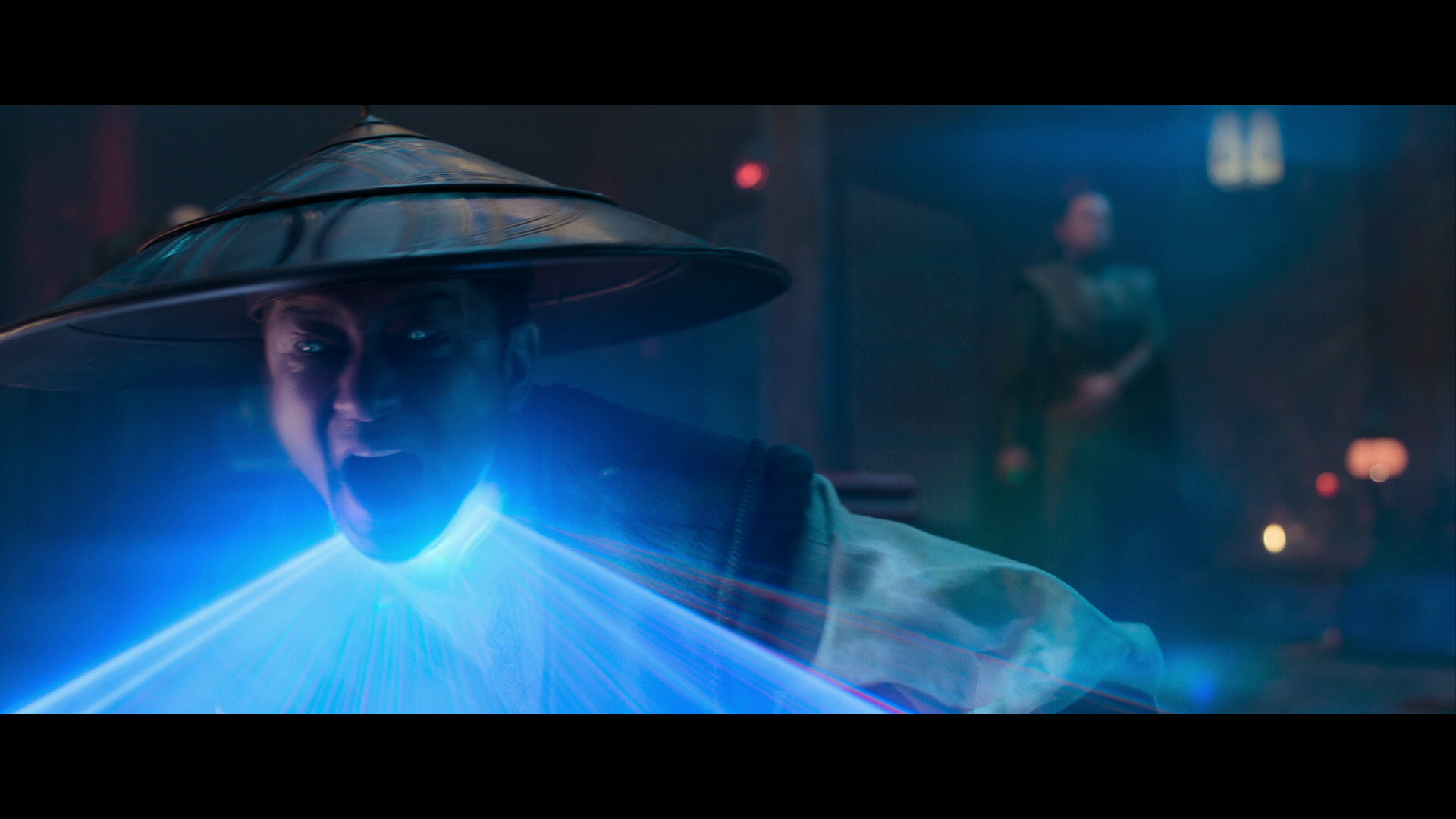
We get to see plenty of on-set footage, the better to appreciate the film’s elegant combination of greenscreen stages, LED display walls and densely populated soundstages. And there’s a lot of fight training, perhaps to underline the fact that most of the cast did some of their own action choreography. (Adeline Rudolph admits she couldn’t stop playing with Kitana’s signature death fans.)
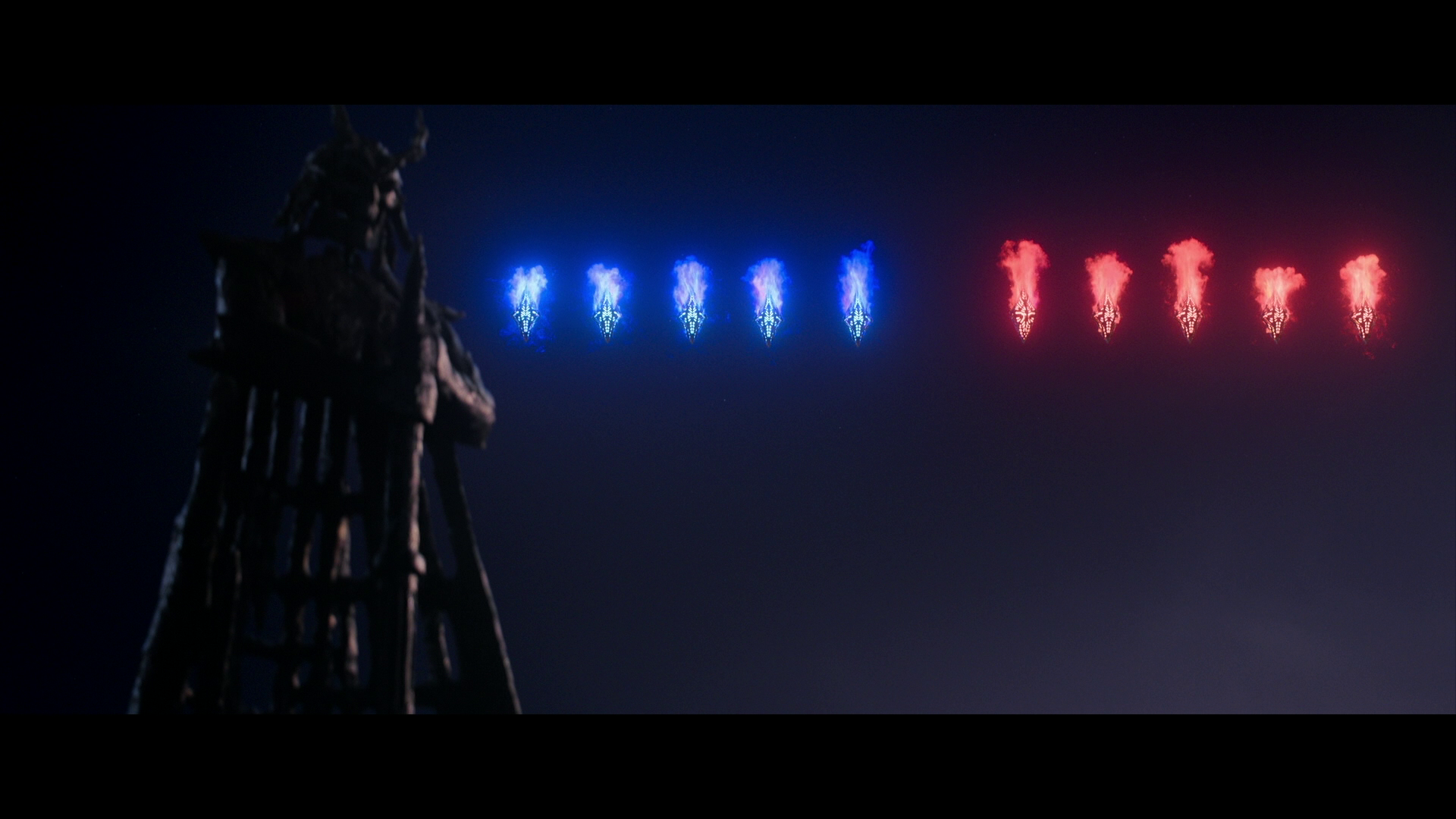
The 4K presentation is reference quality, with the franchise’s signature reds and blues popping out in the HDR grade – Kano’s eye laser is a particular highlight – though more naturalistic scenes also look immaculate, as in the vision of Hell as a peaceful garden or the visit to the Takartan village, where everything is covered in a fine layer of bone dust.
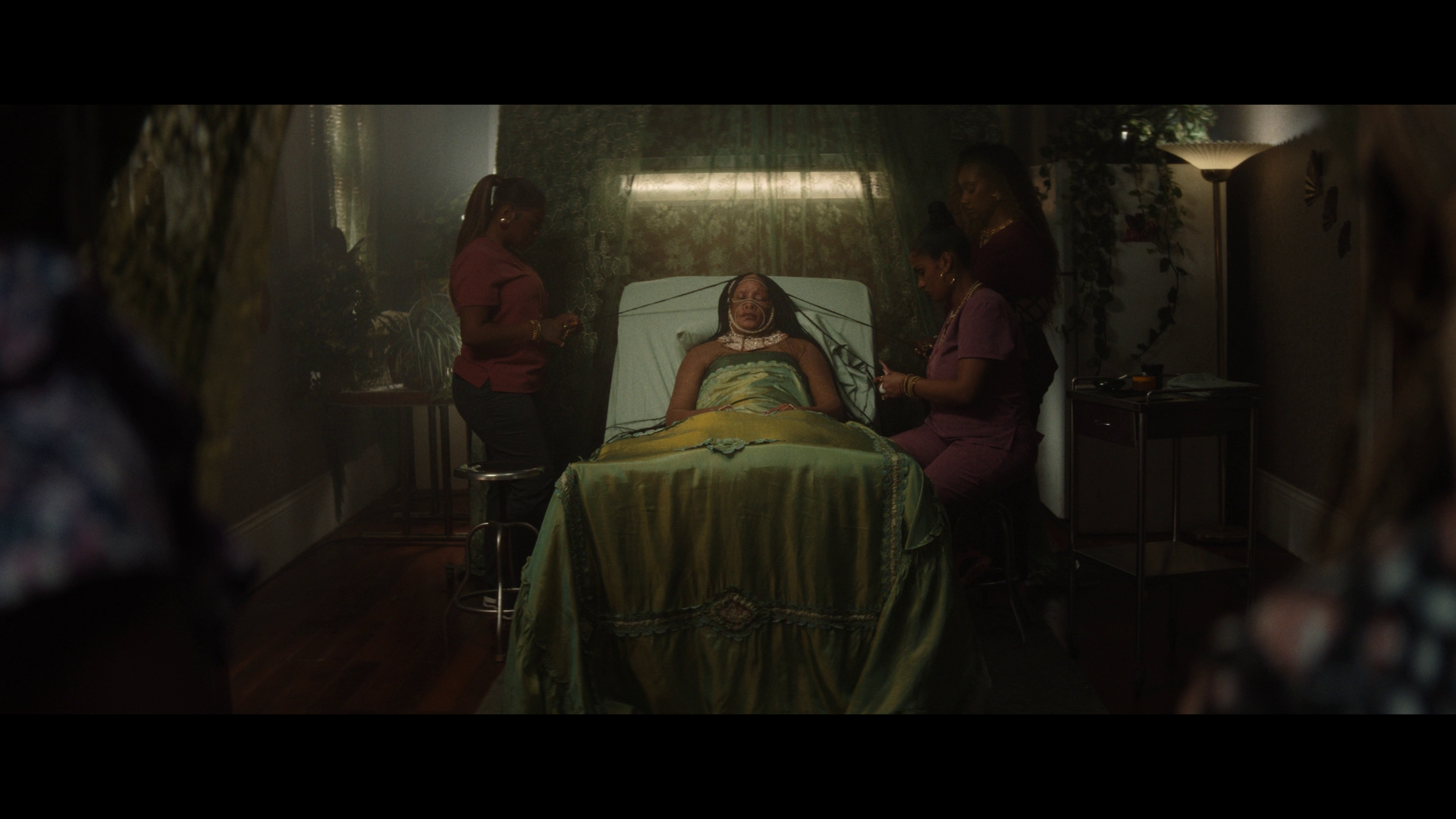
Finally, there’s Alliance’s Blu-ray for Is God Is, which like all of the Amazon MGM Studios releases to date offers a fine presentation of the feature and no supplemental material whatsoever. That changes next week when Project Hail Mary touches down, though. You’ll see.
Is God Is is available on Blu-ray from Alliance Home Entertainment; Mortal Kombat II is available in separate 4K and Blu-ray editions from Warner Bros. Discovery Home Entertainment. And Pressure is available in a 4K/BD combo and a Blu-ray from Universal Pictures Home Entertainment.
Up next: Project Hail Mary leads a pretty strong genre wave next week, but first there’s Friday’s What’s Worth Watching dispatch for subscribers to the paid tier. Want to know what I think of the return of Ted Lasso? You know what to do.