
Objects of Value
In which Norm directs your attention to a quartet of Australian Blu-rays: SAVE THE TIGER, PRETTY BABY, TESTAMENT and NOBODY'S FOOL. Collect them all!

I don’t buy movies on demand. Never have, never will. As you can probably tell from this newsletter’s mission statement, I am all about physical media – for the higher bitrates and the consistency of presentation, sure, but also for the simple fact of ownership.
Today, a tweet about the relative unavailability of Amelie on streaming services led to screenwriter Aaron Stewart-Ahn discovering the digital copy he purchased from Amazon is no longer in his account. My guess is that it’s got something to do with Paramount recently acquiring much of the Miramax catalogue, and Amazon mistakenly pulling purchased copies when it took down the rental option. I doubt this was intentional, but I also doubt those customers who’ve lost their movies will ever see them restored; that’s just not how the world works.
And this is why I buy discs. Unless my 4K steelbook of Jaws is stolen or destroyed, it will always be right there on my shelf, my favorite movie always available to me in the best possible presentation. Twenty bucks well spent, and of course it’s not even the first time I’ve bought that one: I get sent a lot of stuff, but I’ve purchased at least four editions of Jaws over the decades on various formats. That’s love for you.
People love a lot of movies, though, and most of them aren’t classic blockbusters. But it’s just as important, and maybe even more so, that these films get a physical release. Find a decent price point, and throw in a few extras to make even casual fans pick them up out of nostalgia or curiosity, and you can run a pretty successful label: Look at Criterion and Shout Factory, or the companies that have picked up similar torches: Kino Lorber, Arrow, Synapse, Lionsgate’s Vestron label, MVD’s Unearthed Classics, Via Vision’s Imprint. Not all of their movies will be huge sellers, but they’ll move a few thousand copies here and there, and that’s more than enough to be considered successful. And once you get some traction in the market, you can start doing things out of love.
I wrote about Via Vision’s Neo-Noir and Jim Sheridan boxed sets earlier this fall, and the Australian label continues to roll out an impressive, eccentric slate of special editions and boxed sets under the Imprint umbrella. I have no idea who’s running their ongoing excavation of the Paramount library, but they have excellent taste: In recent months I’ve received a quartet of films, released between the early ’70s to the early ’90s, that I never expected to see on Blu-ray: John G. Avildsen’s Save the Tiger, Louis Malle’s Pretty Baby, Lynne Littman’s Testament and Robert Benton’s Nobody’s Fool.
They’re all special editions, offering a mix of new material and archival supplements: The commentary on Save the Tiger by Avildsen and writer-producer Steve Shagan was recorded for Paramount’s DVD release almost two decades ago; the featurettes on Testament were similarly produced for the studio’s 20th anniversary disc, though the movie is approaching its 30th.

It's intriguing to revisit Pretty Baby now, especially in light of Karina Longworth’s celebration of screenwriter Polly Platt in the 2020 season of her excellent podcast You Must Remember This. Hardly the thriller about the triangle that forms between “a photographer, and a prostitute, and the prostitute’s daughter”, as the theatrical trailer so salaciously framed it, it’s an atmospheric and drama about immature characters of all ages that hardly seems worthy of the moral panic that surrounded it back in 1978. Yes, Brooke Shields was only 12 when she made it, and the sexualization of this child in the marketing – to say nothing of the modeling work that followed – was grotesque. But the movie itself doesn’t exploit her; its whole point is that Shields’ character, Violet, is too young to fully understand her sexuality and the damage she does with it, lashing out at her mother because she’s still a child.
Depiction is not endorsement, as the saying goes, and Platt and Malle go out of their way to show us who these people are at every turn. (A lot of that rests on Keith Carradine and Susan Sarandon’s performances opposite Shields; they show us how their very flawed characters regard Violet, creating a context for her behavior.) As is so often the case with a media controversy, people didn’t have to see the film to be offended by the version of it that played in their heads, and Shields wound up shouldering the bulk of the public rage rather than the studio, the filmmaker or her co-stars because, well, America is America.
Imprint’s supplements do their best to frame the film as an empathetic work, with a commentary track by Kat Ellinger and a new interview with Shields that foreground Platt and Malle’s themes and intentions over the public reception. Filmmaker and video essayist Daniel Kremer contributes La Vie en Gris, a look at the English-language films made in the second half of his career, from Pretty Baby to Vanya on 42ndStreet. And that 1978 trailer is included, too, for good or ill.
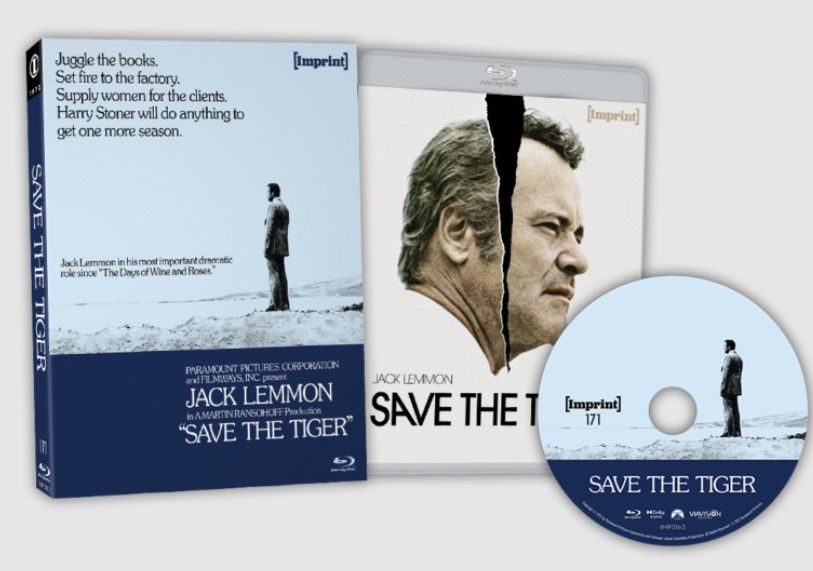
I don’t have much to say about Save the Tiger, which occupies an odd space between Joe and Rockyin director Avildsen’s career; it’s a decent enough moral drama built on the back of Jack Lemmon’s Oscar-winning turn as Harry Stoner, a Los Angeles garment hustler who insists he’s a stand-up guy despite mounting evidence to the contrary that he is very much not.
Released at the beginning of Nixon’s second term, it’s almost too cynical to take seriously – Shagan’s script, adapted from his own novel, is basically one long America, huh, whattaya gonna do – but Lemmon, despite his character being saddled with a fairly clumsy treatment of what we’d now recognize as PTSD, gives Harry a very real humanity that keeps us watching from scene to scene. There’s not much daylight between Harry and Shelley Levine in Glengarry Glen Ross, but by the time that film opened Save the Tiger had receded far enough in the popular memory that few people thought to connect the dots. That's a shame.
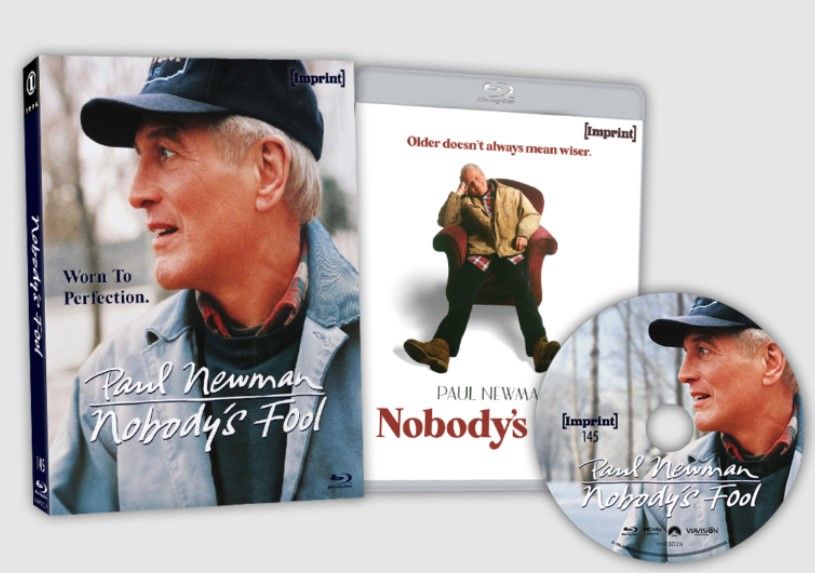
Nobody’s Fool will always be a personal favorite, since that’s the movie that let me meet Paul Newman on the 1994 press junket (and Robert Benton and Richard Russo, too, both swell fellas). But it’s also among his finest pictures, as committed to subverting the actor’s blue-eyed golden-boy persona as was Sidney Lumet’s The Verdict – and with Newman just as invested in showing us how charm and good looks can only get you so far without actual character. It’s a rueful performance, which isn’t something you see every day, steeped in regret and wistfulness that Newman’s Sully won’t allow himself to talk about – not to his friends, not to his landlady (Jessica Tandy), whom he's known since grade school, not to the neighbor (Melanie Griffith) he’s half-heartedly trying to seduce. And then Sully’s son (Dylan Walsh) turns up with the grandson Sully’s never met, and things change.
Nothing of real significance happens at any point in Nobody’s Fool, which is a story about an aging jerk reconnecting with the warmth he’s denied himself for decades, but we’re left with the impression that things will be better going forward. It’s a quiet, profound little picture, an actor-driven work that – much like Save the Tiger – just sort of fell through the cracks over the years. I’m really glad to see it back in play, and given the treatment it deserves.
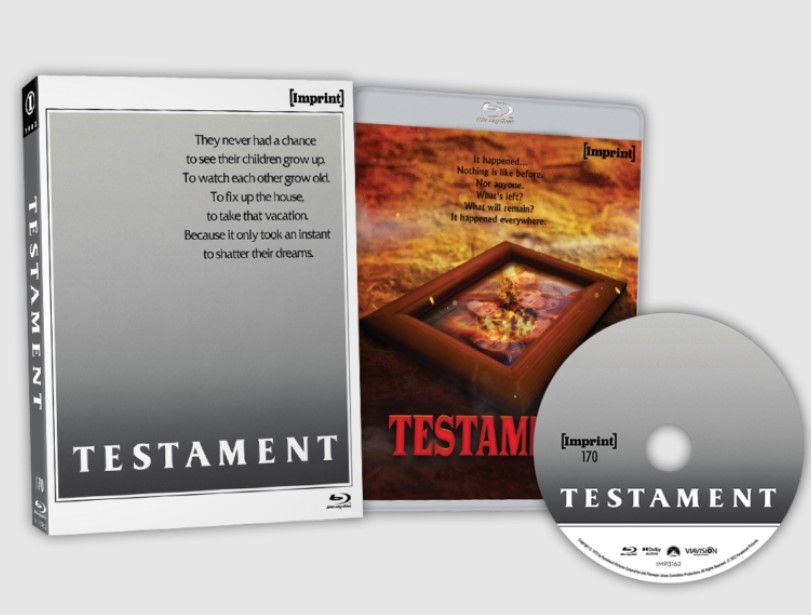
Finally there’s Testament, another film no one much talks about anymore – even though it’s probably the strongest of the lot. Produced for broadcast on PBS’ American Playhouse in 1983, it’s an unnervingly placid drama about World War III as experienced by a family living in a small town an hour and a half away from San Francisco. The second reel has barely started before the outside world goes away in an awful burst of light – and that’s all anyone knows. Carol Wetherley (a perfectly cast Jane Alexander, who was nominated for an Oscar) tries to hold her family together and hope her husband (William Devane) makes it home, as hours stretch into days, neighbors start fighting over gasoline and people start getting sick.
With its measured tone and slow march of miseries, Testament stands in stark relief to its contemporaries, actual television events like Threads and The Day After which presented their nuclear catastrophes through either amped-up horror in the former or mannered drama that now plays like the ’80s version of concern trolling in the latter. The quiet but inescapable despair that falls over Testament is far more upsetting because it’s so recognizable: It’s what it looks like when people are trying not to crack wide open. Watching Carol’s salt-of-the-earth competence disintegrate over the course of the picture is almost unbearable: If this kind, compassionate woman can’t keep it together, what chance do any of us have?
At least technically, Pretty Baby is the clear standout of the four films, mastered from “a newly restored 4K scan by Paramount Pictures” that looks great, preserving Sven Nykvist’s gas-and-candlelight textures of its nighttime sequences and the slightly blown-out look of his daylight shoots. The other three discs were authored from existing 2K masters that are pretty good, if not pristine; the wintry, muted palette of Nobody’s Fool is solidly represented, but its incredible cast of character actors – Philip Bosco, Margo Martindale, Philip Seymour Hoffman, Josef Sommer, Pruitt Taylor Vince, and an unbilled Bruce Willis among them – don’t quite pop the way they did in the film print. (Maybe it’s a little too much DNR; I’m very curious to see what Kino Lorber’s new restoration looks like when it arrives on 4K and Blu-ray at the end of the month.)
Testament and Save the Tiger are solid, too: Save the Tiger’s overcast skies and cigarette smoke feel thick and heavy in the right way, and its gray-brown palette is accurately represented, while Testament looks like the low-budget TV-movie it always was – which of course only adds to its horrible gravity, since now it’s like witnessing an unremarkable TV-movie production that’s being poisoned by fallout. I suspect both films were mastered with streaming in mind; I also have a feeling this is the best they’ll ever look, given their status in Paramount’s library, so if you’re a fan you should snap them up as quickly as possible. Nobody’s Fool has already sold out, but I suspect there’ll be a second pressing – and most of the extras (audio commentary by filmmaker Jim Hemphill, and interviews with Russo and co-star Catherine Dent) are going to be replicated on Kino Lorber’s domestic release, if you'd rather shop closer to home. (A featurette with editor John Bloom doesn’t seem to have made the cut.)
Save the Tiger gets an ambitious package, with more contributions from Pretty Baby video essayist Kremer - who contributes both video (Ammo for Shooting Clouds: John G. Avildsen Before Rocky) and audio, adding a commentary of his own in addition to the vintage track with Avildsen and Shagan. There’s also a Zoom interview with Lloyd Kaufman of Troma fame; a friend and collaborator of Avildsen’s in the 1970s, Kaufman offers some characteristically chatty insight into his methods. Laurie Heineman, who plays the young hitch-hiker Harry picks up early in the film, gets a featurette of her own, and there’s also a seven-minute archival interview with Lemmon that is so steeped in early ’70s culture and technology that it gave me hives.
Testament offers those 20th anniversary featurettes I mentioned earlier and two new commentary tracks: One from Amanda Reyes, who considers the film in the context of made-for-TV movies, and another from author David J. Moore, who examines it from the perspective of post-apocalyptic cinema. Neither classification feels exactly correct here, but that’s just because Testament transcends those concepts. It was made for television, and it is a post-apocalyptic drama … but it isn’t, not really. I could argue no one really knows how to classify it; certainly, its truly bizarre theatrical trailer now plays like something you’d see for an underground horror movie. Which, in a way, it was.
Next week: Shawscope Vol. 2, and plenty more! You’ll see!